



The spindle motor is what actually makes cutting happen in a CNC machine.
It drives the rotation of the tool or workpiece, and its performance directly affects machining speed, accuracy, and surface finish. No matter what machine you use-VMC, HMC, gantry, or lathe-the spindle is always at the center of the process.
In simple terms:
It controls how fast and how stable you can cut
It determines machining quality and efficiency
Choosing the right spindle directly impacts your results
If you want better performance from your CNC machine, the spindle motor is the first place to look.
Spindle Motor vs Belt-Driven Spindle
At a basic level, both systems do the same job-rotate the tool or workpiece.
But how they deliver power is very different, and that difference shows up in speed, torque, precision, and long-term performance.
Spindle Motor (Motorized Spindle)
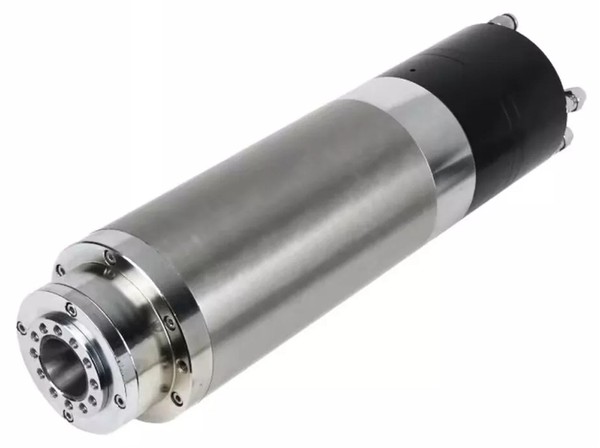
A spindle motor integrates the motor directly inside the spindle housing.
There is no belt or gearbox-power goes straight to the tool.
This design removes transmission loss and improves overall performance.
What makes it different:
Direct drive → almost no energy loss
Very high RPM capability (ideal for high-speed cutting)
Faster acceleration and deceleration
Lower vibration due to fewer moving parts
More compact machine structure
Where it performs best:
High-speed machining (especially aluminum and light alloys)
Precision parts with tight tolerances
Complex surface finishing
5-axis and high-end machining centers
What to be aware of:
Higher initial cost
Heat management is critical (often requires water cooling)
Repairs are more complex compared to traditional systems
Belt-Driven Spindle

A belt-driven spindle uses a separate motor, with power transmitted through a belt system.
This adds a layer between the motor and the spindle, but also brings advantages in torque and flexibility.
What makes it different:
External motor + belt transmission
Adjustable speed range via pulley ratios
Strong torque output at low speeds
Simpler and more serviceable structure
Where it performs best:
Heavy cutting operations
Steel, cast iron, and hard materials
Large workpieces and deep cuts
Gantry and horizontal machining centers
What to be aware of:
Energy loss through belt transmission
More vibration compared to direct drive
Belt wear requires periodic maintenance
Speed is limited compared to motorized spindles
Final Comparison Table
| Feature | Spindle Motor | Belt-Driven Spindle |
| Speed | High | Medium |
| Torque | Medium | High (low speed) |
| Precision | Very high | Moderate |
| Cost | Higher | Lower |
| Maintenance | Lower | Easier |
Spindle Motor Applications in CNC Machining
A spindle motor is used in every CNC machine-but the way it performs depends entirely on the job.
Some applications need speed.
Some need torque.
Others care more about stability over long production runs.
High-Speed Precision Machining
When you're working with aluminum or fine-feature parts, speed changes everything.
At higher spindle speeds, cutting becomes smoother, chips are removed more efficiently, and surface finish improves significantly. This is why high-speed spindle motors are widely used in industries that care about detail and appearance.
You'll typically see this in:
Mold finishing
3C electronics components
Aerospace thin-wall parts
Machines like VMCs and 5-axis centers rely heavily on this type of spindle performance-not for power, but for control and consistency at high RPM.

Heavy-Duty Cutting Applications
Now switch to steel or cast iron-the priorities are completely different.
Here, the spindle isn't trying to go faster.
It's trying to stay stable under load.
Heavy cutting generates strong resistance. If the spindle can't hold torque at low speeds, you'll immediately see vibration, tool wear, or even tool breakage.
That's why gantry machines and horizontal machining centers usually favor spindle systems designed for strength, not speed.
Mass Production & Automation
In production environments, the goal is not maximum performance-it's consistent performance.
A spindle motor in this scenario might run for hours or even days with minimal variation. What matters here is repeatability: same speed, same accuracy, every cycle.
This is common in:
Automotive parts manufacturing
Standardized component production
Machines like drilling and tapping centers depend on spindle motors that can start, stop, and repeat quickly without a performance drop.
Complex Multi-Axis Machining
Multi-axis machining adds another layer of challenge.
The spindle is no longer working in a fixed direction-it's constantly moving, tilting, and adjusting while cutting. That means it has to respond quickly and stay stable at the same time.
This is especially important in:
Aerospace components
Medical parts with complex geometry
In these cases, the spindle motor isn't just about power or speed-it's about how well it can keep up with continuous motion without losing precision.
Main Types of Spindle Motors
Not all spindle motors are built the same.
Even though they serve the same purpose, their design changes depending on speed, cooling, structure, and application.
Instead of looking at one "standard" type, it's better to understand how spindle motors are categorized in real machining scenarios.
By Cooling Method
Heat is one of the biggest factors affecting spindle performance.
Some spindles are designed for simplicity, while others focus on thermal stability.
Air-Cooled Spindle Motor
Easier to install and maintain. Suitable for lighter workloads or intermittent machining.
But as speed increases, heat buildup can affect accuracy.
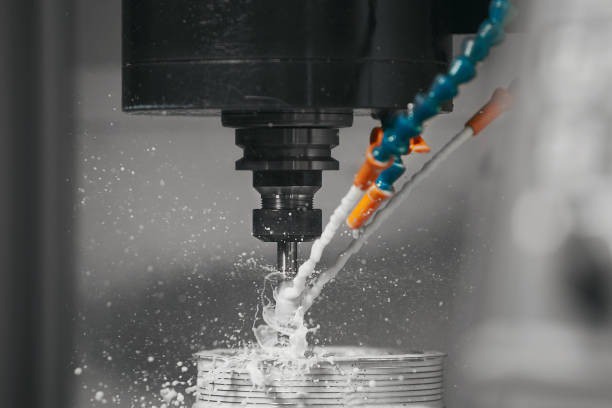
Water-Cooled Spindle Motor
Better at controlling temperature during long or high-speed operations.
Common in precision machining where thermal expansion must be minimized.
By Speed and Torque Characteristics
Speed and torque always come as a trade-off.
Some spindle motors are designed to rotate fast, while others are built to push harder.
High-Speed Spindle Motors
Designed for RPM. Ideal for aluminum, finishing, and small tools.
Medium-Speed Spindles
Balanced performance. Suitable for general machining tasks.
Low-Speed High-Torque Spindles
Built for heavy cuts and hard materials like steel or cast iron.
By Application Type
In real-world use, spindle motors are often defined by what they do.
Milling Spindle Motors
Focus on cutting performance and flexibility across different materials
Turning Spindle Motors
Designed for the stable rotation of the workpiece
Grinding Spindle Motors
Require ultra-high speed and minimal vibration
Drilling/Tapping Spindles
Emphasize fast response and repeatability
By Structure Design
This is where the biggest differences come in.
Built-in Motor Spindle (Motorized Spindle)
Compact, high-speed, high-precision
Common in modern high-end CNC machines
Electric Spindle
Often refers to integrated high-speed spindle units
Widely used in precision and light cutting
Hybrid Spindle Systems
Combine features of traditional and motorized designs
Used when both torque and speed are required
Benefits vs Trade-Offs of Spindle Motors
| Aspect | Benefits (What You Gain) | Trade-Offs (What to Consider) |
| Machining Accuracy | High precision, better surface finish, low vibration | Requires stable setup |
| Speed Performance | High RPM, faster cycle times | Heat generation at high speed |
| Torque Capability | Good performance at medium–high speeds | Lower torque at low speed |
| Structure Design | Compact, fewer components, less energy loss | More complex internal design |
| Maintenance | No belts, less routine maintenance | Harder to repair |
| Cost | Better long-term efficiency | Higher upfront investment |
What to Consider Before Buying a Spindle Motor
Choosing a spindle motor isn't about picking the highest speed or power.
It's about matching the spindle to your actual machining conditions.
Start with Your Material
Different materials require completely different spindle behavior.
Aluminum → high speed, low cutting resistance
Steel → more torque, stable cutting
Titanium → both torque and heat control matter
Match Speed and Torque
Speed and torque always balance each other.
High RPM → better surface finish
High torque → stronger cutting ability
Consider Cooling and Working Conditions
Heat directly affects spindle life and accuracy.
Light or intermittent work → air cooling is enough
Long hours or high speed → water cooling is safer
Also consider:
Workshop temperature
Continuous operation time
Check Machine Compatibility
Not every spindle fits every machine.
VMC / HMC / Gantry / Lathe all have different requirements
Interface, size, and control system must match
Don't Ignore Service and Support
This is often overlooked, but very important.
Are spare parts available?
Is technical support responsive?
Can the spindle be repaired locally?
Choosing the Right Spindle Motor for Your CNC Machine
Choosing a spindle motor comes down to a few key decisions:
Material decides direction
Aluminum → high speed
Steel / cast iron → high torque
Machining type defines performance
Finishing → high RPM
Roughing → strong torque
Machine type sets the baseline
VMC / 5-axis → high-speed spindle
HMC / gantry → high-torque spindle
Don't over-spec
Higher speed or power doesn't always mean better results
Focus on stability and reliability
Real performance matters more than max specs

Horizontal Machining Center
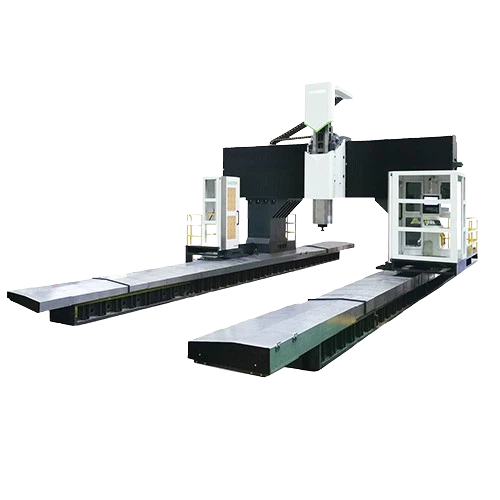
Gantry Machining Center

5-Axis Machining Center
FAQs
What does a spindle motor actually do in a CNC machine?
A spindle motor provides the rotational power needed for cutting. In milling, it drives the tool; in turning, it drives the workpiece. Its performance directly affects machining speed, cutting stability, surface finish, and overall efficiency.
What is the main difference between a spindle motor and a belt-driven spindle?
A spindle motor drives the spindle directly, which gives better speed, response, and precision. A belt-driven spindle uses an external motor and belt system, making it more suitable for low-speed, high-torque cutting. The better choice depends on whether your work needs speed or cutting force.
How do I know if I need a high-speed or high-torque spindle?
The answer depends on your material and machining task. High-speed spindles are better for aluminum, small tools, and fine finishing, while high-torque spindles are more suitable for steel, cast iron, and heavy material removal. In short, finishing needs speed, while roughing needs torque.
Are spindle motors used in all CNC machines?
Yes, all CNC machines rely on spindle systems, but the spindle configuration is not the same. VMCs and 5-axis machines usually focus more on speed and precision, while HMCs and gantry machines often require more torque and rigidity. The spindle must match both the machine and the application.
What should I check before buying a spindle motor?
You should first look at your material, machining process, required speed range, and machine compatibility. Cooling method, stability during long runs, and after-sales support are also important. A spindle that looks strong on paper may still be the wrong choice if it does not fit your real production needs.
Does higher spindle speed always mean better machining performance?
No, higher speed is only useful when the job actually benefits from it. For light cutting and finishing, higher RPMs can improve surface quality and efficiency. But for hard materials or heavy cuts, torque and rigidity are often more important than speed alone.
Conclusion
A spindle motor is not just a component-it defines how your CNC machine actually performs.
From high-speed precision cutting to heavy-duty machining, different applications require different spindle characteristics. Choosing the right spindle is less about chasing higher specs and more about matching it to your material, process, and machine.
In the end, better spindle selection means better stability, better efficiency, and more consistent machining results.
Looking for the right spindle solution for your CNC machine?
Contact our team to get a recommendation based on your actual application.
