


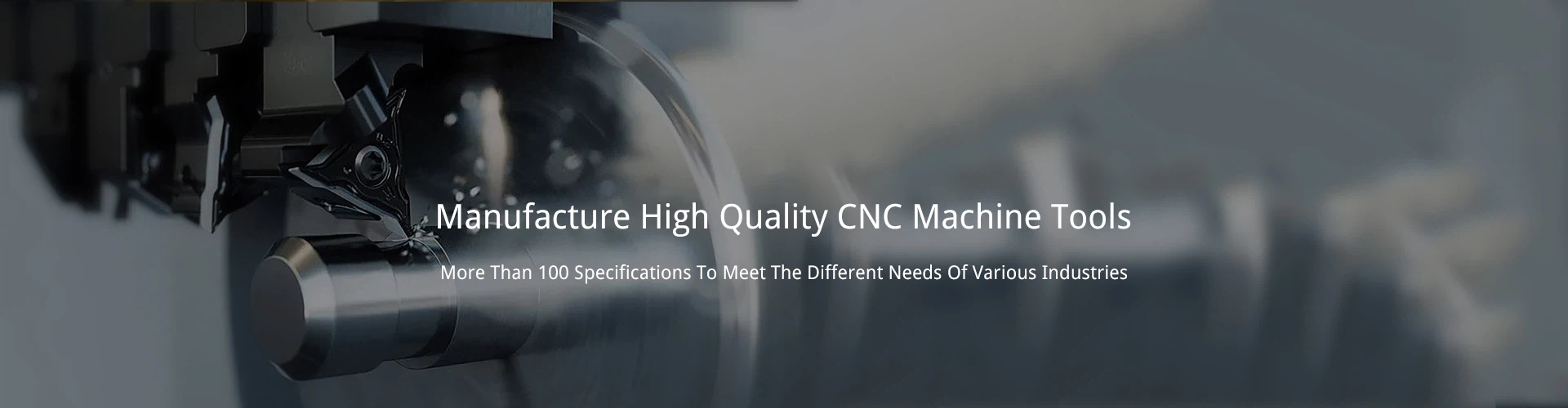
CNC lathe machines play an important role in the manufacturing industry. A CNC lathe machine is a tool that removes unwanted material from the workpiece in the form of chips with the help of a cylinder rotating its axis by the action of wheels or levers. The main function of a lathe machine is to spin the part while other cutting tools are pushed against it to cut the part in a desired geometric shape and size. It holds the part securely and rigidly and turns it against cutting tools that will perform the desired cutting operation on the part and remove the unwanted material. In this article, we will let you know what the CNC lathe axis is and why it is important. Please, keep reading.
A lathe machine is composed of parts such as a headstock, a tailstock, a bed, legs, guideways, a head wheel, e lead screw, a feed rod chuck, and a spindle. It helps cutting tools to perform cutting operations like drilling, reaming, tapping, or boring. It reduces the workpiece's diameter and produces a cylindrical or cone-shaped surface by turning operations. Turning operations can be performed in taper turning, straight turning, external grooving, or profiling, among others. It also supplements cutting tools in reducing the length of the workpiece and producing a flat surface having an axis by facing operations.
1. What is the CNC Lathe Axis?
The CNC lathe axis refers to the different movement axes of the CNC machine. There are two basic movement axes in CNC machining.
1.1. Linear Axes
These are the axes that are perpendicular to one another and that intersect at the origin. We already know them from Math lessons, namely they are the X, Y, and Z axes. These axes are widely used in different areas, including manufacturing and machining. They fall in the subfield of Math "Cartesian Coordinate System".
X-axis
It is the movement from right to left (and vice versa). In CNC machines, this movement is parallel to the cutting tool.
Y-axis
It is the front and back movement (and vice versa). In CNC machines, this movement is perpendicular to the cutting tool.
Z-axis
It is the movement from top to bottom (and vice versa). In CNC machines, this movement is perpendicular to the cutting tool.
To sum up, by directing and moving the cutting tool to the X, Y, and Z axes, the CNC machine performs different operations and gives the workpiece the desired shape and size.
Rotary Axes
The CNC machine may not perform all desired operations by only moving in linear axes. Sometimes, we may need to rotate the cutting tool around one of the X, Y, or Z axes to achieve the desired movement and operation. As a result, the machining industry invented its axes, which are the A, B, and C axes. Each of these axes is formed by the rotation around one of the linear axes. Now, let us define the A, B, and C axes.
A- axis
It is formed by the rotation around the X-axis. It is also called the tilt axis.
B- axis
It is formed by the rotation around the Y-axis.
C- axis
It is formed by the rotation around the Z-axis.
These movements are achieved with the help of the rotary table and the cutting tool can reach the part at different angles and perform the operations, which are impossible to be carried out at linear angles.
2. CNC Lathe Machines Based on Different Axes
The number of axes determines the type of CNC lathe machines, so we have 2-axis CNC lathe machines, 3-axis CNC lathe machines, 4-axis CNC lathe machines, and so on. An increased number of axes gives lathe machines increased movement capability. As a result, we can perform more complicated operations on the part and have more sophisticated results on it. At this point, let us look at different CNC lathe machine types based on different axes.
 |
 |
2- Axis CNC Lathe Machines
They are the most basic form of lathe machines. As we can understand from its name, the machine can only move along 2 linear axes. These axes may be the x-axis and the y-axis the x-axis and the z-axis or the y-axis and the z-axis. However, in practice, most 2-axis CNC lathe machines use a combination of the x-axis and the z-axis. On the machine, the z-axis creates the longitudinal movement. It means that the chuck and the part rotate around the z-axis And the x-axis creates the cross movement, so the lathe machine has the added capability of moving the x-axis and giving additional shape or size to the part. Along with this, the cutting tool can move along the x-axis and the y-axis.
3- Axis CNC Lathe Machines
These machines have movement capability along with all linear axes, namely the x, y, and z axes. It means that the machine can perform operations and remove materials in the length, width, and depth of the workpiece. 3-axis CNC lathe machines are associated with conventional machining and have been widely used in the machining industry to date, however, they have been seriously challenged by multi-axis lathe machines in recent times as a result of the invention of rotary axes. 3-axis CNC machines are very capable of operating on simple parts that need simple features, but they have limitations when it comes to machining more complicated features on parts. That's why they are gradually being replaced by multi-axis CNC machines, which can produce more sophisticated work.
4- Axis CNC Lathe Machines
Starting from 4- Axis CNC lathe machines, rotary axes come into play. Along with the x, y, and z axes, one rotary axis movement is added to the machine. The fourth axis is created by rotation around one of the linear axis. This enables the machine to access the part from an additional side and create more sophisticated features on it. One way to create rotation is rotary tables. The rotary table helps the machine to create rotation around the line from left to right, front to back, or top to bottom. Another way to create rotation is the swivel movement. It is a tilt movement and does not need a 360-degree rotation. With one additional rotary axis, fewer setups are needed to machine the part. Milling, boring, drilling, turning, remaining, and tapping operations can be performed in a few steps. It means that fewer human errors and more accuracy.
5- Axis CNC Lathe Machines
In these machines, two of the rotary axes, namely the A, B, and C axes, are added to linear axes. This addition considerably increases the movement capability of CNC lathe machines. Again, rotation is created around linear axes, but at this time the rotation is around two linear axes. In other words, the rotation is created around two of the lines from right to left, front to back, or top to bottom. There are two subcategories of 5-axis CNC lathe machines. One of them is swivel-rotate-style machines. In these machines, a swivel head tilts around the B axis and does not make a 360-degree rotation, and the rotary table turns around either the A axis or C axis. The other is trunnion-style machines. These machines have rotary tables or indexers with dual axes. 5-axis CNC lathe machines are becoming more and more popular in the machining industry. They significantly reduce setup time and human errors and boost accuracy, overall productivity, and quality.
6- Axis CNC Lathe Machines
These are the most developed form of lathe machines and are very rare in the industry. They employ all axes, including linear axes and rotary axes. They are used in the most sophisticated industries producing the most sophisticated products.
What are the Key Components of a CNC Lathe Machine?
Headstock
The main function of a headstock is to hold the workpiece and ensure its steady movement along the axis. The size of the headstock determines the diameter of the "swing". A big swing is important, especially for large works.
Lathe Bed
A lathe bed holds the Lathe machine components together and supports them. It is designed to ensure the secure operation of the machine, even in the most extreme conditions. It also prevents vibrations.
Chuck
A chuck is used to clamp the workpiece. It keeps the workpiece at the center of the rotation. It ensures easy loading and unloading. It helps the machine to operate with accuracy and precision.
Tailstock
It is positioned opposite the headstock. It provides the workpiece with extra support. Different cutting tools can be mounted to the tailstock to perform different operations.
Control Panel
You can control the machine using computer programs with the help of a control panel. It is the brain of the machine and instructs the machine to perform different operations in different stages.
Tool Turret
It helps the machine to automatically change cutting tools and negate the need for manual tool changing. In that way, it saves time and labor costs.

What Operations Can be Performed on a CNC Lathe?
Facing
Facing aims to make a flat surface in the direction of the operation axis. A CNC lathe can successfully perform this operation by its rotation at the desired speed.
Turning
In turning operation, a cylindrical surface is generated by removing excess material from the workpiece. There are different types of turning such as rough turning, rough turning, or taper turning.
Chamfering
The chamfering operation removes burrs, thereby improving the appearance of the workpiece.
Knurling
Knurling generates a rough surface on the part, which ensures the easy gripping of the part. A knurling tool is used for this operation.
Thread Cutting
Thread cutting is the operation of generating a helical groove on a conical or cylindrical surface.
Why is the CNC Lathe Axis Important?
More axes mean fewer setups and human errors and higher speed and overall productivity. However, they also mean more expensive machines. Therefore, while investing in CNC lathe machines, it is important to choose the correct axis according to the manufacturing purpose and production capacity. A costly investment in multi-axis lathe machines will be compensated by shorter production times, efficiency, and savings in labor and materials in the long run. Nevertheless, if your production volume is low, investing in costly machines will be useless. That's why choosing the right CNC lathe axis that would best suit your manufacturing is crucial.
How Can You Choose the Right CNC Lathe Axis?
You can consider these things while deciding on the right axis:
Cutting Function
If you intend to use your machine for simple cutting functions, a small axis will be enough for you. On the other hand, if you plan to carry out combined cuttings or more complicated operations, you should opt for multi-axis lathe machines.
Complexity of Parts
If your manufacturing requires complex cuttings, investing in multi-axis lathe machines would be inevitable for you.
Your Vision
If you wish to scale up your operations, you will need a speedy, high-capacity, accurate, and precise manufacturing process. You can achieve this vision only through multi-axis CNC lathe machines. As you increase your production volume, you will need more axes and more sophisticated machines.
Conclusion
If you wish to scale up your manufacturing volume and expand your business, it will be need for you to invest in multi-axis CNC lathe machines. Our lathe machines will be a good alternative for you. Then, you can contact us now.