


When you need to machine smooth 3D surfaces, curved profiles, molds, dies, or complex parts, a ball nose end mill is often a better choice than a standard flat end mill. In this guide, you will learn where it is used, how it works, and how to choose the right one for your CNC machining project.
What Is a Ball Nose End Mill?
Before choosing the right tool for 3D surface machining, you need to understand what makes a ball nose end mill different from a standard end mill.

Basic Definition
A ball nose end mill is a cutting tool with a rounded, ball-shaped tip. Instead of creating a flat bottom, it is designed to follow curved surfaces, 3D contours, and complex profiles. You often use it for mold finishing, die machining, curved parts, and precision surface finishing where a smooth shape is more important than a sharp corner.
How It Differs From A Flat End Mill
|
Tool Type |
Best For |
Surface Result |
|
Flat End Mill |
Flat surfaces, pockets, slots, square shoulders |
Flat bottom, sharp corner |
|
Ball Nose End Mill |
3D surfaces, curved profiles, mold cavities |
Smooth curved finish |
|
|
|
| Flat End Mill | Ball Nose End Mill |

Why the Round Tip Matters
The round tip helps the tool move smoothly across changing surfaces. This reduces harsh tool marks and makes it easier to achieve a fine finish on complex shapes. For CNC machining, it helps you improve surface quality, reduce secondary polishing, and machine more precise 3D details.
Main Uses of Ball Nose End Mills in CNC Machining
A ball-nose end mill is primarily used when your CNC machining project requires smooth curves, 3D profiles, radii, or high-quality surface finishing.
3D Contour Milling
You can use a ball nose end mill to machine complex 3D contours, such as freeform surfaces, curved cavities, and irregular profiles. Its rounded tip follows the surface smoothly, making it suitable for parts that cannot be finished well with a flat end mill.
Mold and Die Finishing
Ball nose end mills are widely used in mold and die machining, especially for semi-finishing and finishing operations. If you are machining plastic molds, die-casting molds, stamping dies, or form tools, this tool helps you create smoother cavities and reduce the need for later polishing.

Curved Surface Finishing
When your part has curved surfaces, sloped areas, or smooth transitions, a ball nose end mill can help improve the final surface quality. It is useful when the appearance, fit, or contact surface of the part must be accurate and consistent.
Full Radius Grooves and Fillets
You can also use it to machine full-radius grooves, U-shaped slots, internal fillets, and rounded bottom features. The ball-shaped tip naturally creates a radius, making it easier to achieve these shapes without extra tool changes.
Engraving and Detailed Surface Work
Small-diameter ball nose end mills are useful for engraving, fine details, shallow patterns, and delicate surface features. They are often chosen when you need controlled cutting on small curved areas or detailed CNC finishing.
Aerospace, Automotive, and Precision Parts
In aerospace, automotive, and precision machining, ball nose end mills are often used for turbine blades, mold components, aluminum parts, fixture details, and complex mechanical parts. If your project requires both accuracy and smooth surface quality, choosing the right ball nose end mill can make your machining process more stable and efficient.
When Should You Use a Ball Nose End Mill?
You should use a ball nose end mill when your part requires smooth curves, complex profiles, or a better surface finish than a standard flat end mill can provide.
Use It When Machining 3D Surfaces
If your workpiece has curved surfaces, sloped areas, freeform shapes, or complex 3D profiles, a ball nose end mill is a suitable choice. Its rounded tip can follow changing surface angles more smoothly, helping you machine shapes that are difficult to finish with a square-end tool.
Use It When Surface Finish Is Important
When you need a smoother surface and want to reduce secondary polishing, a ball nose end mill can help. It is commonly used for finishing passes where surface quality, part appearance, or dimensional consistency matters.
Use It When Machining Mold Cavities or Dies
For mold cavities, die surfaces, and forming tools, a ball nose end mill is often used in semi-finishing and finishing. It helps you create smooth transitions, radius areas, and detailed cavity surfaces.

Use It After Roughing Operations
In many CNC jobs, you first remove most material with a roughing or flat end mill, then use a ball nose end mill for final shaping and finishing. This helps improve tool life, surface quality, and machining stability.
When Not to Use a Ball Nose End Mill
Although a ball nose end mill is excellent for curved surfaces and 3D finishing, it is not the best tool for every CNC machining operation.
Not Ideal for Flat-Bottom Pockets
If your part requires a flat-bottom pocket, slot, or square shoulder, a ball nose end mill is usually not the right choice. Its rounded tip will leave a curved bottom or small scallop marks, which may affect the final fit of the part. In this case, a flat end mill is more suitable.
Not the Fastest Choice for Heavy Material Removal
A ball nose end mill is mainly used for semi-finishing and finishing, not for removing large amounts of material quickly. If you need fast roughing, a roughing end mill or square end mill can usually remove material more efficiently and reduce machining time.
Not Suitable When Sharp Internal Corners Are Required
Because the tool tip is round, a ball nose end mill naturally creates a radius. If your design requires sharp internal corners, straight walls, or a clean 90-degree bottom edge, you may need a flat end mill or another tool after the ball nose operation. Choosing the right tool from the beginning helps you avoid rework and improve machining accuracy.
Ball Nose End Mill vs Flat End Mill
Choosing between a ball nose end mill and a flat end mill depends on your part shape, surface finish requirement, and machining purpose.
|
Comparison Point |
Ball Nose End Mill |
Flat End Mill |
|
Tip Shape |
Rounded tip |
Flat tip |
|
Best Use |
3D contouring, curved surfaces |
Flat surfaces, pockets, slots |
|
Surface Finish |
Better for curved finish |
Better for a flat bottom finish |
|
Corner Result |
Radius corner |
Sharp corner |
|
Common Industries |
Mold, die, aerospace, automotive |
General machining, fixture, parts production |
How to Choose the Right Ball Nose End Mill
To choose the right ball nose end mill, you need to match the tool with your material, part shape, machine condition, and required surface finish.
Choose the Right Diameter
A larger diameter gives better rigidity and higher efficiency, while a smaller diameter is better for fine details, narrow areas, and small radius features. You should choose the diameter based on your part design and machining depth.
Match Flute Count to the Material
For aluminum and soft materials, fewer flutes help improve chip evacuation. For steel, stainless steel, and harder materials, more flutes can improve tool strength and surface finish.
Select Carbide or HSS Based on Machining Needs
Carbide ball nose end mills are better for high-speed, high-precision, and harder material machining. HSS tools may be suitable for lower-speed jobs or cost-sensitive applications.
Choose Coating Based on Workpiece Material
The right coating helps reduce wear, heat, and friction. For example, different coatings may be needed for aluminum, stainless steel, mold steel, or hardened steel.
Consider Tool Length and Rigidity
Use the shortest tool length that can reach the machining area. Too much tool overhang can cause vibration, poor surface finish, and shorter tool life.
Confirm Your CNC Machine Rigidity and Spindle Speed
Before choosing the tool, check whether your CNC machine has enough rigidity, spindle speed, and stable holding power. A good tool only performs well when it matches the machine and cutting conditions.
Practical Tips for Better Ball Nose Milling Performance
To get better results from a ball nose end mill, you need to control the cutting strategy, tool setup, and chip removal, not just choose the right tool.
Use Proper Step Over for Surface Finish
Step-over has a direct effect on surface quality. A smaller step-over usually creates a smoother finish, but it also increases machining time. You should balance surface finish requirements with production efficiency.
Avoid Cutting with the Tool Center When Possible
The center of a ball nose end mill has a very low cutting speed. If possible, use a suitable toolpath angle or tilt strategy to let the cutting edge work more effectively. This can help improve surface finish and tool life.
Use Semi-Finishing Before Finishing
Do not jump directly from roughing to final finishing. A semi-finishing pass helps leave a more even allowance, making the final pass more stable and accurate.
Control Tool Overhang
Keep the tool overhang as short as possible. A long overhang can cause vibration, poor surface finish, and faster tool wear, especially when machining deep cavities or hard materials.
Use the Right Coolant or Air Blast
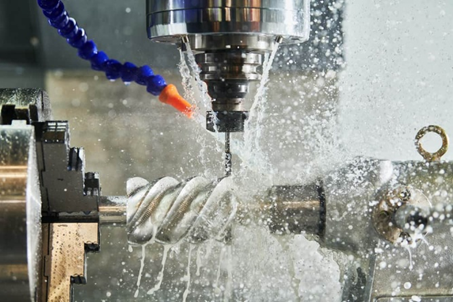
Good chip removal is important for stable milling. Depending on your material, you can use coolant or an air blast to reduce heat, remove chips, and protect the cutting edge.
Common Mistakes When Using Ball Nose End Mills
To get stable machining results, you should avoid using a ball nose end mill in the wrong operation or with unsuitable cutting conditions.
Choosing Ball Nose End Mills for Every Milling Job
A ball nose end mill is useful for 3D surfaces, curved profiles, and finishing, but it is not the best tool for every job. If you need flat-bottom pockets, straight slots, or sharp internal corners, a flat end mill may work better. Choosing the right tool for each operation can save machining time and improve part accuracy.
Using Too Large a Step-Over
A large step-over may improve machining speed, but it can leave visible scallop marks on the surface. If your part requires a smooth finish, you should use a smaller step-over and adjust it based on the required surface quality.
Ignoring Tool Rigidity
Long tool overhang, small tool diameter, or weak clamping can cause vibration during milling. This may lead to poor surface finish, faster tool wear, and unstable cutting. Use the shortest suitable tool length and make sure the tool holder is rigid enough.
Using the Wrong Coating for the Material
Different materials require different tool coatings. For example, aluminum, stainless steel, mold steel, and hardened steel may need different coating choices. The right coating helps reduce heat, friction, and wear.
Skipping Toolpath Optimization
Even a good ball nose end mill cannot perform well with a poor toolpath. You should optimize cutting direction, step-over, feed rate, spindle speed, and finishing strategy. A well-planned toolpath helps you achieve better surface quality, longer tool life, and more consistent CNC machining results.
What materials can Ball Nose End Mills Machine?
Ball nose end mills can machine many common materials, but you need to match the tool material, coating, and cutting parameters to your workpiece.
Aluminum
For aluminum, you can use a ball nose end mill for 3D surfaces, molds, prototypes, and curved parts. Choose tools with good chip evacuation to avoid built-up edge and poor finish.

Steel and Alloy Steel
For steel and alloy steel, carbide ball nose end mills are often preferred for stable cutting and better wear resistance. Proper coating, rigidity, and coolant help improve tool life.
Hardened Steel
When machining hardened steel, you need a high-quality carbide tool with a suitable coating. Use stable cutting conditions and avoid excessive tool overhang to reduce vibration and chipping.
Plastics and Composites
For plastics and composites, ball nose end mills can create smooth, curved profiles and detailed surfaces. You should control heat, chip removal, and feed rate to avoid melting, burrs, or delamination.
Conclusion
A ball nose end mill is a practical choice when you need to machine 3D surfaces, curved profiles, mold cavities, radius grooves, and precision parts with a smooth finish. However, the best machining result does not depend only on the tool itself. You also need to match the end mill with your workpiece material, CNC machine rigidity, spindle speed, tool holder, cutting parameters, and surface finish requirements. At Great CNC, we do not simply provide cutting tools. We support customers who buy or use CNC machines with matching tooling, holders, accessories, and practical machining guidance, helping you build a more complete and efficient CNC machining solution.
