


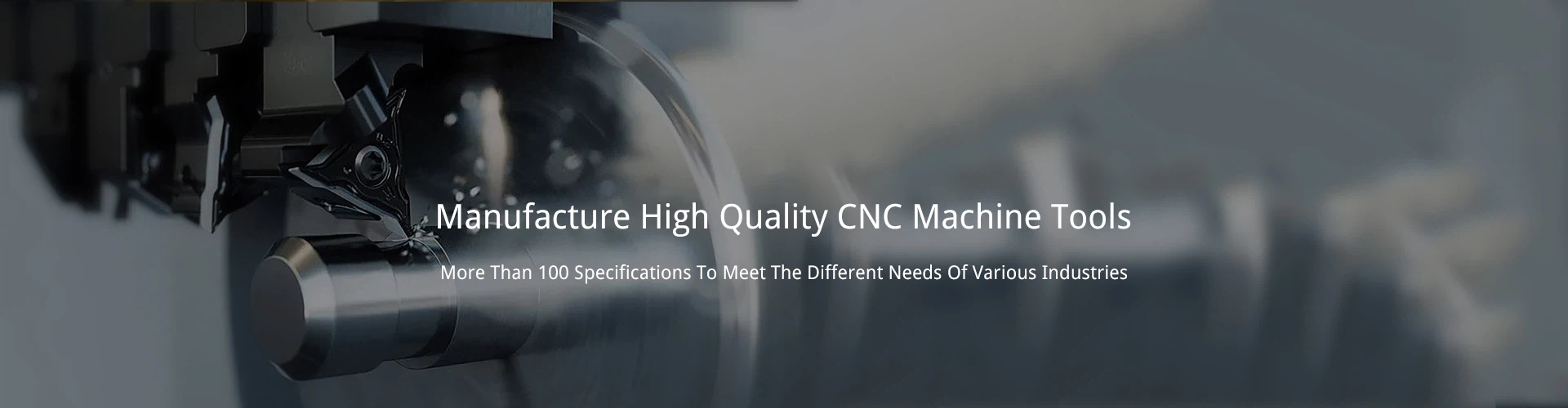
If you're machining large, heavy parts, you've likely faced issues such as poor rigidity, vibration, and unstable accuracy-especially when working with deep holes or complex structures. Frequent repositioning and limited machine capacity can slow you down and increase costs.
A horizontal boring mill is built to solve these problems. It gives you the strength, stability, and precision you need to handle demanding workpieces with fewer setups and better results.
In this guide, you'll quickly understand the key benefits of horizontal boring mills and how to choose the right solution for your machining needs.
What Is a Horizontal Boring Mill?
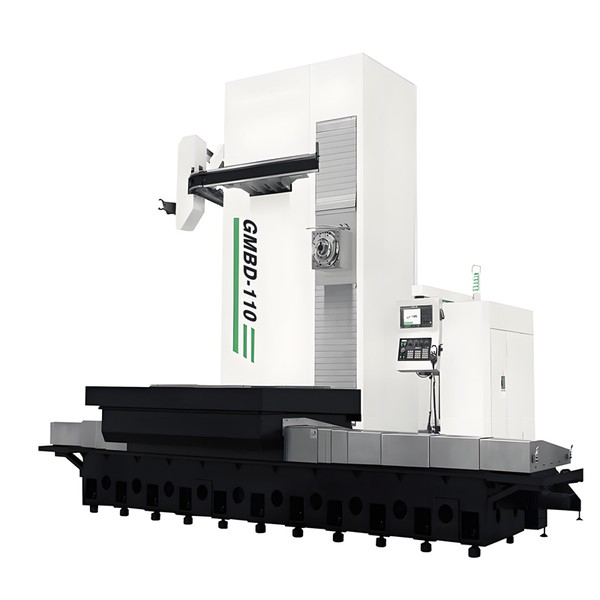
A horizontal boring mill (HBM) is a machine designed for machining large, heavy, and complex parts-especially when precise boring, drilling, and milling are required in a single setup.
What makes it different is the horizontal spindle with an extendable boring bar. This allows you to reach deep into a workpiece while maintaining stability and accuracy-something standard machines often struggle with.
With a horizontal boring mill, you can:
Machine deep holes with high precision
Handle large and heavy components without repositioning
Complete multiple faces in a single setup
Depending on your production needs, you'll typically see three main types:
Table Type – Ideal for medium to large parts with flexible positioning
Floor Type – Designed for extra-large and heavy workpieces
CNC Horizontal Boring Mill – Offers higher automation, accuracy, and efficiency
In short, if your work involves size, weight, or deep machining challenges, a horizontal boring mill gives you the control and stability you need to get consistent results.
Key Benefits of Horizontal Boring Mill
When you're machining large or complex parts, the limitations of standard machines become obvious. A horizontal boring mill is designed to give you more stability, better accuracy, and higher efficiency in demanding applications.
Exceptional Rigidity for Heavy-Duty Machining
When you need to remove a large amount of material or cut tough workpieces, rigidity is critical. A horizontal boring mill uses a heavy-duty structure to keep the machine stable during cutting.
You can perform heavy cutting with less vibration, maintain consistent accuracy, and achieve better surface finish. At the same time, tool wear is reduced, which helps control overall machining costs.
Superior Accuracy for Deep Hole Boring
Deep hole machining is one of the biggest challenges in CNC processing. With a horizontal boring mill, the extendable spindle allows you to reach deep internal features while maintaining alignment.
This means you can control hole straightness, reduce deflection, and achieve higher precision in internal machining operations that are difficult for other machines.
Ideal for Large and Heavy Workpieces
Handling large workpieces often leads to long setup times and positioning errors. A horizontal boring mill allows you to machine large and heavy components directly with minimal repositioning.
You can reduce manual handling, improve safety, and keep your machining process more stable and efficient.
Multi-Face Machining in One Setup
Re-clamping large parts not only wastes time but also affects accuracy. With a rotary table and horizontal structure, you can complete multi-face machining in a single setup.
This helps you maintain better positional accuracy between surfaces while reducing setup time and improving overall efficiency.
High Flexibility for Complex Parts
A horizontal boring mill allows you to handle multiple machining tasks in one machine. You can perform boring, milling, drilling, and tapping without transferring the workpiece.
This flexibility is especially useful when dealing with complex parts that require multiple operations and precise coordination.
Reduced Setup Time and Higher Productivity
Every additional setup increases your production time and the risk of error. By reducing the number of setups, a horizontal boring mill helps you streamline your workflow.
You can shorten machining cycles, improve machine utilization, and increase your overall production efficiency.
Horizontal Boring Mill vs Horizontal Machining Center
When choosing between a horizontal boring mill and a horizontal machining center, the key is not which one is better, but which one fits your application.
|
Feature |
Horizontal Boring Mill |
Horizontal Machining Center |
|
Workpiece Size |
Large, heavy parts |
Medium-sized parts |
|
Cutting Type |
Heavy-duty cutting |
High-speed machining |
|
Spindle Structure |
Extendable boring spindle |
Fixed spindle |
|
Machining Focus |
Deep holes, alignment |
Surface, contour machining |
|
Setup |
Fewer setups for large parts |
Faster for batch production |
|
Typical Use |
Energy, shipbuilding, heavy equipment |
Automotive, 3C, general manufacturing |
When You Should Choose a Horizontal Boring Mill
If your production involves large-scale or heavy components, a horizontal boring mill gives you the stability and reach that other machines can't provide.
You'll benefit more from this machine when:
Your parts are large, heavy, or difficult to move
You need deep hole machining with high accuracy
Your process requires strong rigidity and heavy cutting
You want to reduce repositioning for oversized workpieces
In these cases, using a standard machining center can lead to vibration, limited reach, and unstable accuracy.
When a Horizontal Machining Center Makes More Sense
A horizontal machining center is better suited for speed and efficiency in batch production.
You'll get better results when:
Your parts are medium-sized and repeatable
You focus on high-speed machining and cycle time
Your production involves mass production or automation
You need fast tool changes and high throughput
For these applications, a horizontal machining center helps you maximize productivity.
How to Make the Right Choice
You don't need the most advanced machine-you need the right one for your job.
If your priority is size, strength, and deep machining capability, a horizontal boring mill is the better choice.
If your focus is speed, volume, and efficiency for smaller parts, a horizontal machining center will deliver better results.
Choosing based on your actual production needs will help you avoid unnecessary costs and improve long-term efficiency.
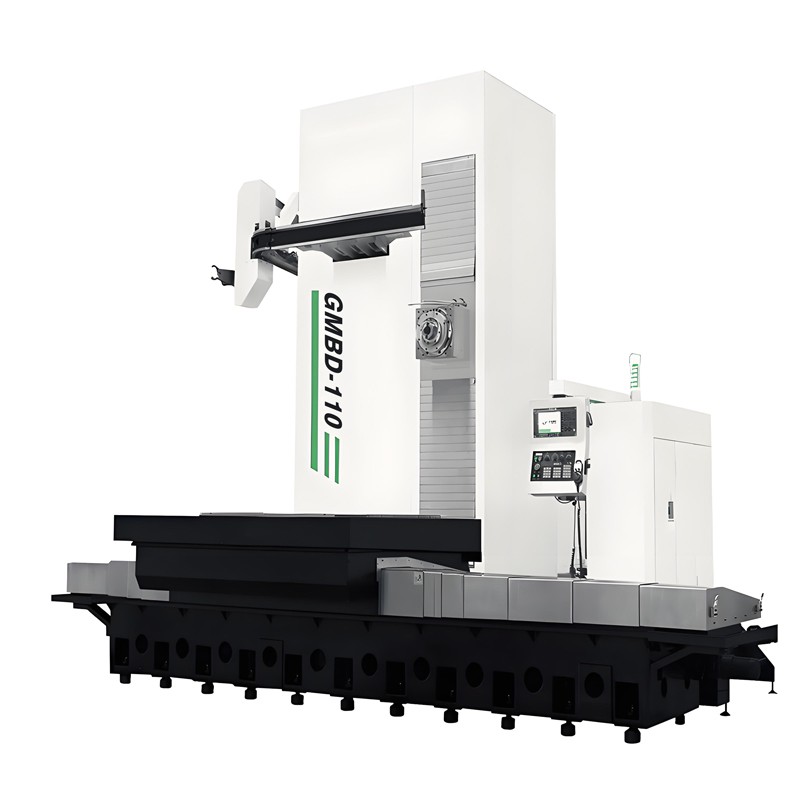
Horizontal Boring Mill

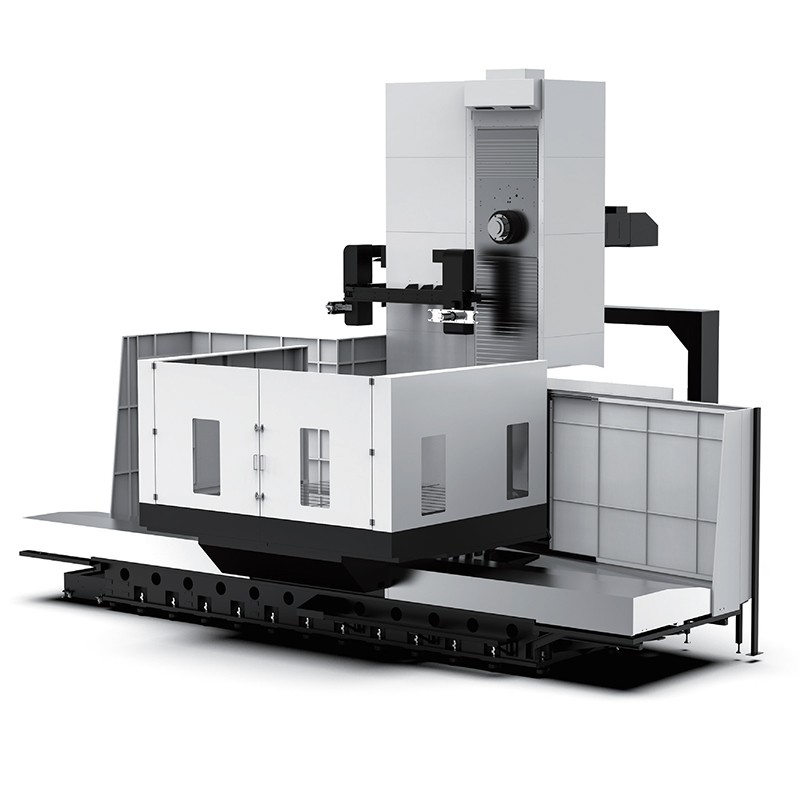
Horizontal Machining Center
Typical Applications of Horizontal Boring Mills
If your production involves large components, deep internal features, or heavy-duty machining, a horizontal boring mill becomes a practical solution across multiple industries.
Energy and Power Equipment
In this industry, you often deal with large, high-value components that require both strength and precision. A horizontal boring mill allows you to machine parts such as turbine housings, generator bases, and valve bodies with stable accuracy.
You can handle heavy materials and maintain alignment in critical areas, which is essential for performance and reliability.
Heavy Machinery Manufacturing
When producing machine frames, gearboxes, and structural components, size and rigidity are key challenges. A horizontal boring mill gives you the ability to process large parts in fewer setups.
This helps you maintain dimensional accuracy while improving efficiency in heavy-duty machining operations.

Shipbuilding Industry
Shipbuilding requires machining large structural parts that are difficult to move and position. With a horizontal boring mill, you can machine engine blocks, large plates, and connection structures more efficiently.
You reduce handling time and improve machining stability, especially when working with oversized components.
Aerospace and Defense
In aerospace applications, large structural components often require precise boring and multi-face machining. A horizontal boring mill allows you to maintain accuracy across complex geometries.
You can handle critical parts where alignment and precision directly impact safety and performance.
Mining and Metallurgy
Equipment used in mining and metallurgy is typically large, heavy, and exposed to harsh conditions. Components like equipment housings and support structures require durable machining.
A horizontal boring mill provides the rigidity and cutting capability needed to process these parts reliably.
How to Choose the Right Horizontal Boring Mill
Choosing the right machine is not about getting the most advanced model-it's about matching the machine to your actual production needs. If you make the wrong choice, you may face low efficiency, accuracy issues, or unnecessary costs.
Workpiece Size and Weight
Start with the basics-your part size and weight.
You need to make sure the machine can handle:
The maximum dimensions of your workpiece
The total weight on the table or floor plate
If your parts are oversized or extremely heavy, a floor type boring mill is usually a better option. Choosing a machine that is too small will limit your capability and increase setup difficulty.
Required Accuracy and Tolerance
Not all applications require the same level of precision.
If your work involves:
Deep hole machining
High alignment requirements
Tight tolerances
You should focus on machines with better spindle accuracy, stable structure, and optional features like linear scales.
Machine Type and Configuration
Different configurations are designed for different applications.
You need to consider:
Table type vs floor type
Spindle size and extension capability
Travel range (X, Y, Z axes)
Choosing the right configuration ensures that your machine fits your machining tasks without over-investing in unnecessary features.
Production Efficiency and Automation
If you want to improve productivity, look beyond basic machining capability.
You can consider:
Automatic tool changers
CNC system performance
Rotary tables for multi-face machining
These features help you reduce manual work and shorten machining cycles, especially in repetitive or complex operations.
Factory Capability and Support
The machine itself is only part of the solution. The supplier's capability is just as important.
You should evaluate:
Manufacturing experience
Quality control process
Technical support and service response
A reliable supplier helps you avoid downtime and ensures long-term performance.
Choosing the right horizontal boring mill means aligning the machine with your part size, accuracy requirements, and production goals. When these factors match, you'll get better efficiency, more stable machining, and a stronger return on your investment.
FAQs
What is a horizontal boring mill mainly used for?
A horizontal boring mill is mainly used for machining large, heavy, and complex parts, especially when you need deep hole boring, precise alignment, or multi-face machining. It's commonly used when standard machines can't provide enough rigidity or reach.
What is the difference between boring and milling?
Boring is used to enlarge or finish internal holes with high precision, especially deep or aligned holes. Milling focuses on cutting external surfaces, slots, and contours. A horizontal boring mill combines both, but its strength is in internal machining.
Is a horizontal boring mill suitable for small parts?
It's not the ideal choice for small parts. If your workpieces are small or require high-speed batch production, a horizontal machining center will give you better efficiency and lower cost.
How accurate is a horizontal boring mill?
A horizontal boring mill can achieve high precision in deep hole machining and alignment, especially on large parts. Its rigid structure and extendable spindle help maintain stability where other machines may struggle.
What industries benefit the most from horizontal boring mills?
Industries that handle large and heavy components benefit the most, such as:
Energy and power equipment
Heavy machinery manufacturing
Shipbuilding
Mining and metallurgy
These applications require both size capability and machining stability.
How do you choose between a horizontal boring mill and a horizontal machining center?
If your parts are large, heavy, or require deep hole precision, a horizontal boring mill is the better choice. If your focus is on smaller parts, high-speed machining, and batch production, a horizontal machining center will be more efficient.
Conclusion
If you're machining large or heavy parts, choosing the wrong equipment will cost you time, accuracy, and efficiency. A horizontal boring mill gives you the stability, deep machining capability, and multi-face processing you need to handle demanding jobs with fewer setups and more reliable results.
The real advantage comes from matching the machine to your application. When your production involves oversized components or precision-critical boring, the right setup can significantly improve both productivity and part quality-if you're looking to optimize your machining solution, you can always reach out to GreatCNC to explore a configuration that fits your exact requirements.
