



How do you choose the right CNC machine for your customer's mold-making projects? Different mold sizes, materials, and machining processes require different machine capabilities. The wrong choice can lead to poor accuracy, low efficiency, and higher costs.
This guide explains which CNC machines are suitable for different molds, what specifications matter most, and how to match machine configurations to machining requirements. It also helps CNC machine dealers evaluate options and avoid costly selection mistakes.
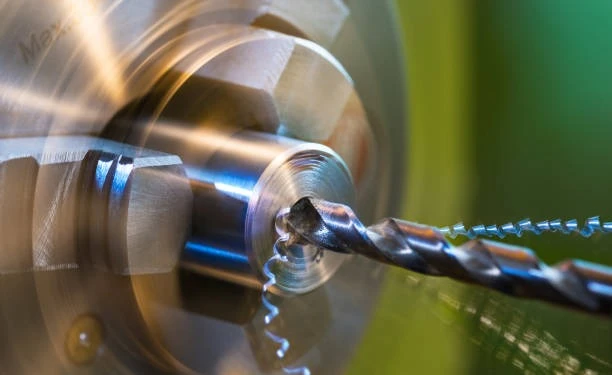
Understand Your Customer's Mold-Making Requirements
Before recommending a CNC machine, you need to understand what your customer plans to machine. Mold size, material, accuracy, and production needs directly affect machine selection.
Ask your customer for mold drawings, material specifications, and machining requirements before requesting a quotation. This helps you narrow down suitable CNC machines and avoid recommending unnecessary configurations.
|
Requirement |
What to Check |
Why It Matters |
|
Mold Type |
Injection molds, stamping dies, die-casting molds |
Helps determine the suitable machine type |
|
Mold Size & Weight |
Maximum dimensions and workpiece weight |
Determines machine travel and table capacity |
|
Workpiece Material |
Aluminum, tool steel, hardened steel |
Affects spindle torque, rigidity, and tooling |
|
Machining Process |
Roughing, finishing, deep cavity machining |
Determines spindle and axis requirements |
|
Accuracy |
Dimensional tolerances and surface finish |
Helps evaluate machine precision and stability |
|
Production Needs |
Mold complexity, workload, production volume |
Affects productivity and automation requirements |
Which CNC Machine Types Are Best for Mold Making?
The best CNC machine for mold making depends on the mold's size, complexity, and machining requirements. As a machine dealer, you should match each machine type to your customer's actual application rather than recommend the most expensive configuration.
Here is a comparison of four common CNC machines used in mold and die manufacturing.
|
CNC Machine Type |
Best Applications |
Key Advantages |
|
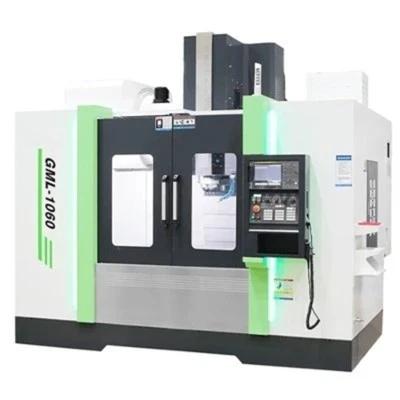
Vertical Machining Center (VMC) |
Small to medium injection molds, mold plates, and cavities |
Flexible machining, easy setup, and cost-effective operation |
|
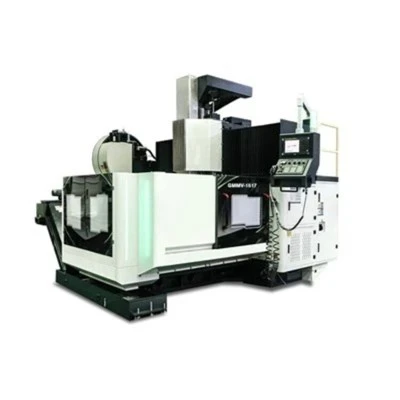
Gantry Machining Center |
Large stamping dies, automotive molds, and heavy mold bases |
Large working area, high load capacity, and strong structural rigidity |
|
5-Axis Machining Center |
Complex mold cavities, curved surfaces, and precision molds |
Better tool access, fewer setups, and improved machining flexibility |
|
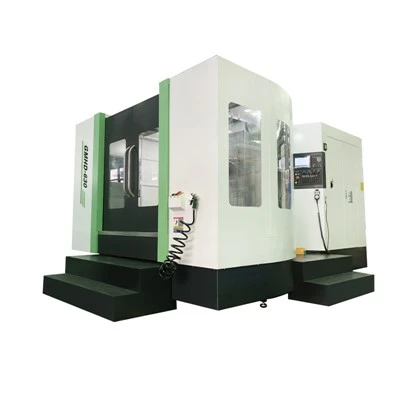
Horizontal Machining Center (HMC) |
Mold bases and components requiring multi-side machining |
Efficient multi-face machining, chip evacuation, and automation options |
How Should You Choose?
- For small and medium molds: A VMC is often the most practical choice for general mold machining.
- For large and heavy molds: A gantry machining center provides the workspace and load capacity needed.
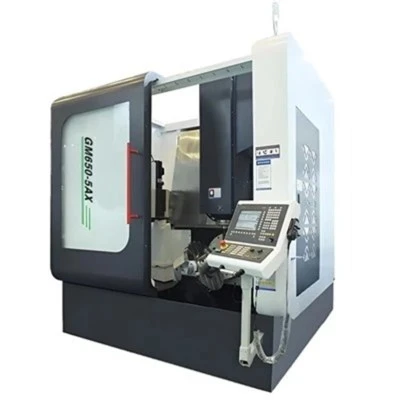
- For complex mold geometries: A 5-axis machining center can reduce setups and improve tool accessibility.
- For multi-side mold components: An HMC can improve machining efficiency and reduce manual repositioning.
|
|
|
|
|
|
Key CNC Machine Specifications for Mold and Die Work
The best CNC machine is not the one with the highest specifications. It is the one that meets your customer's mold size, machining process, accuracy, and productivity requirements without unnecessary costs. Focus on these four factors when comparing CNC machines for your customers.
1. Machine Travel and Table Capacity
Check the mold's maximum dimensions and weight before selecting a machine.
- X/Y/Z Travel: Must accommodate the mold, fixtures, and required tool movements.
- Table Load Capacity: Must safely support the combined weight of the mold and fixtures.
- Z-Axis Clearance: Must provide enough space for long tools and deep cavity machining.
Selection Tip: Allow sufficient clearance for fixtures and tool access instead of matching machine travel exactly to the mold dimensions.
2. Spindle Speed and Torque
Different mold machining operations require different spindle characteristics.
- High Spindle Speed: Suitable for small cutting tools, fine details, and surface finishing.
- High Spindle Torque: Important for rough machining large molds and cutting tough materials.
- Spindle Power: Should support the required cutting conditions without overloading the spindle.
Selection Tip: For customers performing both roughing and finishing, compare spindle power and torque curves rather than focusing only on maximum RPM.
3. Machine Rigidity and Thermal Stability
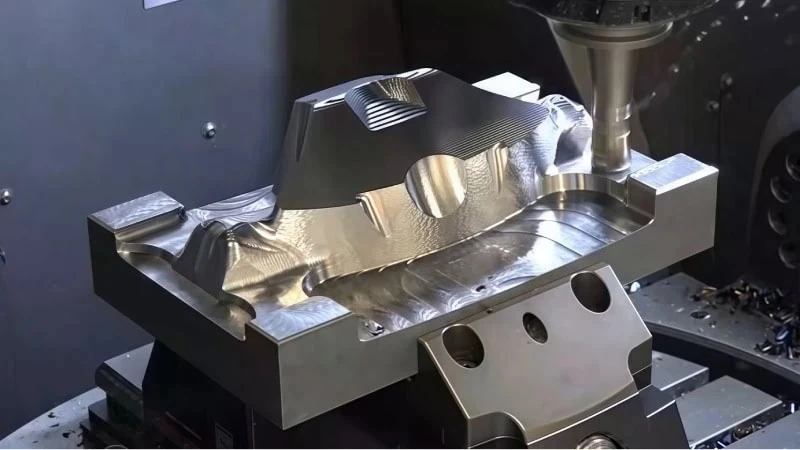
Mold machining often involves long cutting cycles, especially when working with hardened steel or complex cavities.
- Structural Rigidity: Helps reduce vibration during heavy cutting.
- Guideway and Machine Structure: Influence cutting stability and load-handling capability.
- Thermal Stability: Helps maintain consistent accuracy during extended machining operations.
Selection Tip: For large steel molds, prioritize rigidity and stability over high spindle speed alone.
4. Accuracy and Surface Finish
Mold components often require tight tolerances and smooth surfaces to reduce additional finishing work.
- Positioning Accuracy: Affects the machine's ability to reach programmed positions.
- Repeatability: Helps maintain consistent results across repeated movements.
- Surface Finish: Depends on machine stability, spindle performance, tooling, and cutting conditions.
Match the CNC Machine to the Mold Machining Process
Different stages of mold machining require different cutting capabilities. As a CNC machine dealer, you should identify your customer's main machining operations before recommending a machine configuration.
|
Machining Process |
Main Requirements |
Machine Selection Focus |
|
Rough Machining |
Remove large amounts of material efficiently |
High spindle torque, power, and machine rigidity |
|
Semi-Finishing |
Remove remaining stock while maintaining consistent geometry |
Stable feed rates, cutting stability, and accuracy |
|
Finish Machining |
Achieve tight tolerances and smooth mold surfaces |
Spindle performance, positioning accuracy, and thermal stability |
|
Deep Cavity Machining |
Reach deep or narrow mold features without interference |
Z-axis clearance, tool accessibility, and suitable spindle configuration |
What Should You Recommend?
Ask which machining process takes the most time in your customer's workshop. This helps you recommend a machine that improves actual productivity.
If your customer handles both roughing and finishing on one machine, prioritize a balanced combination of spindle torque, speed, rigidity, and accuracy.
For large molds with heavy roughing requirements, consider a rigid vertical machining center or gantry machining center. For complex cavities and precision finishing, a high-speed VMC or 5-axis machining center may be more suitable.
How to Recommend the Right CNC Machine to Your Customers
Recommending a CNC machine involves more than comparing specifications and prices. As a machine dealer, you need to confirm that the machine can handle your customer's actual mold-making tasks.
Step 1: Review the Customer's Mold Drawings
Ask your customer for mold drawings, material details, and machining requirements. Pay attention to workpiece dimensions, weight, tolerances, and complex features that may require special machining capabilities.
Step 2: Compare Suitable Machine Configurations
Shortlist two or three machines that meet the basic requirements. Compare their working range, spindle performance, rigidity, and optional features.
Avoid recommending expensive configurations unless they offer clear benefits in machining efficiency or accuracy.
Step 3: Verify Machine Performance Before Quoting
Before submitting a quotation, confirm the machine's technical capabilities with the supplier.
- Accuracy Reports: Check positioning accuracy and repeatability.
- Machining Tests: Request sample cutting results when needed.
- Machine Configuration: Verify spindle options, CNC controls, and required accessories.
- After-Sales Support: Confirm installation, training, spare parts, and warranty terms.
How GreatCNC Supports Mold-Making Machine Dealers
Finding the right CNC machine for your customer's mold-making project can be challenging, especially when comparing different manufacturers, machine configurations, and technical specifications.
GreatCNC helps machine dealers simplify the selection and purchasing process through practical support.
- Machine Selection: Compare VMCs, gantry machines, and 5-axis machining centers based on your customer's mold size, material, and machining requirements.
- Technical Consultation: Get help with machine specifications, spindle configurations, and machining capabilities before you place an order.
- Supplier Coordination: Connect with suitable machine manufacturers and clarify technical requirements, quotations, and delivery details.
- After-Sales Coordination: Receive assistance communicating with suppliers about installation, technical issues, and spare parts.
Share your customer's mold drawings and machining requirements with GreatCNC. We'll help you evaluate suitable machine options and find a solution that matches their needs and budget.
FAQs About CNC Machines for Mold Making
What type of CNC machine is best for mold making?
+
-
The best CNC machine depends on the mold's size, complexity, and machining requirements. VMCs are suitable for most small and medium molds, while gantry machining centers handle large and heavy molds. For complex cavities and curved surfaces, 5-axis machines offer better tool accessibility and fewer setups.
Is a 3-axis CNC machine suitable for mold making?
+
-
Yes, a 3-axis CNC machine can handle many mold-making applications, including mold plates, cavities, and standard 3D surfaces. However, complex undercuts and hard-to-reach features may require additional setups, 5-axis machining, or other processes such as EDM.
What spindle speed is suitable for mold machining?
+
-
Spindle speed depends on the mold material, cutting tool diameter, and machining process. High-speed spindles are generally better for small-tool finishing, while high-torque spindles suit heavy roughing. Dealers should evaluate the spindle's power and torque range instead of focusing only on maximum RPM.
Can one CNC machine handle both roughing and finishing of molds?
+
-
Yes, one CNC machine can perform both operations if it provides sufficient torque, rigidity, accuracy, and spindle speed. However, for high production workloads, using separate machines for roughing and finishing may improve productivity and reduce machine downtime.
What information should CNC machine dealers collect before requesting a quotation?
+
-
Dealers should collect the customer's mold drawings, workpiece dimensions, weight, material, tolerance requirements, and machining processes. You should also confirm the preferred CNC controller, production volume, budget, and delivery expectations. Complete information helps suppliers recommend suitable machines and provide more accurate quotations.
Conclusion
Choosing the right CNC machine for mold making starts with understanding your customer's workpiece size, material, machining process, and accuracy requirements. By comparing machine types and key specifications, you can recommend a solution that balances performance, productivity, and cost.
Need help selecting a CNC machine for your customer's mold-making project? Contact GreatCNC with your machining requirements. We'll help you compare suitable machine options and find the right solution for your customers.
