




Choosing between a horizontal machining center (HMC) and a vertical machining center (VMC) is not just about machine price. The right choice depends on the parts you make, your production volume, and how often you need to change setups.
A vertical machining center (VMC) is often a practical choice for small batches, frequent job changes, and parts that need machining from one main direction. An HMC is generally better suited for multi-sided machining and repeat production, especially when reducing setup time is a priority.
So, which one makes more sense for your workshop? This guide compares HMC vs. VMC in terms of machining capabilities, productivity, costs, and applications to help you choose a machine that fits your production needs.
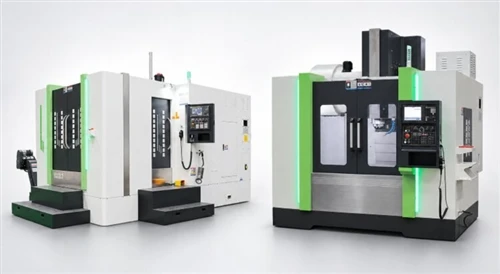
HMC vs. VMC: Key Differences at a Glance
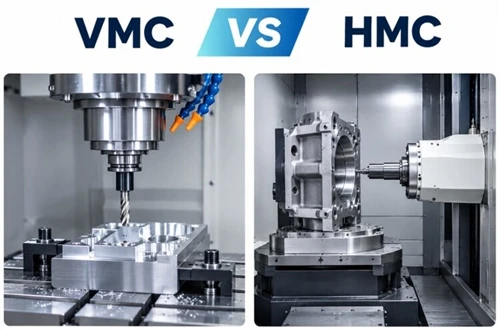
The main difference between an HMC and a VMC is the spindle orientation. A horizontal machining center (HMC) has a horizontally mounted spindle, while a vertical machining center (VMC) has a vertically mounted spindle. This difference affects how you position workpieces, remove chips, and machine multiple surfaces.
|
Feature |
HMC |
VMC |
|
Spindle Orientation |
Horizontal |
Vertical |
|
Workpiece Access |
Multiple sides with a rotary table |
Mainly top-facing surfaces |
|
Multi-Side Machining |
Often requires fewer setups |
May require repositioning |
|
Chip Removal |
Gravity helps chips fall away |
Chips can collect around the workpiece |
|
Production Efficiency |
Well-suited for repeat production |
Flexible for varied jobs |
|
Automation |
Often supports pallet changers |
Automation options also available |
|
Initial Cost |
Generally higher |
Generally lower |
|
Typical Applications |
Gearbox housings, engine blocks, valve bodies |
Plates, molds, brackets, general parts |
An HMC can reduce repositioning when you need to machine several sides of a part. A VMC often provides easier access for setup and inspection, making it practical for workshops that handle different jobs throughout the day.
Neither machine is automatically more accurate or productive. Actual performance depends on the machine's specifications, workpiece design, tooling, and production setup.
5 Key Factors to Consider When Choosing HMC vs. VMC
Choosing between an HMC and a VMC depends on more than spindle orientation. Consider your workpieces, machining process, production volume, and operating costs. The following five factors can help you decide which machine fits your workshop.
1. Workpiece Size, Shape, and Machining Requirements
Start with the parts you need to manufacture. Their shape and the number of surfaces requiring machining can influence your choice.
A VMC is often suitable for flat plates, brackets, and parts that are mainly machined from above. An HMC is useful for box-shaped parts, such as gearbox housings and valve bodies, that require machining from several directions.
However, machine travel, table load capacity, and fixture clearance are just as important as spindle orientation, especially for large or heavy workpieces.
2. Setup Time and Multi-Side Machining
Every time you remove, rotate, and reclamp a workpiece, you add setup time and introduce another opportunity for positioning errors.
An HMC equipped with a rotary table can machine several sides of a part in one setup. This helps reduce manual repositioning during repeated production runs.
A standard 3-axis VMC may require additional setups for the same part. However, a VMC with a fourth-axis rotary table can also perform multi-side machining.
If your parts require frequent repositioning, compare the total setup time rather than machining speed alone.
3. Chip Removal and Cutting Performance
Chip removal affects cutting stability, tool life, and surface quality, especially during deep-pocket machining or heavy material removal.
On an HMC, gravity helps chips fall away from the cutting area. This can reduce chip buildup around the tool and workpiece.
On a VMC, chips may collect inside pockets or on horizontal surfaces. Proper coolant delivery, chip conveyors, and machining strategies can help manage this problem.
For heavy cutting, also compare spindle torque, machine rigidity, and tool capacity. Spindle orientation alone does not determine cutting performance.
4. Production Volume and Automation
Your production volume can have a major impact on which machine delivers better efficiency.
HMCs are often used for medium- to high-volume production. Models equipped with pallet changers allow operators to prepare the next workpiece while the machine processes another part, reducing non-cutting time.
VMCs offer flexibility for workshops handling different part designs and frequent job changes. They can also support automatic tool changers, robotic loading, and pallet systems.
For continuous production, compare cycle times, loading time, and machine utilization before making a decision.
5. Machine Cost and Operating Expenses
A VMC generally requires a lower initial investment than a comparable HMC. It can be a practical choice when your production needs are relatively simple or your budget is limited.
An HMC often costs more because of its machine structure, rotary table, and optional automation systems. However, fewer setups and better machine utilization may help reduce production costs over time.
You should also account for fixtures, tooling, maintenance, floor space, and operator labor.
The lowest purchase price does not always mean the lowest cost per part. Your expected production volume and operating requirements should guide the investment.
When Should You Choose an HMC?
A horizontal machining center (HMC) is worth considering when your parts require machining on multiple sides or your production involves repeated machining operations. It is especially useful when you want to reduce manual handling and maintain a consistent production process.

Parts That Need Machining on Multiple Sides
If you manufacture gearbox housings, valve bodies, or engine blocks, you may need to machine several faces, holes, and mounting surfaces.
An HMC with a rotary table allows you to access different sides of these parts without removing them from the fixture. This can simplify machining operations and help maintain consistent positioning between features.
For example, when machining a gearbox housing, you can machine several accessible faces and bore features in one setup, provided the fixture and machine travel allow it.
Repeated Production Runs and Automated Machining
An HMC can be a good investment when you produce the same parts in medium or large batches.
For example, if your factory manufactures hundreds of similar housings each month, an HMC with a pallet changer can allow you to load the next workpiece while another is being machined.
This reduces machine idle time and makes production scheduling easier.
An HMC is especially worth considering when multi-side machining, repeat orders, and high machine utilization are important to your operation.
When Is a VMC the Better Choice?
A vertical machining center (VMC) is often the better choice when you need flexible machining, frequent job changes, and a lower initial investment. It is especially practical for workshops producing different parts in small batches or handling custom machining orders.

Small-Batch and High-Mix Production
If your workshop regularly switches between different part designs, a VMC can make daily operations easier.
For example, a job shop producing aluminum brackets, steel plates, and custom machine components may need to change fixtures and machining programs several times a day. A VMC provides convenient access to the worktable, making part loading, setup, and inspection more straightforward.
This flexibility makes VMCs a practical choice for prototype development, custom parts, and low-volume production.
Simple Parts and Limited Floor Space
For parts that mainly require top-surface milling, drilling, or pocket machining, a standard 3-axis VMC can often complete the job without the additional equipment commonly associated with HMC setups.
VMCs also generally have a smaller footprint and lower purchase cost than comparable HMCs, making them attractive to workshops with limited space or budgets.
However, a VMC is not limited to simple machining. With suitable tooling and rotary-axis options, it can also handle complex parts.
Choose a VMC when flexibility, easy setup, and cost control matter more than high-volume multi-side machining.
How to Choose the Right Machining Center
Once you understand the differences between an HMC and a VMC, the next step is to match the machine to your actual production needs. Instead of choosing based on machine type alone, use the following three steps to narrow down your options.
Step 1. Evaluate Your Workpiece and Production Needs
Start with the parts you plan to manufacture. Check their material, dimensions, weight, and the number of surfaces that require machining.
You should also consider your expected production volume and how frequently your jobs change.
For example, if you mainly produce flat aluminum components in small batches, a VMC may be sufficient. If you manufacture box-shaped steel parts that require machining on several sides, an HMC may be more practical.
Step 2. Compare Machine Specifications
Once you identify a suitable machine type, compare specific models based on your machining requirements.
Pay attention to these specifications:
- X/Y/Z Travel: Make sure the machine can accommodate your workpiece and required tool movements.
- Table Size and Load Capacity: Confirm the table and fixture can safely support your workpiece.
- Spindle Speed and Torque: Match spindle performance to your materials and cutting operations.
- Tool Magazine Capacity: Consider how many tools your machining process requires.
- Positioning Accuracy and Repeatability: Compare verified specifications against your tolerance requirements.
- Rotary Table and Pallet Options: Evaluate whether additional axes or pallet changers can improve your workflow.
Step 3. Review Your Budget and Future Production Plans
Consider more than the initial purchase price. Include tooling, fixtures, installation, maintenance, and expected operating costs.
Also consider how your production may change over the next few years. If you expect larger orders or more complex parts, choosing a machine with suitable expansion options may reduce the need for an early replacement.
Before making a final decision, compare actual machine specifications and, where possible, request a machining test using your own workpiece.
You can explore GreatCNC's horizontal and vertical machining centers to find models that match your production requirements.
FAQs About HMC vs. VMC
1. Is an HMC more accurate than a VMC?
+
-
Not necessarily. Both HMCs and VMCs can achieve high machining accuracy. Actual accuracy depends on machine rigidity, thermal stability, positioning performance, tooling, and setup conditions. An HMC may help maintain consistent positioning when machining multiple sides in one setup, but it is not automatically more accurate than a VMC.
2. Can a VMC perform multi-side machining?
+
-
Yes. A VMC equipped with a fourth-axis rotary table or suitable indexing equipment can machine multiple sides of a workpiece without repeated manual repositioning. However, the available tool access, fixture design, and machine travel determine which surfaces can be machined in one setup.
3. Is an HMC worth the higher investment?
+
-
An HMC can be worth the investment if you regularly produce parts that require multi-side machining or run large production batches. Reduced setup time, pallet automation, and higher machine utilization may help offset its higher initial cost. For smaller batches or simpler parts, a VMC may be more economical.
4. Which machine is better for heavy-duty cutting?
+
-
Both HMCs and VMCs can handle heavy-duty cutting when properly designed. HMCs are commonly used for heavy machining of large housings and castings, but spindle torque, machine rigidity, guideway design, and tool capacity matter more than spindle orientation alone. Compare the specifications of individual models before deciding.
5. Can an HMC replace a VMC?
+
-
An HMC can perform many operations typically done on a VMC, including milling, drilling, and boring. However, it may not be the most practical replacement for every application. VMCs often provide easier access for certain setups and may be more cost-effective for smaller, frequently changing jobs. The right choice depends on your workpieces and production requirements.
Conclusion
Choosing between an HMC and a VMC comes down to your workpieces, production volume, and budget. A VMC is often the better choice for small batches, frequent job changes, and parts that mainly require machining from above. An HMC can offer greater efficiency for multi-side machining and repeated production, especially when automation is involved.
Before buying, compare machine specifications, setup requirements, and long-term operating costs rather than focusing on purchase price alone.
If you're unsure which machining center fits your needs, GreatCNC can help you evaluate suitable models from its range of CNC machining centers based on your workpiece drawings, machining requirements, and production goals.
