


How do end mills actually work in CNC machining, and why do some tools last longer while others fail quickly? At first glance, an end mill simply spins and removes material. Simple, right? Not quite! In reality, successful machining depends on a complex balance of cutting forces, heat, chip evacuation, and tool geometry.
Whether you're a CNC operator, engineer, or buyer sourcing cutting tools, understanding how end mills work can help you avoid costly mistakes, improve machining efficiency, and choose the right tool for your application. In this guide, we'll break down not just the basics but the real factors that affect performance in the workshop.
What is an End Mill in CNC Machining?
End mills may bear a striking resemblance to drill bits; however, once you understand their structure and their specific role in the cutting process, you will be able to select the appropriate tool for your CNC machining tasks with much greater confidence.
End Mills vs. Drill Bits: A Comparison
If you are new to the field of CNC machining, it is easy to confuse end mills with drill bits. Drill bits are primarily designed to create holes by cutting vertically downward, whereas end mills offer a much wider range of functionality. Depending on their design, end mills can be used for side milling, slotting, contouring, pocketing, and, in some cases, vertical plunging. Simply put, drill bits are designed primarily to "drill" holes, while end mills are engineered specifically for "milling" operations.
Key Components of an End Mill
To understand how an end mill works, you must first familiarize yourself with its main components. The cutting edges remove material from the workpiece; the flutes evacuate chips generated during cutting; and the shank secures the tool in the machine tool holder. Furthermore, you will notice that end mills come in a variety of tip styles, such as flat-end, ball-end, and corner-radius, each tailored to suit specific machining tasks.

How Do End Mills Work in CNC Machining?
To understand machining results, you first need to know how an end mill cuts, moves, and removes material inside a CNC process.
Rotation And Feed Motion
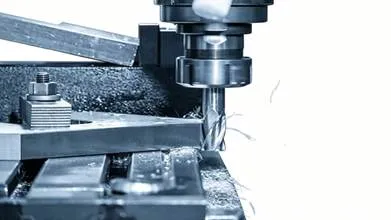
An end mill works by combining spindle rotation with controlled feed motion. The spindle spins the tool at high speed to create the cutting action, while the CNC machine moves it along the programmed toolpath. As the tool travels through the X, Y, and Z axes, it stays in controlled contact with the workpiece. This combination of rotation and movement allows you to machine slots, pockets, edges, and complex shapes with precision.

Side Cutting Vs End Cutting
An end mill can cut with both its side edges and its bottom edges. The side edges handle peripheral cutting, which is useful for profiling, slotting, and wall machining. The bottom edges handle face cutting and help with plunging or flat-bottom milling. This gives you more flexibility than a standard drill bit.
How Material Is Removed
The cutting edges shear material into chips as the tool moves through the workpiece. Chip thickness and chip load affect cutting stability, heat, and tool life. If chips form cleanly and leave the cutting zone smoothly, you can achieve better surface finish and more reliable machining.
Types of End Mills and Their Applications
Different types of end mills are designed for specific machining tasks, so understanding their applications helps you choose the most effective tool.
Square End Mills
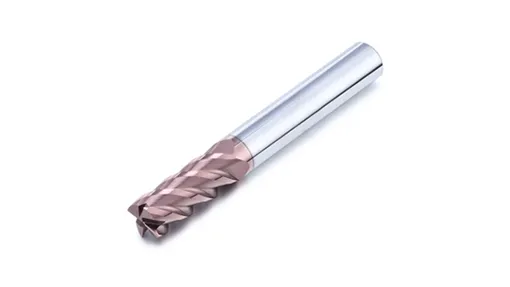
Square end mills have sharp corners and are widely used for general-purpose machining. You can use them for slotting, side milling, and creating flat surfaces. They are a reliable choice when you need clean edges and precise 90-degree corners.
Corner Radius End Mills
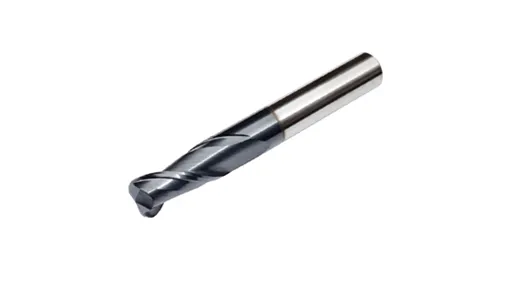
Corner radius end mills have rounded edges that make them stronger than sharp-corner tools. If you are doing heavier cutting or want to reduce the risk of chipping, this type can give you better durability and longer tool life.
Roughing End Mills
Roughing end mills are designed for fast material removal. Their serrated cutting edges break chips into smaller pieces, helping you reduce cutting load and improve efficiency during roughing operations.
Square End Mills
Corner Radius End Mills

Roughing End Mills
What Happens During the Cutting Process
To get stable machining results, you need to understand what really happens at the cutting edge during the process.
Heat Generation And Friction
When you cut material, heat is generated from the friction between the tool and the workpiece. If heat builds up too quickly, it can reduce tool life and affect the surface quality of your part. You should always pay attention to cooling, cutting speed, and material type to control heat effectively.
Cutting Forces And Tool Deflection
During machining, the tool experiences both radial and axial forces. These forces can cause slight bending, especially if the tool is long or the setup is not rigid. This may lead to vibration, poor accuracy, or even tool breakage if not managed properly.
Chip Evacuation And Its Importance
Flutes are designed to remove chips from the cutting area. If chips are not cleared efficiently, they can be recut, increasing heat and wear. Good chip evacuation helps you maintain stable cutting and longer tool life.
Tool Entry Methods
How you enter the material matters. Direct plunging creates sudden stress, while ramping or helical entry allows a smoother load. Using the right entry method helps you reduce shock and protect the tool.
Why Different End Mills Perform Differently
Even if two end mills look similar, their performance can vary greatly depending on design, material, and coating.
Flute Count And Chip Space
Flute count directly affects how the tool cuts and clears chips. A 2-flute end mill gives you larger chip space, making it ideal for soft materials like aluminum. A 4-flute or multi-flute tool offers higher strength and better surface finish, but less room for chip evacuation. You need to balance strength and chip flow based on your application.
Helix Angle And Cutting Smoothness
The helix angle influences cutting stability. A higher helix angle helps reduce cutting forces and improves surface finish, while a lower helix provides more strength. Choosing the right angle helps you control vibration and achieve better results.
Tool Material
End mills are commonly made from HSS or carbide. Carbide offers higher hardness and heat resistance, while HSS is more cost-effective for lighter work.
Coatings And Tool Life
Coatings like TiAlN, TiN, and DLC improve wear resistance and heat protection. If you are working at high speeds or with hard materials, the right coating can significantly extend tool life.
Common CNC Milling Operations Using End Mills
End mills are widely used across different CNC operations, and understanding each application helps you choose the right tool and strategy for better results.
Slot Milling
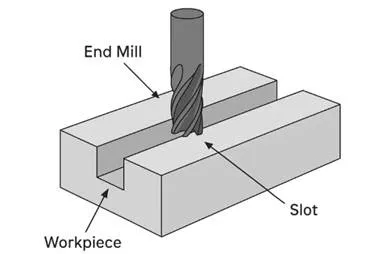
Slot milling involves cutting a full-width groove into the material. This operation puts a high load on the tool, so you need to pay attention to chip evacuation and cutting parameters to avoid tool breakage.
Pocket Milling
Pocket milling is used to remove material inside a closed area. You can use it to create cavities or internal shapes, and smooth toolpaths will help you achieve better efficiency and finish.
Profile And Contour Milling
This operation focuses on shaping the outer edges or complex contours of a part. It requires good tool stability to maintain accuracy and surface quality.
3d Surface Machining
For complex surfaces like molds, you can use ball nose end mills to achieve smooth finishes and precise details in 3D machining.
Why End Mills Fail
End mills usually fail not because the tool is poor, but because the cutting conditions are not matched to the job.
Poor Chip Evacuation
If chips cannot leave the cutting zone smoothly, they may be cut again and again. This chip recutting creates extra heat, increases tool wear, and can quickly damage the cutting edge. You should always make sure the chip removal is clean and stable.

Incorrect Cutting Parameters
A mismatch between feed rate and spindle speed can overload the tool or cause inefficient cutting. If the settings are too aggressive or too light, tool life and surface quality will both suffer.
Excessive Tool Engagement
Cuts that are too deep or too wide increase cutting force and stress on the tool. This often leads to breakage, poor finish, or unstable machining.
Improper Tool Entry
Direct plunging can create sudden shock loading, especially if the tool is not designed for it.
Tool Overhang And Instability
If the tool extends too far out, vibration and chatter become more likely, reducing accuracy and shortening tool life.
How to Choose the Right End Mill for Your Application
Choosing the right end mill is not about finding one "best "tool, but about matching the tool to your actual machining conditions.
Based On Material Type
You should start with the workpiece material. Aluminum usually needs fewer flutes and better chip evacuation, while steel or stainless steel often requires stronger geometry and better heat resistance. Different materials place different demands on the tool.
Based On The Machining Operation
The right choice also depends on what you want to do, such as roughing, finishing, slotting, or contour milling. Each operation creates different cutting loads, so the tool design should match the task.
Based On Machine Capability
Your machine matters too. Spindle speed, rigidity, and holder stability all affect how well an end mill performs. A tool that works well on a high-performance CNC machine may not suit a less rigid setup.
Based On Performance Goals
You also need to decide whether you want longer tool life, faster material removal, or better surface finish. Your goal will influence the best tool choice.
Practical Tips to Improve End Mill Performance
Small adjustments in your setup and strategy can significantly improve end mill performance and tool life.
Instead of direct plunging, you should use ramping to reduce the shock on the tool. Keep the tool overhang as short as possible to improve rigidity and minimize vibration. Always match the flute count to your material to balance strength and chip evacuation. Make sure chips are removed efficiently to avoid heat buildup. Avoid excessive cutting depth, and use proper coolant or air blast to maintain stable cutting conditions and extend tool life.
Conclusion
Understanding how end mills work in CNC machining helps you make better decisions in both tool selection and machining strategy. While the cutting process may seem simple, real performance depends on many factors, including tool geometry, chip evacuation, cutting parameters, and machine stability. If you want better surface finish, longer tool life, and more stable machining, you need to match the end mill to your actual material and application.
At GreatCNC Machine, we do more than just discuss tooling. We support end users who buy machine tools and need matching solutions for real production needs. If you are planning a new machining project or looking for the right end mill to work with your CNC machine, you can work with us for more practical and coordinated support.
