


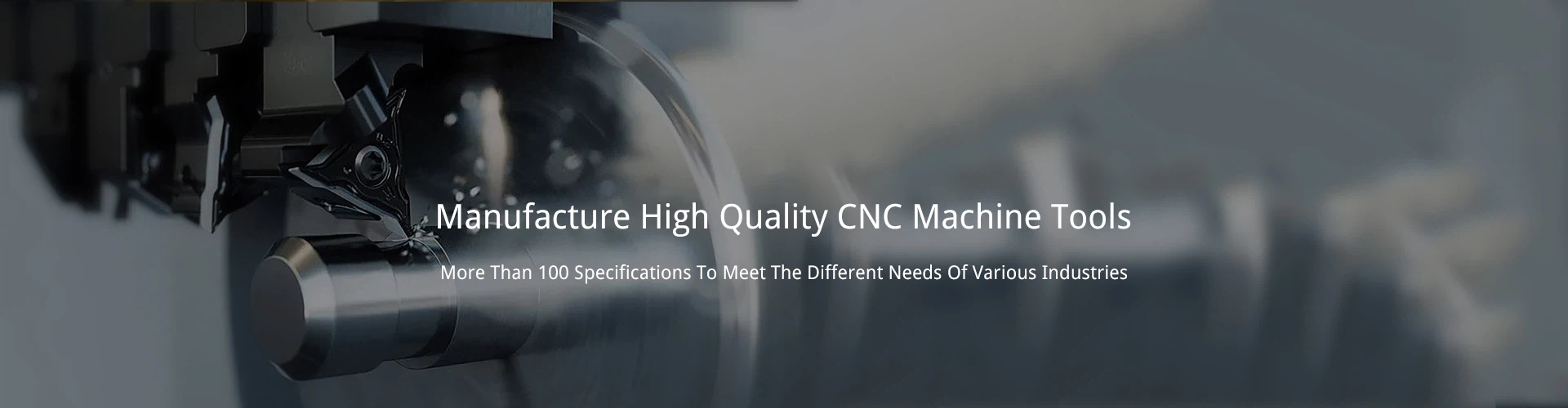
In modern manufacturing, CNC turning and CNC milling are two widely used procedures, famed for the perfection they deliver in manufacturing.
Both CNC milling and CNC turning use computer-controlled equipment to shape and sculpt different raw materials into precise parts, with accuracy that is hardly rivaled by any other process.
While these two machining procedures are great, people often struggle to decide between both two techniques. This post will help you make a well-informed choice between CNC Milling vs CNC Turning procedures. This article covers the features, applications, advantages, disadvantages, and every important aspect that'll help you choose the best CNC procedure for your manufacturing projects. Let's delve in!
What is CNC Turning?
CNC turning is a manufacturing process that rotates its part as the cutting tool follows an existing axis to cut a material and form a shape or object.
While the workpiece is rotating, the cutting tool will be removing excess pieces to create a perfect shape.
The cutting tool used for CNC turning is designed to pass through several axes, so that it can create different shapes, whether simple or complex, with ease and accuracy. The tool can also shape materials like plastic, metal, and wood for mass manufacturing or customized manufacturing processes.
CNC turning is carried out on a CNC lathe machine, which ensures that the repeated motions are accurate. The CNC turning process also follows programmed instructions, ensuring efficient production processes free of human error.
Thanks to modern developments in technology, newer CNC lathes have multi-axis capabilities, allowing for the creation of more complex designs than ever before, while maintaining quality and consistency.

Components and Processes of CNC Turning
Components of a CNC Turning Machine
A CNC turning machine has a lot of important components that play important roles in the achievement of precise cuts. Here are some of such components.
Bed and Carriage: The bed and carriage work together in cutting, as the bed stabilizes the material and the carriage rotates the cutter.
Control Panel: The control panel situated in the CNC turner is the brain where programs are imputed to ensure adjustments to the turner.
Chuck: The chuck is a component that holds the workpiece in the right position.
Cutting Tool: The cutting tool is responsible for removing and refining the material while moving it around several axes.
Spindle: The spindle rotates the workpiece for precise cutting.
Tool Turret: The tool turret ensures a smooth switch from one cutting tool to the other.
CNC Turning Operation Process
CNC turning can be used for several operation processes, delivering high precision, including:
Boring: Boring involves using a tool to enlarge existing holes in a material.
Drilling: This process is carried out using drill bits to create holes in the axis of the workpiece.
Facing: The process entails the creation of flat surfaces by removing material from the end of the workpiece.
Grooving: In this operation, grooves are created on the surface of a workpiece with the use of a cutting tool.
Knurling: This is the process of creating patterns on a workpiece's surface.
Threading: Threading is a process used to cut the internal and external threads in a workpiece to support fastening.
Turning: This is removing material following the workpiece's length to form cylindrical shapes.
Advantages of CNC Turning
CNC turning has several advantages in today's manufacturing scene, including:
High Precision
CNC turning method delivers high efficiency and precision, making every finished product stand out.
Quality and Consistency
CNC lathes ensure that quality is top-notch and consistent, even with tight tolerances.
Automation
CNC machining processes are automated, thereby reducing human input and errors.
Versatile Process
The process is versatile and can create complex and simple items while maintaining axial symmetry.
Disadvantages of CNC Turning
CNC turning has some disadvantages and weaknesses, including:
Cost
CNC turning machine costs a lot to set up and to program.
Need for Skill
CNC turning machine needs skilled operators because of its programming and automation
Maintenance
Frequent maintenance is needed, and it can be costly to handle
Tool Wear
When working with hard materials, the tools get worn out, which increases the cost, effort, and time dedicated to the process.
Applications of CNC Turning
CNC turning is applicable in a large number of industries, especially those that manufacture symmetrical or cylindrical components. Such industrial applications include:
Aerospace industry:
Landing gear parts and engine shafts use CNC turning for better precision.
Automotive
CNC turning is used to create bushings, shafts, pistons, and fasteners, with precise diameters and smooth finishes.
Electronics Industry
CNC turning is used to create small connectors and contacts for electrical applications in the electronics industry.
Industrial Equipment
CNC turning is used to produce rollers, gears, pulleys, and other similar industrial equipment for machinery systems.
Medical
CNC turning is used to produce medical equipment like joint and screws, as well as their replacement components.
Oil and Gas
Oil and gas industries use parts created by CNC turning for pipeline fitting, drilling of couplings, and other components exposed to high pressure and other conditions.
What is CNC Milling?
CNC milling is a manufacturing process where milling tools are used to make different shapes and components from existing materials. This process takes place on a CNC mill that has a vertical spindle and a rotating head that carries a cutter that is fed to the workpiece.
When milling happens, the mill holds the workpiece in one place on the machine bed, while the spinning cutting tools make contact with the surface of the workpiece and remove excess materials in a controlled manner until it forms the expected shape.
Modern CNC mills have different configurations, with 3, 4, and 5-axis mills to enable the cutting tool to cut at several angles. With the 5-axis mill, the cutting tool can move in five directions and angles while shaping the workpiece.
A higher number of axes increases the flexibility level, allowing CNC mills to create more custom shapes, components, and details.
Components and Processes of CNC Milling
Components of a CNC Milling Machine
CNC milling machines have several important parts that support smooth operations, as well as the achievement of precisely CNC-milled parts with perfectly accurate details, contours, and shapes. These components include:
Axes: Axes are the things that determine a worktable and a cutting tool's angles of movement. In standard machines, these axes are called Axis X, Y, and Z. However, they can sometimes be tagged axes A and B, especially in more advanced CNC milling machines.
Control Panel: The control panel is the machine's brain, where all the setting and programming is done. You specify the machine process and adjustments at the control panel.

Coolant: The coolant keeps the CNC machine in good condition by reducing heat and friction.
Cutting Tool: Cutting tools such as drills and mills help the CNC machine make shapes out of materials.
Spindle: The spindle is responsible for holding the cutting tool down and also rotating it so that the workpiece can be cut.
Worktable: The worktable is responsible for holding the parts and moving them from one direction to the next based on the way it has been configured.
CNC Milling Operation Process
The operation process of CNC milling is what allows for the creation of features and shapes on a workpiece, creating parts for different industrial purposes. They include:
Boring: Boring is a process commonly used in engineering components to enlarge drilled holes.
Drilling: Drilling operations place holes on an otherwise hole-less surface using drill bits that factor in the exact depth and diameter.
Face Milling: This refers to the creation of smooth surfaces using the workspace.
Peripheral Milling: A cutting tool shapes the outside features of a material by working around the edges.
Slot Milling: Slot milling is done on mechanical parts to create grooves or keyways in a material.
Thread Milling: This entails creating threads that will be used for fastening.
Advantages of CNC Milling
We have established the fact that CNC milling is one of the most applied machine processes across a broad range of industrial manufacturing. Here are some advantages of using this process:
Efficiency and Precision
CNC milling process delivers a high level of efficiency and precision. As a result, it is preferred for handling tolerances when working with tiny workpieces.
Consistency
CNC milling has admirable consistency, in addition to precision, which makes it a great choice for mass manufacturing jobs.
Automation
CNC milling integrates automation, reducing human interference and minimizing errors.
Versatility and Adaptability
CNC milling is a very versatile and adaptable process, making it applicable across several industries and with a wide range of materials.
Disadvantages of CNC Milling
The numerous benefits of CNC milling are not without challenges, which can be seen as disadvantages.
Cost
CNC milling machines and the associated programming cost a fortune, so many manufacturers struggle to afford it.
Need for Skill
CNC milling machines can only be operated and programmed by skilled workers.
Maintenance Concerns
Machine maintenance can also be a lot for manufacturers to handle.
Applications of CNC Milling

CNC milling is applicable in a large number of industries, such as:
Aerospace
CNC milling creates complex parts for the aerospace industry using its multi-axis machining, including engine hosting and airframe parts.
Automotive
CNC milling is used in the automotive industry to produce engine blocks, suspension components, and brackets because of its high precision.
Electronics Manufacturing
CNC milling is also used for electronic processes like the creation of enclosures, PCB housing, and heat sinks.
Medical
CNC milling is used in the medical industry to produce complex surgical equipment and prosthetics.
CNC Milling vs CNC Turning: A Comparison

|
Factors/Features |
CNC Milling |
CNC Turning |
|
Cost |
More expensive compared to turning |
Less expensive compared to milling |
|
Compatibility |
Wide-range material compatibility. |
Compatible with a wide range of materials |
|
Features |
Ideal for undercuts, slots, and pockets. |
Great for grooves, threads, and cylindrical parts. |
|
Material Properties |
Handles challenging materials with more flexibility |
Less efficient at handling ductile materials |
|
Mechanism |
Rotating cutting tool and stationary workpiece. |
Stationary tool, rotating parts, and cutting tool moving along the axial direction |
|
Number of Axis |
3-5 Axis |
2 to 4 Axis |
|
Part Complexity |
Perfect for complex shapes |
Ideal for symmetrical geometries |
|
Productivity |
Varies based on complexities |
Faster when dealing with symmetrical parts |
|
Production Volume |
Great for low to medium production volumes |
Great for large volume and mass production |
|
Surface Finish |
Could require additional finishing |
Doesn't require additional finishing for cylindrical production |
Which Is Better?
Both CNC milling and CNC turning are amazing manufacturing processes, which is why a lot of people struggle to decide which to use. However, to make the decision, it is important to consider your manufacturing requirements.
Here's a pointer:
For components with complex details, geometries, flat surfaces, and pockets, choose CNC milling. It delivers accurate designs, handles multi-axis
However, when dealing with round and cylindrical parts like shafts and fasteners, as well as components that need high accuracy, choose CNC turning.
Summary
So far, we have had a detailed insight into two fundamental machining techniques, CNC milling and CNC turning. These two manufacturing methods boast high efficiency and precision in manufacturing.
However, their processes are different. While CNC turning rotates the workpiece as it is getting shaped by the cutting tool, CNC milling keeps the workpiece in one place and the cutting tool shapes it across several axes.
Also, while CNC turning is perfect for symmetrical designs and cylindrical materials like fasteners and shafts, CNC milling is ideal for complex parts with intricate geometries, contours, and pockets.
As far as pros and cons are concerned, CNC milling has flexibility as an advantage, but is costlier to handle and requires skilled hands. On the other hand, CNC turning is more cost-effective and very efficient for handling simple shapes; it has limited complexity.
In the end, choosing between CNC milling and CNC turning depends completely on the nature of your project. For cylindrical designs, choose turning, and for complex designs, choose milling.
Overall, both methods deliver high-quality manufacturing.