




Why can two CNC lathes with similar specifications have very different quotations? The answer is rarely just the brand. Machine size, spindle performance, turret type, machining functions, automation, and included services can all affect the final cost.
A low quotation may exclude essential options, tooling, shipping, or installation. A higher quotation may include functions your parts do not actually need.
This guide explains what affects CNC lathe prices, what should be included in a complete quotation, and how to compare different machines on the same basis. The goal is to help you choose a CNC lathe that fits your parts and production needs without paying for unnecessary capacity or features.

Why Do CNC Lathe Prices Vary So Much?
Two CNC lathes may look similar but provide very different machining capabilities. The price difference usually comes from what the machine can handle, what operations it can complete, and what is included in the quotation.
A larger turning diameter, longer machining length, or heavier workpiece requires a stronger bed, spindle, and support structure. Adding live tooling, a C-axis, Y-axis, sub-spindle, or automatic loading system also increases the machine's complexity and cost. The CNC control, turret, bearings, ball screws, and other core components can further affect the quotation.
For this reason, comparing the final price alone can be misleading. First, confirm that the machines have the same capacity, configuration, included equipment, and service scope. Only then can you judge which quotation offers better value for your production.
CNC Lathe Types and Their Relative Cost Levels
The type of CNC lathe gives you a useful starting point for comparing costs. A basic two-axis lathe handles standard turning, while a turn-mill center combines several operations in one setup. More functions usually mean a higher initial investment, but they may also reduce secondary machining, handling, and labor.
|
CNC Lathe Type |
Relative Cost Level |
Best Suited For |
Main Cost Driver |
|
Basic 2-Axis CNC Lathe |
Lower |
Simple shafts, sleeves, bushings, and general turned parts |
Basic axis and tooling configuration |
|
Standard CNC Turning Center |
Medium |
Stable batch production of common rotational parts |
Faster turret, better chip removal, and production-focused design |
|
Live-Tool CNC Lathe |
Medium to High |
Parts requiring turning, drilling, tapping, or light milling |
Driven tools and C-axis control |
|
Y-Axis Turning Center |
High |
Parts with off-center holes, flats, and milled features |
Additional axis and more complex machine structure |
|
Turn-Mill Center |
High |
Complex parts that would otherwise require several machines |
Multi-axis control, sub-spindle, and combined operations |
|
Vertical CNC Lathe |
Varies by Size |
Large-diameter, short, or heavy components |
Table diameter, load capacity, and structural rigidity |
These levels are only relative. A large heavy-duty two-axis lathe may cost more than a compact multi-axis machine. The right comparison should therefore start with your workpiece size, required operations, production volume, and included configuration, not the machine type alone.
What Factors Affect CNC Lathe Price?
A CNC lathe quotation is mainly determined by the work the machine must perform. Size, structure, spindle output, machining functions, components, and automation all affect the final cost. Understanding these factors helps you separate necessary features from options that may not add value to your production.
Workpiece Size and Machine Capacity
Start with the largest part you plan to machine. Its diameter, length, weight, and bar size determine the required turning capacity.
Important specifications include:
- Maximum turning diameter
- Maximum turning length
- Chuck size
- Spindle bore
- Bar capacity
- Maximum workpiece weight
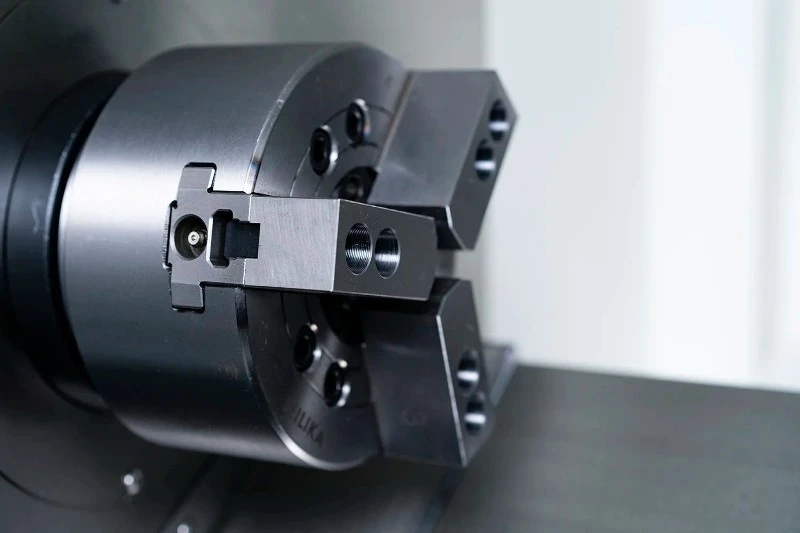
Larger capacity normally requires a longer or wider bed, a stronger spindle, and heavier supporting components. This increases both the machine cost and its requirements for floor space, foundations, power, and transportation.
Machine Structure and Rigidity
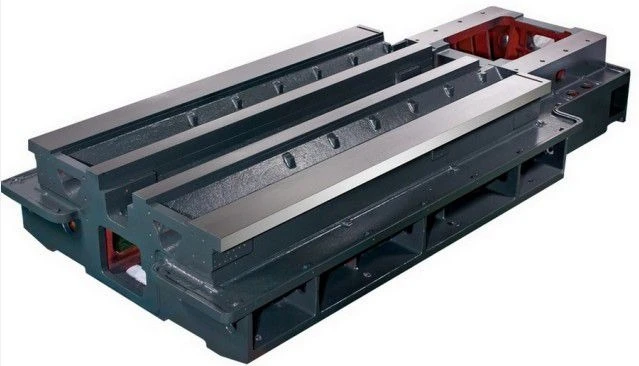
The machine structure affects how well the lathe handles cutting forces, vibration, and heat during extended operation. Heavy-duty machining usually requires a more rigid bed, stronger guideways, and better support for the spindle and turret.
Factors that can affect the quotation include:
- Bed design and casting weight
- Slant-bed or flat-bed construction
- Linear guideways or box ways
- Spindle and turret support
- Thermal control measures
Rigidity should match the material and cutting load. A machine used for light aluminum parts does not need the same structure as one that performs heavy cuts in steel. The goal is suitable stability, not simply the heaviest available machine.
Spindle and Turret Configuration
The spindle determines the size of material the machine can hold and how effectively it can cut it. Higher power, greater low-speed torque, a larger spindle bore, or a more robust bearing arrangement can increase the machine cost.
The turret also makes a difference. Compare:
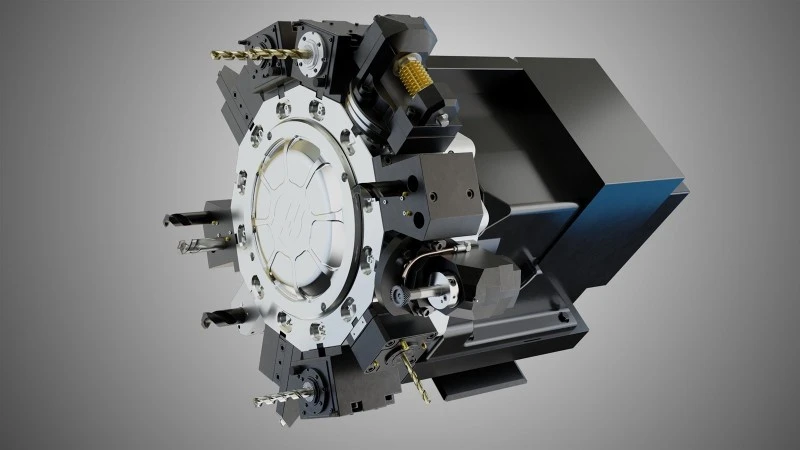
- Hydraulic and servo turrets
- Number of tool stations
- Tool size and mounting type
- Indexing and tool-change speed
- Static or driven tools
A faster, more capable turret is valuable in batch production, where every tool change affects cycle time. For lower-volume work, however, the highest turret specification may not provide a clear return.
Number of Axes and Machining Functions
A basic two-axis CNC lathe handles outside and inside turning, facing, grooving, and threading. As part complexity increases, you may need additional functions.
Common upgrades include:
- C-axis positioning
- Live tooling
- Y-axis movement
- Sub-spindle
- Twin turrets
These features make the machine and control system more complex, so they increase the initial investment. However, they can also complete turning, drilling, tapping, and milling in one setup. If they remove secondary operations or reduce repeated clamping, the higher machine cost may result in a lower cost per part.
CNC Control and Core Components
The CNC control affects programming, operation, axis coordination, and compatibility with your existing production system. Control brands and optional software functions can therefore change the quotation.
You should also compare the following:
- Servo motors and drives
- Spindle bearings
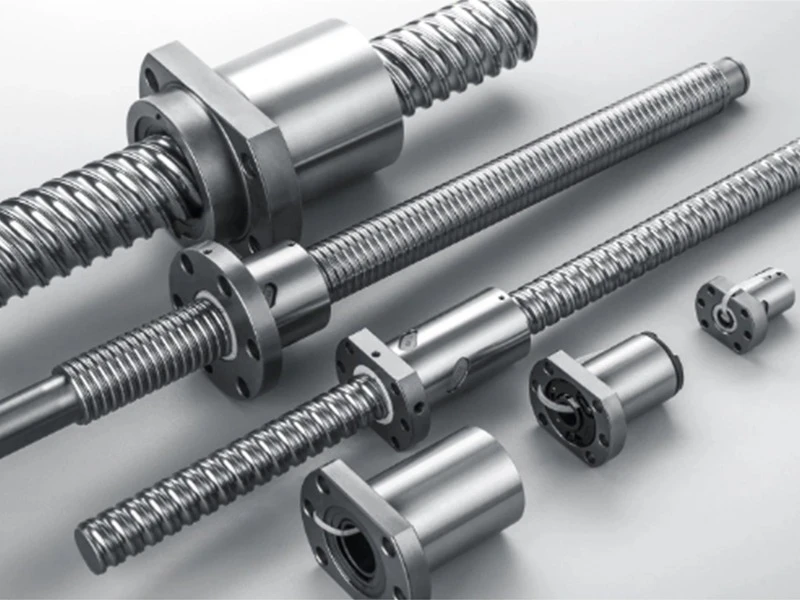
- Ball screws
- Linear scales
- Hydraulic and lubrication systems
- Main electrical components
Do not compare component brands alone. Confirm the exact model, specification, local service availability, and spare-parts supply. A familiar control system may also reduce operator training time and make future maintenance easier.
Automation and Optional Equipment
Automation can reduce manual handling and support longer unattended production, but it should match your output and part cycle.
Common options include:
- Bar feeder
- Parts catcher
- Chip conveyor
- Automatic tool setter
- High-pressure coolant system
- Steady rest
- Robot loading system
For high-volume production, these options may reduce labor and keep the machine running more consistently. For small batches or frequent part changes, some automation may remain underused.
How to Compare CNC Lathe Quotations Correctly
The machines may differ in capacity, components, accessories, service, or delivery terms. Before making a decision, place each quotation into the same comparison format.
Compare the Same Machine Capacity
First confirm that every machine can handle your workpiece. Compare the main specifications side by side.
- Maximum turning diameter and length
- Swing over bed and carriage
- Chuck size
- Spindle bore and bar capacity
- Maximum workpiece weight
- Spindle power, speed, and torque
- X- and Z-axis travel
Pay attention to how each specification is defined. For example, swing diameter and actual maximum turning diameter are not the same. A machine with a larger headline figure may not provide a larger usable machining range.
Separate Standard and Optional Configurations
Ask each supplier to identify what is standard, optional, and excluded.
Check whether the quotation includes:
- Hydraulic chuck and jaws
- Tool holders and sleeves
- Chip conveyor and chip cart
- Tool setter and parts catcher
- Tailstock or steady rest
- Coolant and hydraulic systems
- Transformer and electrical cabinet cooling
- Bar feeder or robot interface
If an option is necessary for your process, add it to every quotation before comparing the totals.
Check the Core Components
Ask for the brand, model, and specification of the CNC control, spindle, turret, bearings, ball screws, guideways, servo drives, and main electrical parts.
Also consider whether local service and replacement parts are available. A familiar component with reliable support may be more practical than a higher specification that is difficult to maintain in your market.
Review Delivery and Support
The machine must arrive safely and enter production without unnecessary delays. Confirm:
- Production and delivery time
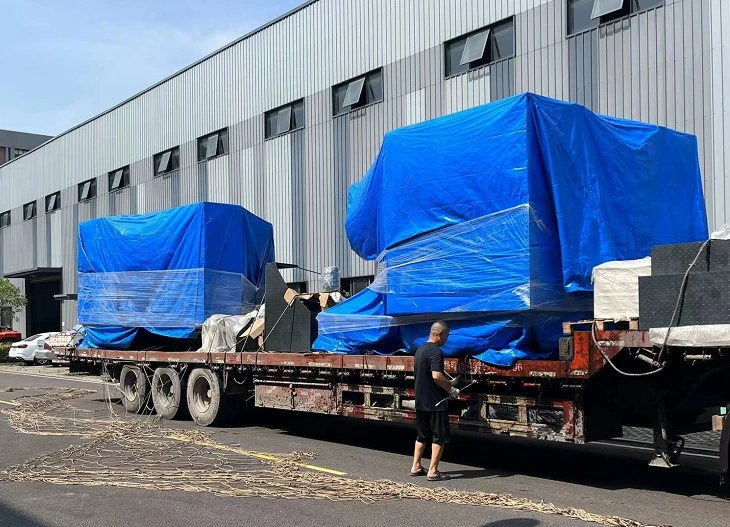
- Packing method and shipping terms
- Pre-shipment inspection or factory acceptance test
- Installation and commissioning method
- Operator and maintenance training
- Warranty coverage
- Technical response time
- Spare-parts supply
Make sure every supplier uses the same trade terms. An EXW quotation and a CIF quotation cannot be compared directly.
Compare Production Value, Not Only Purchase Cost
Finally, consider what each machine will cost to produce your parts. A machine that reduces cycle time, secondary operations, manual handling, or repeated setups may provide better value even if its initial quotation is higher.
Use your actual part drawing and production volume to compare:
- Expected cycle time
- Number of setups
- Required operators
- Additional machines or processes
- Tooling and fixture requirements
- Changeover time
- Expected downtime and maintenance support
The best quotation is the one that clearly matches your parts, production target, and service requirements, not simply the one with the lowest figure at the bottom.
How to Avoid Paying for Features You Do Not Need
More features do not automatically make a CNC lathe more suitable for your production. An oversized machine or an unused function increases the initial investment without improving your parts. Start with what the machining process actually requires.
Start With the Workpiece, Not the Machine Model
Use your part drawing to define the required turning diameter, length, spindle bore, material, tolerance, surface finish, and machining operations. This prevents you from selecting a machine based on an impressive specification that your parts will never use.
If you produce several parts, group them by size and process. Choose a machine that covers most of your regular work rather than one designed around a rare, oversized part.

Separate Required Features From Optional Features
Divide the proposed configuration into three groups:
- Required Now: Features needed to complete your current parts.
- Useful for Future Work: Options supported by a realistic production plan.
- Not Currently Needed: Features with no clear use in your process.
For example, live tooling is valuable when your parts require drilling, tapping, or milling. If they only need standard turning, a two-axis configuration may be more practical.
Avoid Oversizing Without a Clear Reason
Extra turning length, spindle bore, chuck size, or load capacity usually means a larger and more expensive machine. It may also require more floor space, power, foundation work, and shipping preparation.
Allow reasonable capacity for future parts, but don't choose a much larger machine just because it appears more capable. Oversizing can also make small parts less efficient to load and machine.
Add Automation Only When Production Volume Supports It
Bar feeders, parts catchers, robots, and automatic measurement systems can reduce manual work and support unattended production. Their value, however, depends on batch size, cycle time, part consistency, and labor availability.
Before adding automation, calculate how often it will be used and what cost it can remove. If your work involves small batches and frequent changeovers, flexible tooling and easy setup may provide more value.
Ask What Problem Each Option Solves
For every proposed feature, ask:
- Which operation requires it?
- Will it reduce setup or cycle time?
- Can it replace a secondary process?
- Will it improve quality or consistency?
- How often will it be used?
- What additional maintenance does it require?
Keep the feature when the answer supports your production goal. If its benefit cannot be connected to your parts, output, or process stability, it may not belong in the current machine configuration.
FAQs
Why do CNC lathes with similar specifications have different prices?
+
-
The main specifications may look similar, but the machine structure, spindle, turret, CNC control, bearings, ball screws, electrical components, and included accessories can differ. Quality inspection, warranty coverage, installation, and after-sales support also affect the quotation. Compare the complete configuration rather than a few headline specifications.
Is a CNC turning center more expensive than a basic CNC lathe?
+
-
A turning center generally has a more production-focused design, such as faster tool changes, better chip removal, and more automation options. A basic CNC lathe is usually more suitable for straightforward turning work. However, machine size and configuration can change the comparison, so the machine type alone does not determine the final cost.
Is live tooling worth the additional cost?
+
-
Live tooling is useful when your parts need drilling, tapping, flats, slots, or other milled features. It can reduce secondary operations and repeated setups. If your parts only require conventional turning, the feature may add cost without delivering a clear production benefit.
Should I buy a lower-cost machine and add options later?
+
-
Only if the machine is designed to support those upgrades. Some accessories can be added later, while functions such as a Y-axis, sub-spindle, or different turret structure usually cannot be installed easily after production. Confirm future upgrade possibilities before placing the order.
What information should I provide for an accurate quotation?
+
-
Provide your part drawings, material, maximum dimensions, workpiece weight, required tolerances, surface finish, machining operations, batch size, and destination country. If automation is required, include your target cycle time and loading method. This allows the supplier to recommend a suitable configuration instead of giving you a general base quotation.
Conclusion
Start with your workpiece and production requirements. Then compare machine capacity, standard configuration, optional equipment, delivery terms, and support on the same basis. The best choice is not the cheapest or most highly equipped machine. It is the one that can produce your parts reliably without unnecessary investment.
Contact GreatCNC with your part drawing, material, required operations, and production volume. We will help you compare suitable CNC lathe configurations and prepare a clear project quotation.
