



Machining large molds, heavy machine bases, or long structural parts requires ample table space. You also need to consider workpiece weight, machining travel, and how the machine moves during cutting.
Both double column and gantry machining centers can handle large workpieces, but their structural configurations may differ. So, which machine is right for your workpiece? Choosing the wrong setup can limit your machining range, increase costs, or make heavy parts difficult to handle.
What Is a Double Column Machining Center?
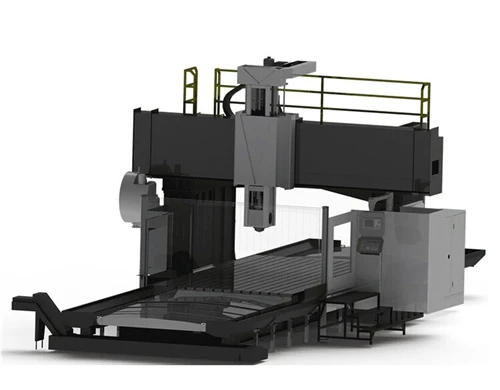
A double column machining center is a CNC machine designed for machining large and heavy workpieces. It features two vertical columns connected by a crossbeam, creating a rigid structure that supports the spindle during cutting.
How Does a Double Column Machining Center Work?
The workpiece is secured to the table, which moves along the X-axis beneath the fixed bridge. The spindle moves across the crossbeam and vertically to reach different machining positions.
This design provides stable support for the spindle, making it suitable for milling, drilling, and boring large components.
What Types of Workpieces Is It Used For?
Double column machining centers are commonly used for large molds, machine bases, cast iron components, and industrial equipment parts.
They are especially useful when you need to machine wide surfaces, deep pockets, or precision features on large workpieces. However, you must check the table load capacity, axis travel, and machining clearance to ensure the machine can handle your parts.
What Is a Gantry Machining Center?
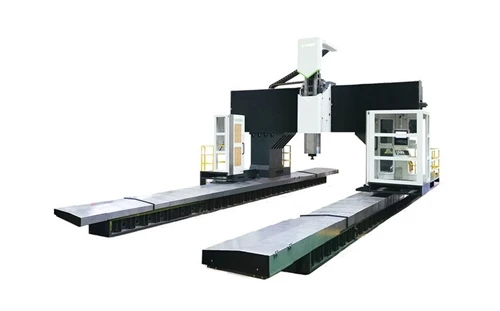
A gantry machining center is a CNC machine used to machine large, heavy, or long workpieces. Gantry machines come in different configurations, including fixed-bridge and moving-gantry designs.
How Does a Moving Gantry Machining Center Work?
The workpiece is secured to a stationary table while the gantry structure moves along the X-axis. The spindle travels across the crossbeam along the Y-axis and moves vertically along the Z-axis.
What Types of Workpieces Is It Used For?
Moving gantry machining centers are commonly used for long structural parts, large machine frames, heavy steel components, and oversized industrial equipment parts. If your workpiece is too long or heavy for a moving-table machine, a moving gantry design may be a better option.
Double Column vs. Gantry Machining Center: Key Differences
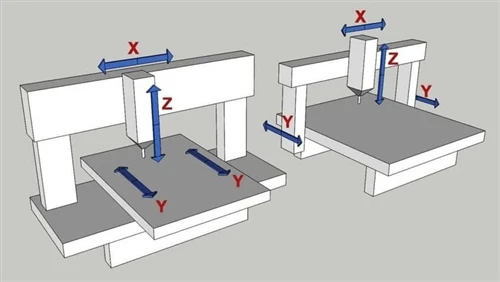
The main difference between these two machine configurations is how they move during machining. A fixed-bridge double column machining center moves the workpiece with its table, while a moving gantry machining center moves the gantry structure over a stationary workpiece.
|
Comparison Factor |
Double Column Machining Center |
Moving Gantry Machining Center |
|
Machine Structure |
Fixed bridge with a moving table |
Moving bridge with a fixed table |
|
Workpiece Movement |
Workpiece moves with the table |
Workpiece remains stationary |
|
Workpiece Size |
Suitable for large parts within table travel limits |
Often suitable for long or oversized parts |
|
Workpiece Weight |
Limited by table capacity and moving-axis requirements |
Heavy parts remain stationary during machining |
|
Machining Travel |
Table moves along the X-axis |
Gantry moves along the X-axis |
|
Rigidity |
Fixed bridge provides stable structural support |
Depends on gantry design and structural stiffness |
|
Floor Space |
Requires space for table movement |
Requires space for gantry travel |
|
Machine Cost |
Depends on machine size and specifications |
Depends on machine size, drive system, and configuration |
Which difference matters most for your workpiece?
If you machine large molds or components that fit within a moving table's capacity and travel range, a fixed-bridge double-column machine can be a practical choice.
If you handle very heavy or long workpieces, a moving gantry machine may be more suitable because the workpiece stays stationary during cutting.
However, neither configuration is automatically more accurate or powerful. You should compare actual machine specifications, including axis travel, spindle performance, rigidity, and load capacity, before making your decision.
How Does Workpiece Size Affect Your Machine Choice?
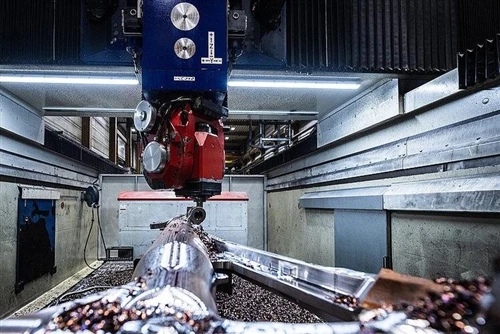
Workpiece size is one of the most important factors when choosing between a double column and a moving gantry machining center. You need to consider not only whether your part fits on the table, but also whether the machine can reach every area that requires machining.
1. Check Your Workpiece Length and Width
Start by measuring the maximum length and width of your workpiece, including any fixtures.
For a fixed-bridge double column machine, the table must support your part while moving through the required machining range. For a moving gantry machine, the stationary table must provide enough space for the part, while the gantry travels along its length.
If you regularly machine long components, a moving gantry design may offer a more practical arrangement.
2. Consider Workpiece Height and Z-Axis Clearance
A tall workpiece may fit on the table but still leave insufficient space for machining.
Check the distance between the spindle nose and the table, the Z-axis travel, and the height of your fixtures and cutting tools.
For deep cavities or tall components, make sure the spindle can reach the required surfaces without interference.
3. Evaluate Workpiece Weight and Table Load
Workpiece weight affects both machine selection and machining stability.
On a moving-table double column machine, the table drive must move the combined weight of the workpiece and fixtures. On a moving gantry machine, the workpiece remains stationary, which can be an advantage for very heavy components.
However, you must still check the maximum table load, weight distribution, and foundation requirements.
4. Check the Available Machining Area
A workpiece fitting on the table does not guarantee that every feature can be machined.
Compare your part dimensions with the machine's X, Y, and Z travel. Also consider spindle access, tool length, fixture clearance, and the distance between the columns.
Before choosing a machine, use the following checklist:
- Length and Width: Table dimensions and X/Y-axis travel.
- Height: Z-axis travel and spindle clearance.
- Weight: Maximum table load and weight distribution.
- Fixtures: Additional space, height, and weight.
- Machining Features: Tool reach and access to required surfaces.
- Column Clearance: Enough space for the workpiece and machining operations.
The right machine must accommodate your entire setup, not just the workpiece itself. Comparing these measurements with actual machine specifications will help you avoid clearance problems and unnecessary equipment costs.
What Other Factors Should You Consider Before Buying?
Workpiece size and weight are important, but they are not the only factors that affect your machine choice. You should also consider machining performance, workshop conditions, and long-term operating costs.
1. Machining Accuracy and Rigidity
If your parts require tight tolerances or heavy cutting, machine rigidity and positioning accuracy are essential.
A fixed-bridge double-column machine provides stable structural support, while a moving-gantry machine must maintain accuracy as the bridge moves. However, neither design is automatically more accurate.
Compare positioning accuracy, repeatability, thermal stability, and machine rigidity based on your machining requirements.
2. Spindle Power and Cutting Requirements
Different materials and machining operations require different spindle capabilities.
For heavy milling of steel or cast iron, you may need higher spindle torque and a rigid machine structure. For mold finishing, higher spindle speeds and smooth cutting performance may be more important.
Check the spindle power, torque, speed range, and available milling heads before selecting a machine.
3. Workshop Space and Installation
Large machining centers require sufficient floor space, foundation support, and installation clearance.
A moving-table machine needs room for the table to travel, while a moving gantry machine requires space for the bridge to move along the bed.
You should also consider ceiling height, crane access, maintenance space, and the floor's load-bearing capacity.
4. Machine Cost and Long-Term Operation
The purchase price is only part of your total investment.
You also need to consider installation, tooling, energy consumption, maintenance, and operator training. A larger machine may offer more capacity, but it can also increase operating costs.
Choose a machine that meets your current production needs while providing reasonable capacity for future projects.
How to Choose the Right Machining Center for Your Workpiece
Choosing between a double column and a moving gantry machining center starts with understanding your actual machining needs. Follow these five steps to narrow down your options.
- Confirm Your Workpiece Dimensions and Weight: Record the maximum length, width, height, and weight of your parts, including fixtures. This helps determine the required machine capacity.
- Identify Your Machining Operations: Consider whether you need milling, drilling, boring, or multi-side machining. Check whether your operations require special milling heads or additional axes.
- Check Machine Travel and Clearance: Compare the machine's X, Y, and Z travel with the areas you need to machine. Make sure the spindle and cutting tools can reach all required features without interference.
- Compare Machining Performance: Review spindle power, torque, positioning accuracy, and rigidity. Choose specifications that match your workpiece material and tolerance requirements.
- Evaluate Your Budget and Workshop Conditions: Consider installation space, foundation requirements, maintenance costs, and future production needs.
FAQs
1. Are Double Column and Gantry Machining Centers the Same?
+
-
Not always. The terms are sometimes used interchangeably because both machines can have a double-column structure. In this comparison, a double column machining center has a fixed bridge and moving table, while a moving gantry machining center has a moving bridge and stationary table.
2. Can a Double Column Machining Center Handle Very Heavy Workpieces?
+
-
Yes. Many double column machining centers are designed for heavy-duty machining. However, the maximum workpiece weight depends on the machine's table load capacity, drive system, and structural design. Always check the manufacturer's specifications before selecting a machine.
3. Is a Moving Gantry Machining Center More Accurate?
+
-
Not necessarily. Both configurations can achieve high machining accuracy. Actual performance depends on machine rigidity, positioning accuracy, thermal stability, and control systems. You should compare the specifications of individual machines rather than judging accuracy by their structure alone.
4. Can a Gantry Machining Center Perform 5-Axis Machining?
+
-
Yes. Some gantry machining centers support 5-axis machining through additional rotary axes or specialized milling heads. However, not every gantry machine offers this capability. Check the available axis configurations and milling head options before purchasing.
5. What Information Should You Provide When Requesting a Machine Quote?
+
-
You should provide your workpiece drawings, dimensions, weight, material, required tolerances, and machining operations. It also helps to share your expected production volume and any special tooling requirements. This information allows the manufacturer to recommend a suitable machine configuration.
Conclusion
Choosing between a double column and a moving gantry machining center depends on your workpiece size, weight, and machining requirements. A fixed-bridge double column machine can be a practical choice for large molds and precision components, while a moving gantry machine may be better suited for long or extremely heavy workpieces.
If you're unsure which machine fits your production needs, GreatCNC can help. Share your workpiece drawings and machining requirements with our team to find a suitable CNC machining solution.
