



In the field of modern precision machining, ball end mills have become the core tools for complex surface machining, mold manufacturing, and 3D contour cutting with their unique arc blade design. Whether it is impeller blade machining in the aerospace field or precision component molding of medical devices, ball end mills can meet diverse needs with high precision and high efficiency. However, facing different materials, processing scenarios, and process requirements, correctly selecting tool specifications is still a challenge faced by many engineers and technicians.
This guide will systematically analyze the structural characteristics, selection logic, and practical skills of ball end mills, helping you to accurately match processing needs from the perspectives of tool material, coating technology, etc., while also sharing practical solutions to improve surface finish and extend tool life. Whether you are a novice in the industry or a senior practitioner seeking process breakthroughs, you can gain key knowledge and practical solutions from it.
Basic knowledge of ball end mills
What is a ball nose end mill?
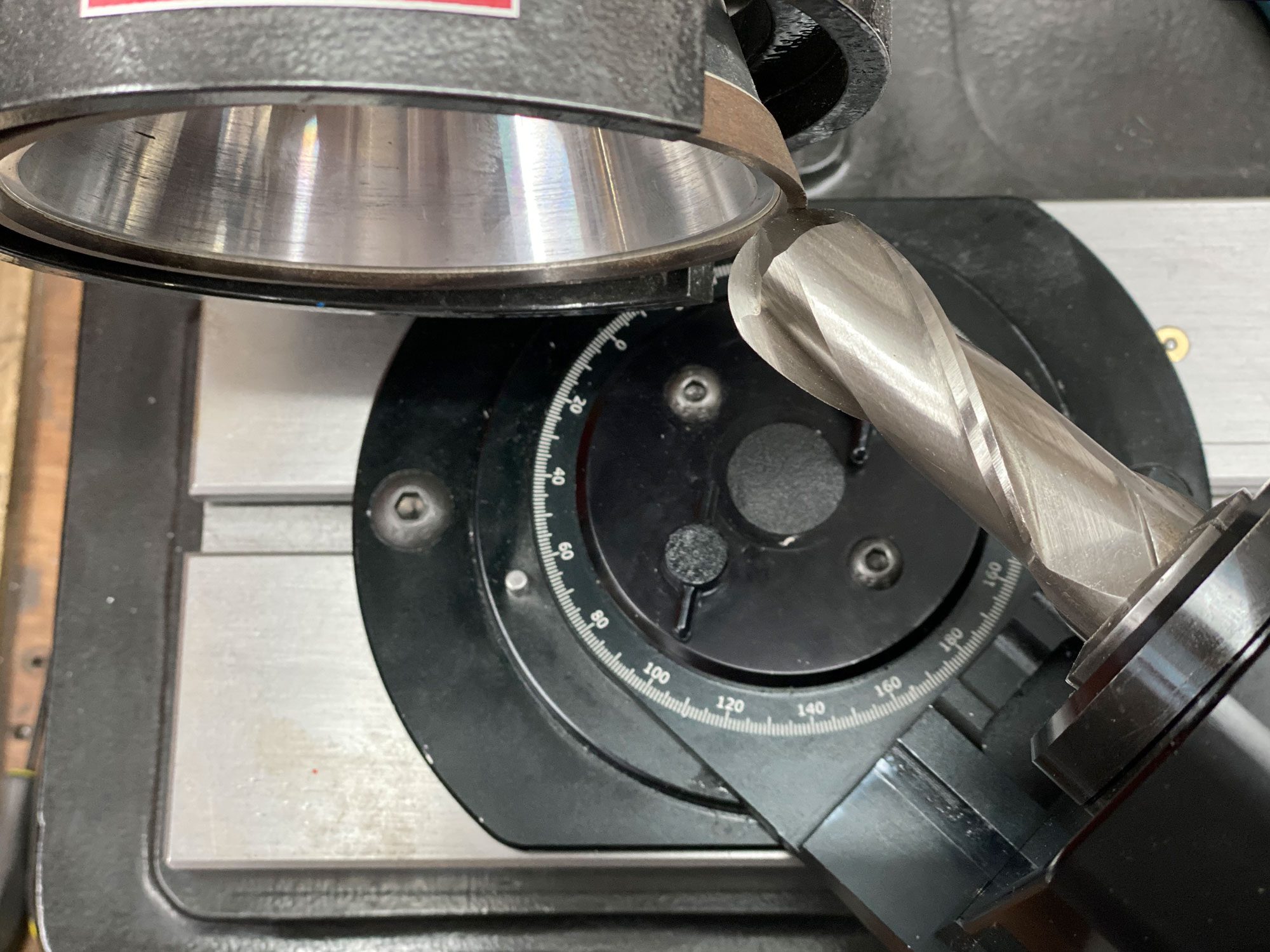
A ball end mill is a milling cutter with a hemispherical tip. Unlike flat-bottom milling cutters that cut right-angle edges or flat-bottom grooves, ball end mills are designed for 3D curved surfaces, complex contours, and streamlined transition surfaces, achieving smoother machining results.
Core features of ball nose end mills
Ball Head Shape: The cutting edge is hemispherical, suitable for 3D contour processing, which can reduce the residual height and improve the surface finish.
Multi-edge Design: usually has 2 edges, 3 edges, 4 edges, and other different specifications, affecting the cutting efficiency and chip removal performance.
Compatible with a Variety of Tool Materials and Coatings: Common coatings include TiAlN, AlTiN, and DLC, which are used to enhance heat resistance and reduce tool chip sticking, especially when processing stainless steel or titanium alloys.
Flexible Application: It can be used for both rough machining (large feed rate, large cutting depth) and fine machining (high speed, small cutting depth), and is especially suitable for complex surface and deep cavity machining.
The main structural components of the ball end cutter
Cutter
The head is the core part, which determines the quality of the machined surface and the ability to realize complex shapes. Its fillet radius (R value) is usually equal to the tool radius, but there are also asymmetric designs.
Number of Blades
Ball end cutters are commonly designed with 2, 4, or even 6 blades. The number of blades affects chip removal, cutting speed, and surface quality. 2-blade ball end cutters have strong chip removal capabilities and are suitable for soft materials such as aluminum; 4-blade ball end cutters are suitable for finishing steel parts.
The Helix Angle
It is generally between 30° and 45°. A large helix angle is more suitable for high-speed processing, but the rigidity decreases, and it is suitable for soft materials; a small helix angle has strong rigidity and is more suitable for hard materials.
Shank
Shank is connected to the machine tool spindle. High-end ball-end cutters use an integrated carbide shank to ensure accuracy and strength at high speeds.
Coatings
TiAlN, AlCrN, etc., are used to improve wear resistance and high temperature resistance. The coating selection should be determined according to the processing material.
Application Areas of Ball Nose End Mills
Mold Manufacturing

Industry, such as injection mold, die casting mold, and stamping mold, ball cutters are almost the standard tools for 3D cavity finishing. In particular, when there are many fillets and curves on the mold surface, flat cutters are not competent.
Aerospace
The machining of aircraft structural parts, turbine blades, or engine nacelles often involves large curvature surfaces. Ball-end cutters can achieve uninterrupted contour cutting to improve part consistency and surface quality.
Medical Devices
Complex free-form surface parts, hip and knee implants, must use ball cutters to achieve smooth transitions.
Automotive Industry
In the processing of engine and gearbox molds, ball cutters are widely used for cavity processing, especially in high-hardness steels such as H13 and SKD61. The use of appropriate coatings can effectively extend the tool life.
Art and Sculpture
Wood carving, stone carving, and even relief sculptures in jewelry are often processed with micro ball cutters to achieve natural and smooth results.
Common types of ball end cutters
Ball end cutters are commonly used in CNC machining, mainly for machining complex contours such as three-dimensional surfaces, cavities, and molds. The ball-end design can achieve multi-axis linkage cutting, reduce stepping residue, and improve surface finish. The following are common types and structural analysis.
Integral ball end milling cutter
The cutter head and the cutter bar of the integral ball end milling cutter are made of the same material, and the common material is high-speed steel (HSS) or carbide. Its ball head is divided into a complete hemispherical cutting edge, which is formed by precision grinding and has high rigidity and precision. It is widely used in mold manufacturing, aviation parts finishing, etc.
The welded ball end milling cutter
The head (carbide) is connected to the steel shank by welding. The ball-end cutting edge can be formed by welding multiple blades or welding the whole. It is often used for medium and rough machining, preliminary forming of large workpiece surfaces, and tasks with relatively low precision requirements.
Indexable ball-end cutter

The indexable carbide blade is installed on the tool bar. The blade is usually polygonal and forms a spherical cutting profile through a specific arrangement. The blade can be rotated or replaced after passivation. Injection mold or engine housing. High efficiency and high cost performance, but the accuracy is slightly lower than that of the integral cut.
Micro ball end mills
Are solid carbide tools with a diameter of usually less than 3mm. The ball end is ultra-precision ground, and the shank is slender to fit the processing of tiny structures. Some designs have necks to enhance rigidity. They are designed specifically for processing fine parts, medical equipment, and micro molds. They are almost irreplaceable when processing free-form surfaces and fine patterns.
Coated ball end cutter
Coated ball end cutters are coated with TiAlN, DL, C, and other coatings on the tool surface to enhance high temperature resistance and lubricity and extend tool life. This type of tool is particularly suitable for machining difficult-to-cut materials (titanium alloys, high-temperature alloys). The coating can reduce the generation of built-up edge and improve machining efficiency, but the coating type must be selected according to the material characteristics.
Multi-edge ball-end cutter

The multi-edge ball end cutter is designed with multiple cutting edges (2-edge, 4-edge) on the cutter body to improve processing efficiency and chip removal capacity. It is suitable for rough and fine processing of soft materials such as aluminum alloy, but too many edges may lead to insufficient chip space. The number of edges and groove type should be selected according to the material.
What materials are suitable for ball end cutters?
Aluminum alloy and copper
Aluminum alloys and copper are relatively soft non-ferrous metals suitable for machining with ball end cutters. Ball end cutters can achieve smooth surfaces on these materials, especially in the machining of complex curved surfaces or fine details. Since these materials have low cutting resistance, the arc edge of the ball end cutter can effectively reduce burrs while maintaining high cutting efficiency.
Mold steel
Mold steel (P20, H13, etc.) has a high hardness, but can still be processed with a ball end cutter when it is not hardened. Ball end cutters are suitable for surface finishing and detail engraving of mold steel, especially when making injection molds or die casting molds. It is necessary to select carbide tools with wear-resistant coatings and control cutting parameters to avoid excessive wear.
Hardened steel
Hardened steel requires extremely high wear resistance of the tool, and the ball end cutter must be made of super-hard material to be effectively processed. It is usually used in the finishing stage to process the complex surface of high-hardness workpieces with a small cutting depth and low feed rate, but care must be taken to avoid chipping.
Copper and brass
Copper and brass have good ductility and low cutting resistance, which are very suitable for ball-end tool processing. Ball-end tools can avoid the problem of material adhesion that may be caused by sharp-angle tools, and are especially suitable for curved surface processing of precision parts. Using sharp cutting edges and appropriate cutting fluids can further improve surface quality.
The principle of ball end mill in CNC processing
In CNC machining, ball-end mills perform three-dimensional contour machining on workpieces by rotating cutting edges. The hemispherical cutter head design enables precision milling of complex curved surfaces, transition fillets, and cavities. During machining, the spindle drives the tool to rotate at high speed, and the CNC machine tool moves according to the programmed path under multi-axis linkage control, so that the ball head blade forms continuous point contact with the workpiece, and the material is removed layer by layer through the tangential cutting movement. The geometric characteristics of the ball head enable it to complete both plane milling and curved surface profiling through the side blade. It is especially suitable for scenes with high requirements for surface finish and shape accuracy, such as molds and aerospace parts. The cutting parameters need to be optimized according to the material hardness and tool diameter to avoid tool vibration or overload, and coolant should be used to ensure heat dissipation and chip removal efficiency.
What is the difference between ball nose end mills and other end mills?
Ball nose end mills feature a hemispherical cutting tip, making them ideal for machining curved surfaces and contoured arcs, while other end mills (flat-end or corner-radius) have flat or slightly rounded edges, better suited for straight cuts, square shoulders, and planar milling.
| Feature | Ball Nose End Mill | Other End Mills ( Flat, Corner-Radius) |
|---|---|---|
| Tip Shape | Hemispherical | Flat or small corner radius |
| Best For | 3D contours, curved surfaces, grooves | Flat surfaces, sharp edges, and side milling |
| Cutting Force | Distributed, ideal for finishing | Concentrated, suited for roughing/high MRR |
| Surface Finish | Smooth curves (lower feed rates) | High planar accuracy (higher feed rates) |
| Applications | Molds, complex shapes, engraving | Slots, keyways, face milling |
| Limitations | Zero cutting speed at center (wear risk) | Stress concentration at sharp corners |
How to choose a suitable ball end mill?
●The first is the processing material. Different materials require tools of different tools. High-speed steel or special coated carbide tools with sharp cutting edges are suitable for aluminum alloy processing; carbide tools with good wear resistance are needed for steel processing; and composite materials may require diamond-coated tools.
●The selection of geometric parameters is equally important. The tool diameter should be selected according to the size of the processing feature, generally 1.2-1.5 times the minimum curvature radius of the feature; the helix angle affects the cutting stability and chip removal effect, usually 30-45° is the best; the blade length should be as short as possible to improve rigidity, but sufficient processing depth must be ensured. For deep cavity processing, a long neck design can be selected, but the cutting parameters need to be reduced.
●Cutting parameter setting is the key to maximizing tool performance. A reasonable combination of spindle speed, feed rate, cutting depth, and cutting width can achieve efficient and high-quality processing. Generally speaking, roughing can adopt a large cutting depth and small step-over; finishing is suitable for a small cutting depth and fast step-over. For specific parameters, refer to the recommended values of the tool manufacturers and adjust according to the actual processing effect.
Tips to improve machining results and tool life
Choose the right tool material
Choose the matching tool material according to the characteristics of the processing material. For example, cemented carbide is suitable for most metal processing, while CBN or diamond tools are more suitable for high hardness materials. The right grade can significantly reduce wear and extend tool life.
Optimize cutting parameters
And reasonably adjust cutting speed, feed rate, and cutting depth to avoid tool overheating caused by too high parameters or friction and wear caused by too low parameters. Finding the best balance point through experiments or software simulation can improve machining efficiency and tool durability.
Use coolant and lubrication technology
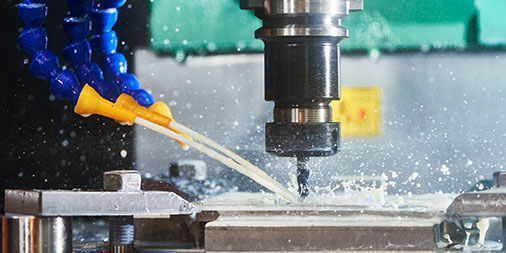
To fully apply coolant to reduce the temperature of the cutting area, reduce thermal deformation, and tool adhesion. For difficult-to-machine materials, high-pressure cooling or minimal lubrication technology can be used to effectively extend tool life and improve surface quality.
Keep the tool sharp and regularly maintain it
And sharpen or replace the passivated tool in time to avoid increased cutting force due to edge wear. Check the tool clamping system regularly to ensure it is firmly clamped to prevent chipping or reduced machining accuracy caused by vibration.
Use reasonable machining paths and strategies
To optimize the tool path when programming, reduce empty travel and sharp turns, and use layered cutting or spiral feed to disperse the load. Reasonable strategies can reduce the instantaneous load on the tool and improve processing stability and life.
Reduce vibration and increase rigidity
Dampen vibration by reducing overhang, using a vibration-damping toolholder, or increasing workpiece support. The higher the rigidity of the machining system, the more evenly the force on the tool is applied, and the more it can avoid edge chipping and abnormal wear.
Select coating according to working conditions Tool
Coating can reduce friction and heat conduction, suitable for high-speed or dry cutting. Selecting coating type according to different processing conditions can significantly improve tool wear resistance and cutting performance.
Summarize
As a core tool for precision machining, the correct selection and use of ball end mills is crucial to machining quality and efficiency. With the continuous development of machining technology, the design and manufacturing technology of ball end mills are also continuously improving. New technologies such as adaptive machining will further expand the application boundaries of ball end mills. Mastering the core knowledge of ball end mills and flexibly applying various machining techniques will help engineering and technical personnel cope with increasingly complex machining challenges and create greater value.