


How long do drill bits last? It's one of the most searched questions in machining, but also one of the most misleading.
In industrial and CNC drilling, drill bits rarely fail because they're used up.
They fail early. Unexpectedly. And expensively.
We've seen shops replace drills every few hours, while others run the same tool for weeks on the same material. The difference isnt luck. Its selection, parameters, and process discipline.
In this guide, we focus strictly on industrial and CNC drilling.
You'll learn realistic drill bit lifespan ranges, the real reasons drills fail early, and how to diagnose tool life problems before they kill productivity.
How Long Do Drill Bits Last in Industrial Drilling?
In industrial drilling, drill bit life is far less predictable than most people expect. Youre not measuring lifespan by days or weeks youre measuring it by holes drilled, total cutting depth, and process stability. Depending on the material, drill type, and cutting parameters, a drill bit may last anywhere from a few dozen holes to several thousand.
What really matters isnt the maximum life on paper, but whether you can repeat that life consistently. If your drill bits fail early or vary wildly between batches, the root cause is usually selection or parameters, not bad luck. Understanding this difference helps you control cost, quality, and downtime.

Understanding Drill Bits - Types & What They're Made Of
Before you talk about drill bit life, you need to understand what kind of drill you're using and what it's actually made of, because these two factors determine how long the tool can survive under industrial conditions.
Common Drill Bit Types
Different drill bit types are designed for very different cutting behaviors, chip evacuation methods, and stability requirements. Using the wrong type almost always shortens tool life, no matter how good the material is.
|
Drill Bit Type |
Typical Application |
Tool Life Characteristics |
Common Mistake |
|
Twist Drill |
General metal drilling |
Predictable, moderate life |
Used too deeply without pecking |
|
Jobber Drill |
Standard CNC & manual use |
Balanced reach and rigidity |
Overused in hard materials |
|
Stub (Screw-Machine) Drill |
Rigid CNC setups |
Longer life due to stiffness |
Limited reach ignored |
|
Carbide Drill |
High-speed production |
High life, sudden failure |
Used on unstable machines |
|
Step Drill |
Thin materials |
Consistent for sheet metal |
Forced into thick materials |
If your drill bit geometry doesn't match the hole depth and machine rigidity, tool life will drop fast.
Material Composition & Its Impact on Life
What the drill is made of determines heat resistance, wear behavior, and failure mode. This is where most premature failures begin.
|
Drill Material |
Heat Resistance |
Wear Pattern |
Best Use Case |
|
HSS |
Low–Medium |
Gradual dulling |
Mild steel, low volume |
|
Cobalt (HSS-Co) |
Medium–High |
Slower edge wear |
Stainless steel |
|
Solid Carbide |
Very High |
Sudden breakage |
Rigid CNC, high volume |
|
Coated Drills |
Depends on base |
Reduced friction |
Heat-intensive materials |
If your drill turns blue, chips early, or breaks without warning, the issue is often a material mismatch, not operator error. Choosing the right combination of type plus material is the foundation of stable drill bit life.
Drill Bit Lifespan by Material Being Drilled
Your drill bit doesn't wear out the same way in every material. The material you drill determines heat generation, chip behavior, and failure mode, which directly affects tool life. The table below shows what you can realistically expect in industrial use.
|
Workpiece Material |
Typical Drill Bit Life |
Main Wear Mechanism |
Key Risk You Must Control |
|
Aluminum & Non-Ferrous |
Long and stable |
Built-up edge |
Chip welding, poor evacuation |
|
Mild Steel |
Moderate and predictable |
Gradual edge wear |
Inconsistent speed/feed |
|
Carbon Steel |
Moderate |
Heat + abrasion |
Overheating at low RPM |
|
Stainless Steel |
Short if unstable |
Work hardening |
Rubbing instead of cutting |
|
Cast Iron |
Moderate |
Abrasive wear |
Edge chipping, dust heat |
If you see wide tool-life variation, the problem usually isn't the drill-it's how the material reacts to your parameters. Matching speed, feed, and drill material to the workpiece is the fastest way to stabilize drill bit lifespan and reduce unexpected failures.
Why Most Drill Bits Never Reach Their Expected Lifespan
In real production, drill bits rarely fail because they are "worn out," they fail early because the application, parameters, or process quietly work against the tool from the first hole.
Wrong Drill Bit Material for the Application
If you use HSS where cobalt or carbide is required, your drill is already overloaded before it starts cutting. Hard or work-hardening materials generate heat fast, and a drill without enough hot hardness will dull long before you expect it to. On the other hand, using carbide on an unstable machine leads to sudden breakage instead of gradual wear. Tool life starts with matching material capability to cutting reality.
Conservative Speed That Causes Rubbing, Not Cutting
Running too slow feels "safe," but it's one of the fastest ways to kill a drill. When speed is too low, the cutting edge rubs instead of shearing, generating heat without removing material. This is especially destructive in stainless steel, where rubbing causes work hardening and rapid edge failure. If chips aren't forming cleanly, your drill isn't cutting-it's overheating.
Feed Rate Instability and Operator Compensation
Inconsistent feed creates uneven loading on the cutting edge. When operators "feel" the cut and adjust feed manually, the drill experiences micro-shocks and temperature swings. Over time, this leads to edge chipping, wandering, and unpredictable tool life. Consistency matters more than aggression.
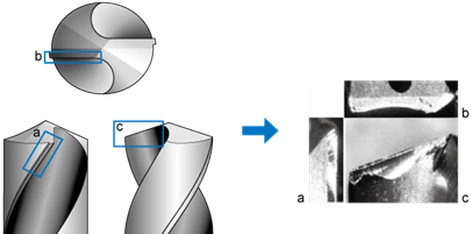
Heat Mismanagement
Coolant alone doesn't fix heat problems. Poor chip evacuation, shallow peck cycles, and interrupted cutting trap heat at the edge. If heat can't escape, tool life collapses-no matter how good the coolant looks on paper.
Factors That Actually Determine Drill Bit Life
Drill bit life isn't decided by one single factor-it's the result of tool quality, how hard you run it, and how disciplined your process is.
Quality of Drill Bit Material
Not all drills labeled HSS, cobalt, or carbide perform the same. Differences in grain structure, heat treatment, and edge preparation determine how well a drill resists heat and wear. If two drills fail at very different rates under the same conditions, material quality is often the reason.
Usage Intensity & Duty Cycle
How often and how continuously you drill matters. A drill used in short, controlled cycles can last far longer than one pushed nonstop without recovery time. High duty cycles amplify heat, vibration, and edge fatigue, especially in hard materials.
Maintenance vs Process Discipline
Cleaning, storage, and sharpening help, but they can't fix poor parameters. Consistent speed, feed, and chip evacuation do more for tool life than maintenance alone. Stable processes always outperform careful handling.
Industrial Parameter Guide - How to Make Your Drill Bits Last
If you want longer and more predictable drill bit life, parameters matter more than tool brand. Small adjustments in speed, feed, and heat control often deliver bigger gains than switching drills.
Choosing Correct Speed & Feed
Your drill must cut, not rub. If RPM is too low, the edge slides instead of shearing, creating heat and work hardening. If the feed is too light, you get the same problem. Start with recommended values, then fine-tune until chips form cleanly and consistently. Stable cutting sounds and steady chip flow are signs you're in the right range.
Chip Evacuation & Peck Cycles
Trapped chips kill drills fast. For deeper holes, use controlled peck cycles to break chips and clear the flute. Peck too shallow and you waste time; peck too deep and heat builds up. Your goal is smooth chip evacuation without interrupting cutting more than necessary.

Coolant & Thermal Control in CNC
Coolant helps, but only if it reaches the cutting edge. Use proper nozzle alignment or through-coolant when possible. Remember, cooling works best when chips and heat can escape together; coolant alone can't save a poor process.
How to Tell a Drill Bit Is About to Fail
Drill bits rarely fail without warning. If you know what to watch for, you can replace or resharpen a drill before it breaks, ruins parts, or causes downtime.
Performance-Based Signals
The first signs usually appear in cutting performance. If you notice higher thrust force, slower penetration, or the need to increase feed just to keep the drill cutting, the edge is already degrading. In CNC machines, rising spindle load or unstable cutting sounds are clear warnings that tool life is nearly exhausted.
Thermal and Visual Indicators
Heat leaves visible evidence. Blue or darkened cutting edges indicate overheating and loss of hardness. A burning smell, smoke, or excessive heat around the hole means the drill is rubbing instead of cutting. Once discoloration appears, tool life will drop rapidly-even if the drill still cuts.

Hole Quality Degradation
As the edge wears, hole quality suffers. You may see oversized holes, poor surface finish, or heavy burrs at the exit. If holes start drifting or losing roundness, the drill is no longer stable. These issues often appear before complete failure.

Replace or Resharpen?
Resharpening works best for HSS and cobalt drills with predictable wear. Carbide drills, however, often fail suddenly and are usually replaced. The key is acting early, waiting too long turns recoverable wear into scrap and broken tools.
Drill Bit Lifespan vs Cost
To evaluate drill performance correctly, you need to stop thinking in hours and start thinking in cost per hole. Calculate it by dividing the total tool cost, including purchase price, resharpening, and tool changes, by the number of acceptable holes produced. This approach reflects real production cost, not theoretical lifespan.
A more expensive drill pays off when it runs at a higher speed, lasts longer per cycle, and delivers consistent hole quality. If it reduces downtime, scrap, or operator intervention, its higher price quickly disappears. In production, predictability and stability are worth more than the lowest upfront cost.
FAQ
Q: How long do drill bits last in CNC machining?
A: In CNC machining, drill bit life is measured by holes, depth, or parts, not time. With stable parameters and correct selection, tool life should be consistent from batch to batch.
Q: Do cobalt drill bits really last longer than HSS?
A: Yes, especially in stainless steel. Cobalt resists heat better than standard HSS, but it still requires correct speed and feed to perform well.
Q: Why does my drill bit fail faster in stainless steel?
A: Stainless steel work-hardens easily. If your drill rubs instead of cutting, heat builds fast, and tool life collapses.
Q: Is coolant enough to extend drill bit life?
A: No. Coolant helps, but without proper speed, feed, and chip evacuation, it can't prevent premature wear.
Q: Can I fix premature wear by lowering RPM?
A: Often no. Too low RPM causes rubbing, which increases heat and accelerates wear.
Q: When should I switch from HSS to carbide drills?
A: Switch when you need higher speed, better consistency, and lower cost per hole, and your machine is rigid enough.
Q: Why does my drill cut but generate excessive heat?
A: This usually means incorrect feed or poor chip evacuation. Cutting without clean chip formation always creates excess heat.
Conclusion
Drill bit life isnt about how long a tool survives its about how predictable your process is.
If your drill bits fail early or inconsistently, the root cause is usually a selection or parameter issue, not the tool itself.
Are you unsure whether your issue stems from speed, feed, or the incorrect drill type?
Send us your material, hole size, and current drill setup. We'll help you identify the real bottleneck before you replace another tool.