


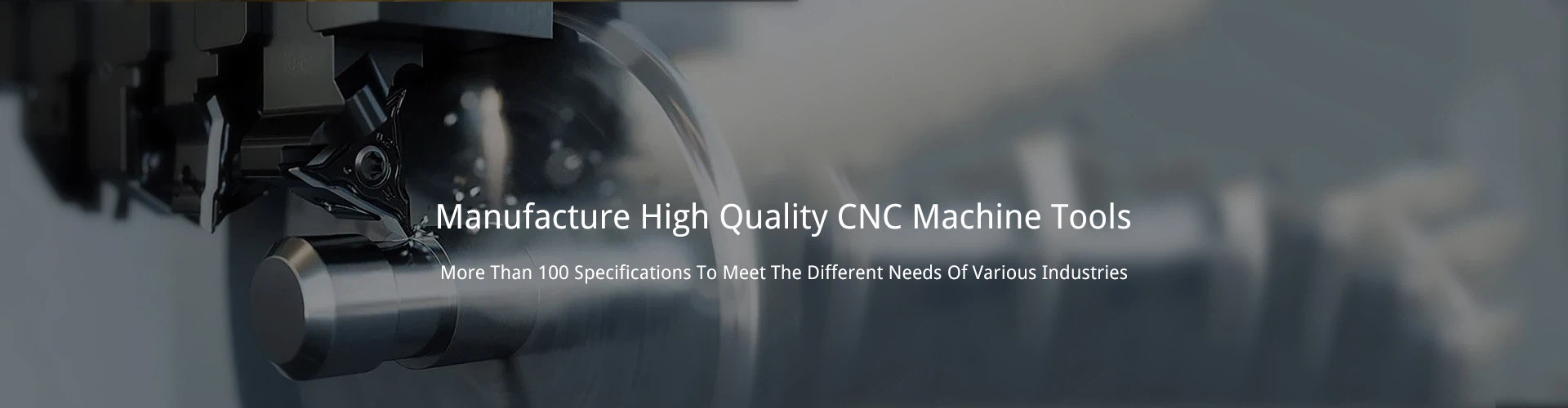
CNC lathe machines are widely used in modern manufacturing to produce precise cylindrical parts such as shafts, bushings, and threaded components. Their accuracy and efficiency derive from the coordinated operation of multiple key components within the machine.
Understanding the parts of a CNC lathe machine helps operators and engineers better control machining processes and maintain stable production. In this guide, we will introduce the main components of a CNC lathe and explain how each part contributes to precise turning operations.

What Is a CNC Lathe Machine?
A CNC lathe is a computer-controlled machine tool used to produce cylindrical parts by rotating the workpiece while a cutting tool removes material. The machine follows programmed instructions to perform precise and repeatable machining operations.
Unlike traditional manual lathes, CNC lathes use a CNC control system to automatically control spindle rotation, tool movement, and cutting parameters. This allows manufacturers to achieve higher accuracy, better surface finish, and consistent production.
CNC lathes are commonly used for turning, facing, threading, drilling, and boring, making them essential equipment in industries such as automotive, aerospace, medical devices, and general machinery manufacturing.
Main Parts of a CNC Lathe Machine
A CNC lathe machine is composed of several key mechanical and control components that work together to perform precise turning operations. Each component has a specific role in supporting the machine structure, rotating the workpiece, controlling tool movement, and ensuring machining accuracy. Understanding these parts helps operators improve machining efficiency and maintain machine stability.
Bed

The bed is the main structural component of a CNC lathe. It supports and aligns major components, including the headstock, carriage system, and tailstock. Because all machining operations depend on the stability of the machine structure, the bed must provide high rigidity and excellent vibration absorption.
Most CNC lathe beds are made from high-grade cast iron because it offers strong structural stability and good damping properties. A well-designed bed helps maintain component alignment and reduces deformation during heavy cutting.
The main functions of the bed include:
Supporting all major machine components.
Maintaining the alignment between the spindle and tool system.
Absorbing vibration during machining.
Providing stable guideways for carriage movement.
A rigid bed structure is essential for maintaining long-term machining accuracy and reliability.
Headstock

The headstock is located at one end of the CNC lathe and serves as the main power unit of the machine. It houses several important components, including the spindle, bearings, gearbox, and spindle motor. The headstock is responsible for driving the spindle to rotate the workpiece during turning operations.
Inside the headstock, the spindle is supported by high-precision bearings to ensure stable rotation at different speeds. The spindle motor provides the torque and power required for cutting various materials.
Key components inside the headstock typically include:
Spindle
Precision bearings
Spindle motor
Transmission system or gearbox
A high-quality headstock design ensures smooth spindle rotation, reduced vibration, and consistent machining performance.
Spindle

The spindle is one of the most critical rotating components in a CNC lathe machine. It is mounted inside the headstock and directly drives the workpiece during machining. The chuck or collet is attached to the front of the spindle to hold the workpiece securely.
Spindle performance greatly influences machining quality. Factors such as spindle speed, torque, and rotational accuracy determine the cutting capability and surface finish of the machined part.
Key spindle characteristics include:
Spindle speed range, which affects cutting performance.
Rotational accuracy, which impacts machining precision.
Rigidity, which helps reduce vibration during cutting.
Modern CNC lathes may use different spindle designs, including belt-driven spindles, direct-drive spindles, and built-in motorized spindles.
Chuck

The chuck is mounted on the front of the spindle and is used to clamp and hold the workpiece during machining. It ensures the workpiece remains firmly positioned while the spindle rotates at high speed.
There are several types of chucks used in CNC lathe machines, depending on the workpiece shape and precision requirements.
Common types include:
Three-jaw chuck
A self-centering chuck that automatically aligns the workpiece. It is widely used for machining round or hexagonal parts.
Four-jaw chuck
Each jaw moves independently, allowing the chuck to hold irregularly shaped workpieces or achieve precise manual alignment.
Collet chuck
Collet chucks are used for high-precision machining of small-diameter parts. They provide excellent concentricity and a strong clamping force.
The correct chuck selection helps improve machining accuracy and workpiece stability.
Tool Turret

The tool turret is a key component that holds multiple cutting tools and allows automatic tool changes during machining. It rotates or indexes to position the required tool for different operations.
By using a turret system, CNC lathes can perform multiple machining processes without stopping the machine. This significantly increases production efficiency and reduces manual intervention.
Typical turret features include:
Multiple tool stations (commonly 8, 10, or 12 tools)
Automatic indexing to select tools
High positioning accuracy
Tool turrets enable CNC lathes to perform operations such as turning, facing, drilling, threading, and grooving in a single setup.
Tailstock
The tailstock is located opposite the headstock and is mainly used to support long or slender workpieces during machining. Without proper support, long parts may bend or vibrate under cutting forces.
The tailstock typically includes a movable quill that holds a center to support the end of the workpiece. It can also hold tools such as drills or reamers for additional machining operations.
The main functions of the tailstock include:
Supporting long shafts during turning
Preventing workpiece deflection and vibration
Holding tools for drilling or reaming operations
Using a tailstock improves machining stability and accuracy when working with longer components.
Carriage System
The carriage system controls the movement of the cutting tool along the CNC lathe. It allows the tool to move precisely along different axes to perform various turning operations.
The carriage system usually consists of several components:
Saddle
The saddle moves along the machine bed and carries the cross slide.
Cross slide
The cross slide moves perpendicular to the spindle axis and controls the cutting depth.
Compound rest
This component allows the cutting tool to move at specific angles, which is useful for machining tapers or angled surfaces.
Together, these parts enable accurate tool positioning during machining.
Guideways
Guideways guide the movement of the carriage and other machine components along the bed. They play an important role in maintaining motion accuracy and smooth machine operation.
There are two common types of guideways used in CNC lathes:
Box guideways
These provide excellent rigidity and load capacity, making them suitable for heavy cutting.
Linear guideways
These offer smoother and faster movement with lower friction, which is ideal for high-speed machining.
High-quality guideways ensure precise motion control and long-term durability.
Ball Screws
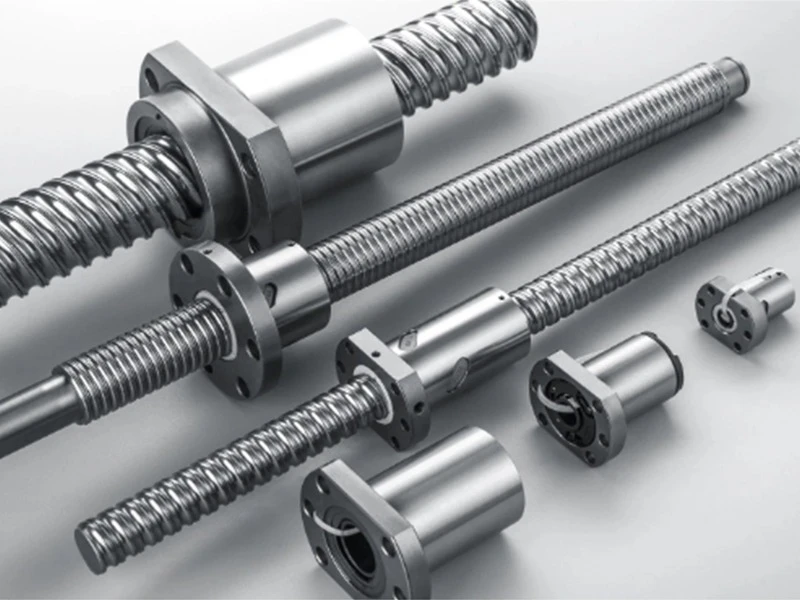
Ball screws are used to convert rotary motion from servo motors into precise linear movement. They drive the movement of machine axes such as the X-axis and Z-axis.
Ball screws are widely used in CNC machines because they provide:
High positioning accuracy
Low friction and smooth movement
Minimal backlash
These characteristics allow CNC lathes to achieve accurate tool positioning and repeatable machining results.
CNC Control System
The CNC control system is the brain of the CNC lathe machine. It reads machining programs and controls the movement of the machine according to the programmed instructions.
The CNC system coordinates various machine functions, including:
Spindle speed control
Tool movement along different axes
Automatic tool changes
Cutting parameter control
Popular CNC control systems include FANUC, Siemens, Mitsubishi, and SYNTEC. A reliable CNC control system ensures stable operation and high machining precision.
Our CNC Lathe Machine

Vertical CNC Lathe Machine
Vertical lathes, or VTLs, are one of the most traditional machine types. They are ideal for heavy-duty machining of medium to large parts.

CNC Vertical Turning Lathe
Our CNC Vertical Lathe is specially designed for heavy-duty and large-diameter turning operations.

CNC Vertical Lathe
A CNC vertical lathe is a computer-controlled machine tool designed to machine large or heavy workpieces.
How CNC Lathe Parts Work Together?
All the components of a CNC lathe machine work together to perform precise and efficient turning operations. From holding the workpiece to controlling tool movement, each part plays a coordinated role during the machining process.
First, the CNC control system reads the machining program and sends commands to the machine. The spindle, located in the headstock, begins rotating the workpiece while the chuck securely holds it in place. At the same time, the servo motors and ball screws drive the carriage system to move the cutting tool along the X-axis and Z-axis.
During machining, the tool turret automatically selects the required cutting tool for different operations such as turning, threading, or drilling. If the workpiece is long, the tailstock provides additional support to prevent vibration or bending.
Meanwhile, the guideways ensure smooth and precise movement of machine components, while the cooling system and chip removal system help maintain a stable machining environment.
Through the coordinated operation of these parts, a CNC lathe machine can produce complex and high-precision components efficiently and consistently.
Common CNC Lathe Applications
CNC lathe machines are widely used in many industries to produce high-precision cylindrical parts. Their ability to perform turning, threading, drilling, and boring operations makes them essential equipment in modern manufacturing.
Automotive Industry
In the automotive industry, CNC lathes are commonly used to manufacture parts such as drive shafts, brake components, bushings, and transmission parts. These components require high precision and consistent production quality.
Aerospace Industry
CNC lathes are used to machine aerospace components including landing gear parts, precision shafts, and structural fittings. These parts often require tight tolerances and high reliability.
Medical Equipment
In the medical field, CNC lathes produce small and highly precise components such as surgical instruments, orthopedic implants, and medical device fittings.
Hydraulic and Fluid Systems
CNC lathes are widely used to manufacture valves, pipe fittings, connectors, and hydraulic components that require accurate threading and sealing surfaces.
Electronics and Precision Components
For electronics and precision machinery, CNC lathes are used to produce connectors, sensor housings, and small mechanical parts that require precise dimensions and smooth surface finishes.
Because of their precision and automation capabilities, CNC lathe machines play an important role in producing complex and high-quality parts across various industries.
How to Choose a CNC Lathe Machine?
Choosing the right CNC lathe machine is important for achieving stable machining performance and efficient production. The selection should be based on several key factors related to the workpiece and production requirements.
Workpiece Size
The size and weight of the workpiece determine the required swing diameter, turning length, and chuck size of the CNC lathe. Larger parts require machines with stronger structures and larger working capacities.
Material Type
Different materials require different cutting capabilities. Hard materials such as stainless steel or titanium may require a machine with higher spindle torque and stronger rigidity, while softer materials like aluminum can be machined at higher speeds.
Precision Requirements
If the application requires tight tolerances and high surface finish, it is important to choose a CNC lathe with high spindle accuracy, precision ball screws, and stable guideway systems.
Production Volume
For high-volume production, machines equipped with automatic tool turrets, bar feeders, or sub-spindles can significantly improve productivity and reduce manual operation.
CNC Control System and Reliability
A reliable CNC control system and stable machine structure ensure long-term performance and easy operation. Choosing a machine with strong technical support and service can also reduce downtime and maintenance costs.
FAQs
What are the main parts of a CNC lathe machine?
The main parts of a CNC lathe machine include the bed, headstock, spindle, chuck, tool turret, tailstock, carriage system, guideways, ball screws, and CNC control system. These components work together to rotate the workpiece, control tool movement, and ensure precise machining operations.
What does the spindle do in a CNC lathe?
The spindle is responsible for rotating the workpiece during machining. It is located inside the headstock and holds the chuck or collet that clamps the workpiece. The spindle speed and stability directly affect cutting performance, machining accuracy, and surface finish.
What is the function of the tool turret?
The tool turret holds multiple cutting tools and automatically indexes to the required tool during machining. This allows the CNC lathe to perform different operations such as turning, threading, drilling, and grooving without manual tool changes, improving productivity and efficiency.
What is the difference between a chuck and a collet?
A chuck is commonly used to hold larger workpieces and usually has three or four jaws for clamping. A collet, on the other hand, is designed for smaller parts and provides higher clamping accuracy and better concentricity. Collets are often used in high-precision machining applications.
Why is the machine bed important in a CNC lathe?
The machine bed serves as the structural foundation of the CNC lathe. It supports major components such as the headstock, carriage, and tailstock. A rigid bed structure helps absorb vibration, maintain alignment, and ensure consistent machining accuracy.
Can a CNC lathe perform operations other than turning?
Yes, modern CNC lathes can perform various machining operations beyond turning. With features such as live tooling and Y-axis capability, CNC lathes can also perform milling, drilling, tapping, and slotting operations, allowing multiple processes to be completed on a single machine.
Conclusion
Understanding the parts of a CNC lathe machine is essential for anyone involved in modern machining and manufacturing. Each component-from the bed and spindle to the turret and CNC control system-plays an important role in ensuring stable operation, machining accuracy, and production efficiency.
When these parts work together properly, a CNC lathe can perform precise and reliable turning operations for a wide range of industrial applications. By understanding the function of each component, operators and manufacturers can improve machining performance, reduce downtime, and select the right machine for their production needs.
If you are looking for high-performance CNC lathe machines for precision manufacturing, explore our CNC machine solutions designed to deliver stable performance and efficient production.
