


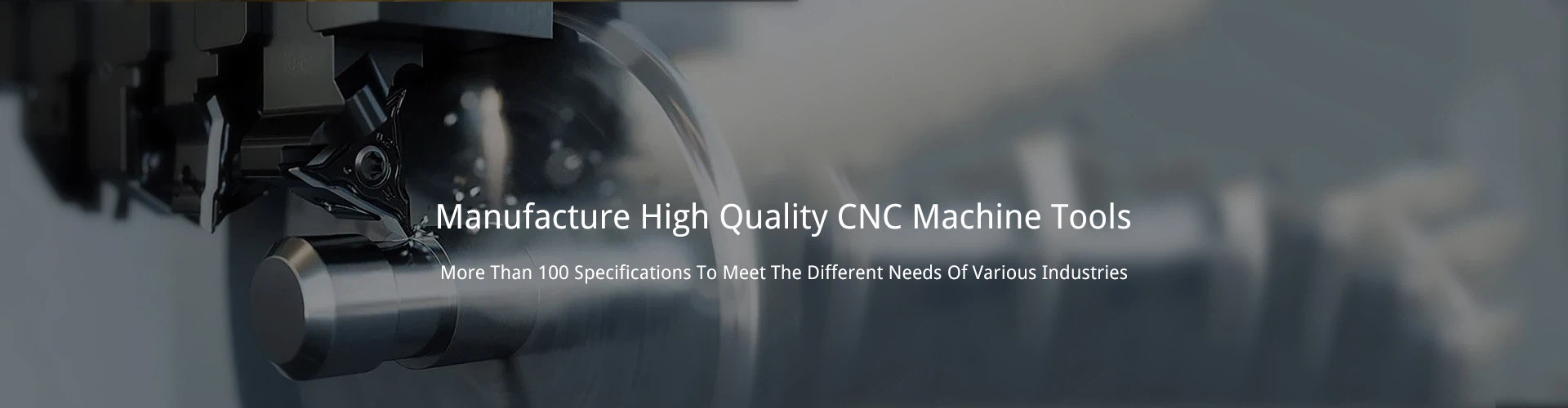
The 5-axis CNC machine is one of the most precise and versatile tools available. It can translate the cutting tool in five directions. In contrast with conventional machines, it makes it possible to build complicated part designs easily. This extra mobility also means fewer setups because a few more compressors are rolling around the shop floor, which saves time and increases productivity. The characteristics of 5-axis machining make it very useful and effective: the tool and the part can be positioned in any way. It can make different shapes, angles, and curves within manufacturers' products. These machines are ideal for use by production firms that require precision and complex parts in their products.
Utilizing a 5-axis machine reduces the chance of human error, and efficiency and precision will be higher. Operators can conveniently operate and control the machine through enhanced software programs. With such machines, the opportunities for new technologies and increased production expand manifold. That's a game-changer in the world of precision engineering.
What is 5-Axis Machining?
5-axis machining is a process in which the tool translates along five axes to fashion a workpiece. It combines linear movements along the X, Y, and Z axes with rotational movements around the A and B axes. The versatile configuration allows for wider geometry and angle to be carved at a time as it is easier to handle and reduces the time needed for rearrangement.
Unlike the more limited 3-axis machines that move only in straight paths, 5-axis machines can rotate the part being machined during the cutting. That is why using the described method of simultaneous movement of the tool and the part, it is possible to create twists and special undercuts without the involvement of people. There are few applications where this particular process is more valuable; specifically, when the precision is critical, such as in aerospace, medical, and automotive industries.
5-axis machining is a technique that increases effectiveness because it limits the number of times a part must be placed within a machine or set into a fixture. It makes operators effectively work with a part from multiple angles irrespective of the need to adjust or reposition the part. This not only shortens the production cycle but also provides higher accuracy, uniformity, and higher surface quality throughout the process.
5-Axis Possible Configurations
5-axis machines are available in many types of constructions, but all of them have flexibility in common. The most typical configurations are described as 'table-table' and 'head-head' configurations. In the table-table configuration, both the workpiece and tool tables are rotated as well. This allows continuous relative motion and extremely accurate feed for finer operation requirements. The system enables complex components to be machined in one position without having to replace them. Such a configuration is highly suitable for high-accuracy demanding sectors like aerospace.
The head-head configuration, on the other hand, causes rotation of the tool holder. The workpiece does not move or has little movement across the machine during the machining process. It is stable and rigid, especially during cutting hard materials, and for these reasons this design is effective. This is ideal for use in applications where high cutting forces will be needed. The setup minimizes chances of distortion or vibration hence delivering quality results.
One of the other most used designs is the "tilt-rotate" design. In this design, one of the two components of the workpiece or the tool will have the ability to tilt or rotate. This movement offers further freedom in machining complex shapes. It enables the testing of the form's hard-to-reach areas thereby decreasing form set-up time. Tilt-rotate setups are ideal where designs of the required part consist of intricate geometries.
Types of 5-Axis CNC Machines
The common types of 5-axis CNC Machining include;

Head/Table 5 Axis CNC Machines
The Head/Table arrangement of the cutting tool comprises a tilting head with the workpiece held firmly on a table that does not move. The direction of the tool's head can be changed in a vertical and horizontal plane to reach different positions of the part. This configuration is useful when working on micro parts, features, undercuts, or deep pockets. Since the workpiece does not move about the machine table, a high degree of stability is possible, and this will mean high accuracy. These machines are utilized where tolerances are tight and include aerospace and medical device industries.
Head/Head 5-Axis CNC Machines
The most suitable classification of this group of machines is the Head/Head wherein both the tool and the workpiece rotate on their respective heads. Here one head is equipped with the cutting tool and the second head holds the workpiece. Both can move around two axes while the other facilitates movement in just one axis.
This provides the tool a capacity of versatility when approaching the part from almost any direction and orientation. It is most useful for applications where the tools have to function while the part also rotates, in a difficult machining operation. The H/H design is favored for any industry that requires complicated cuts, for example, the molding of nuts, bolts as well as other parts for automobile manufacturers.
Table/Table 5 Axle CNC machines
In the Table/Table design, rotation is possible in both the cutting tool and the workpiece. In most cases, the machine's base can accommodate two tables – the workpiece table and the tool table. These tables are moveable in a way that the tool and part can approach each other from all sides as the tables are tiltable and rotatable.
The benefit of this arrangement is the ease of providing a high degree of flexibility in the machining of intricate workpieces, time and effort required to set up the machinery being considerably minimized. Table/Table machines are widely employed in mass production for complex parts in aerospace and precise engineering industries.
Tilt-Rotate 5-axis CNC Machines
The Tilt-Rotate configuration comprises having the workpiece or the tool mounted on a rotating table that also has a tilting motion. The rotation is used to make small movements in different planes thus enhancing the possibility of contouring workpieces of a complex shape without having to reorient them.
Tilt-rotate systems are typically utilized where geometries of high complexity, deep holes, or undercuts are a factor. This design offers improved access to some of the small and recessed areas of the structure and at the same time minimizes the number of setups. These machines are best suited to high part complexity such as in molds or aerospace industries producing unique parts.
Benefits of the 5-Axis CNC Machining
Improved Precision and Accuracy
5-axis CNC machining is even more precise than 4-axis because it allows the tool and workpiece to simultaneous continuous motion in different axis directions. This lessens the misalignment risk, especially for difficult geometry structures in the mirror and track system. It also allows for better working of the pieces from many directions which results in better control of tolerances and therefore higher repeatability which makes it ideal for high-precision industries such as aviation and the manufacturing of medical equipment.

Reduced Setup Time
5-axis CNC machines are special in that several operations can be performed on the same part and in the same position. It can reach every corner and slot on the part without the user having to readjust it something that saves time. This results in fewer handling errors, higher productivity, and shorter turnaround time,e particularly in small production runs or where the custom order production is involved.
Capability for Complex Geometries
5-axis machines are particularly used in the machining of complex shapes with undercuts and other shapes. Its operation makes it possible to perform the machining of multiple-axis projects using the tool and workpiece with equal ease in equal cycles. This capability is needed for manufacturing turbine blades, molds, and automobile parts, which are usually large and have cross-sectional features.
Improved Surface Finish
5-axis CNC machining provides a good surface finish since the tool has the best cutting angles. This diminishes tool deflection, vibration, and chatter thereby giving better finishes as well as enhanced surface finishes. This multi-axis capability also helps leave very little evidence of the tool used, which is advantageous for parts that must have very smooth surfaces, such as for the production of implants for the human body or molds for micro injection molding.
Extended Tool Life
Due to the proper orientation of the cutting tool through 5-axis CNC machining, the stress that may be exerted on the specific tool is considerably minimized. The Spread of cutting forces with low stresses on the tool results in increase in the tool durability. Less frequent tool change also helps to save cost and time and maintain a stable quality of machining.
Better Efficiency and increased Productivity
5-axis CNC machining combines several operations into a single cycle thus improving its efficiency. Manufacturers can realize higher throughput from the production line, thanks to fewer setups, lower rework, and shorter cycle times. Reducing scrap and rejections, five-axis machining remains an efficient method of manufacturing for both low and high quantities.
Comparisons between 3-axis, 4-Axis, and 5-Axis CNC Machine
Movement Capabilities
3-Axis CNC: In a 3-axis CNC machine, the cutting tool is in motion in a straight line in three directions, that is, along the X (left-right), Y (front-back), and Z (up-down) access. This setup lets the machine drill, mill, and engrave; however, it is not suitable for further geometries or other surfaces.
4-Axis CNC: A 4-axis CNC increases the rotation axis around the X-axis (A-axis) of the worktable. This makes it possible to have the workpiece revolve as the machine can get to other surfaces of the part or other surface features. While it will permit more complex parts based on the third revolution axis, it still needs to be repositioned for 3D machining.
5-Axis CNC: A 5-axis CNC adds two more rotational axes, generally, in the Y-axis referred to as B-axis, and in the Z-axis called C-axis. This design allows both the tool and workpiece to travel in five directions, which in turn can produce more intricate forms and machine all aspects of an object without repositioning.
Complexity of Parts
3-Axis CNC: It is ideal for less complex 2D components or a component having limited 3D complexity. It's well suited for roughing operations, where it is used to make deeper cuts, drill or mill a workpiece but is not suitable for finishing operations, where one wants to produce shapes or workparts with fine and small features or undercuts.
4-Axis CNC: Suitable for parts that need extra motion, especially contoured components on intricate geometries or cylindrical ones. The feature of rotation also proves advantageous as it can be used, for example, for engraving on cylindrical objects or, for instance, for machining features on several faces of a part without the need for part positioning.
5-Axis CNC: The highest category of the three that can range through full 3D shapes, undercuts, and deep recesses. It can reach most sides of a part at once which is perfect for tight-tolerance industries such as aviation, medical, and automotive.
Setup Time
3-Axis CNC: Needs to be set up more than once to machine all the faces of a given part. Every repositioning brings the possibility of misregistration which in turn impacts the accuracy and the overall setup time.
4-Axis CNC: Less time is required to set up this machine than the 3-axis as part rotation is done in the same setup. However, it may still need more accessories for some of the geometries that are not in the reach of the rotating axis.
5-Axis CNC: Reduces setup time because it can machine all sides of the part in one cycle. One good thing is that there is no repositioning of the robots which minimizes mismatch and human element. This contributes to faster cycle and overall part production rates in complex part manufacturing.
Tooling and Surface Finish
3-Axis CNC: Lack of versatility in tool location which results in the marking of the workpiece surfaces especially on curved or bent surfaces.
4-Axis CNC: Advantages over 3-axis as it permits the tool to operate at various angles to the workpiece surface. However, it is still not very effective in certain situations concerning modeling processes on complex 3D surfaces.
5-Axis CNC: Provides the best surface finishes since it is possible to approach the workpiece from several directions. The result, as one might expect, is that since there is less repositioning required the tool marks are less likely to build up, and the cut is much smoother and more consistent, especially in difficult or irregular shapes.
Applications
3-Axis CNC: Often used in industries that cannot afford complex machining, for example, industries involving mass production of simple artifacts, woodworking, or industries producing simple components in small numbers. It should be used for mainly drilling, milling, as well as simple engraving.
4-Axis CNC: Applicable in industries where parts have to be turned over to machine different faces. It is used in the manufacture of components such as gear, shafts, cylindrical, and other rotational parts besides molds.
5-Axis CNC: Cathodic electrodeposition is indispensable for those industries where manufacturing intricate, high-accuracy parts is imperative. Applications of 5-axis CNC machines include the aerospace industry, medical industries, automotive industries, and mold-making industry because of their strength, accuracy, and ability to make complex shapes and undercuts, and thin-walled products with great precision.
Cost and Investment
3-Axis CNC: The cheapest to acquire as well as to maintain for the long-term period of utilization of the services offered by the center. It is ideal for small shops or manufacturing industries which require simple machining processes.
4-Axis CNC: A bit costlier than 3-axial machines because of an added rotary axis but more versatile in the way it can be used to shape complex parts. It offered a reasonable degree of capability and cost for applications in shops dealing with moderate levels of complexity in parts.
5-Axis CNC: The most expensive of the three, since it is more complex and has the highest level of automation. But it has the highest ROI for manufacturers who have to create intricate and very accurate parts in one go and eliminate the need for different machines and setups.
Table Summary: C
|
Feature |
3-Axis CNC |
4-Axis CNC |
5-Axis CNC |
|
Movement |
X, Y, Z linear movement |
X, Y, Z + A (rotational) |
X, Y, Z + A, B (2 rotational axes) |
|
Complexity |
Simple, 2D or limited 3D parts |
Moderate complexity, cylindrical |
Complex 3D geometries, undercuts |
|
Setup Time |
High, requires multiple setups |
Reduced, part rotation is possible |
Low, one setup for all sides |
|
Tooling & Finish |
Limited, basic surface finishes |
Improved, better access to angles |
Optimal surface finishes, minimal marks |
|
Applications |
Basic machining, general work |
Parts requiring rotation |
High-precision, complex part machining |
|
Cost |
Most affordable |
Mid-range investment |
Highest investment |
Disadvantages of 5-Axis CNC Machining
High Initial Investment
The largest disadvantage of 5-axis CNC machining is that it is more expensive than other types of machining at the beginning. The machines themselves are much more costly compared with 3-axis or 4-axis CNC machines. Also, the investment is brought about by the need to purchase necessary software for programming and training of individuals in operating the equipment. This makes 5-axis machining a significant cost which often becomes a challenge, especially to the new firms or even those facing some level of financial constraints.
Complex Programming and Setup
As with any machine, 5-axis CNC machines are more complex than the simpler 3-axis ones, when it comes to programming. The multi-axis movement necessitates CAM (Computer-Aided Manufacturing) software that is complex to program and challenging to operate. Such a machine requires advanced training of operators to enhance their utilization of the machine fully. Incorrect programming results in either poor machining, slow cycle time, or damaged tools hence the need for qualified personnel.
Increased Maintenance Costs
As the complexity level with the simultaneous use of multiple rotational axes is even higher, 5-axis CNC machines are costlier to maintain. These machines have more components such as auxiliary motors, drives, and bearings, anare d also more frequently subjected to maintenance. This means that more time is spent on maintenance, greater repair costs, and more time lost due to repairs as well. Maintenance is highly recommended to avoid inaccuracies in the product, and where there has been some construction, it can be very expensive to repair.
Limited Availability of Skilled Operators
5-axis CNC machines are a bit complex and need a highly skilled person to operate the equipment well. Five axes simultaneously bring several complex calculations and a sophisticated understanding of the applied machining processes. The supply of operators is generally low and hence it leads to high labor costs besides posing challenges in staffing particularly for industries with complex machining needs yet little capital to hire professional talented people.
Longer Setup Time for Complex Jobs
While 5-axis CNC machines eliminate the need for multiple setups by machining complicated parts in a single cycle, there is still the time required to set up these machines when there is work that requires complex operations. Positioning the workpiece correctly, getting the right tools, and setting the right parameters for the machine operations can be quite several hours. In cases where parts are often swapped or changed over during the production run, then setup times may still be higher than these basic CNC machines.
Tooling and Workpiece Constraints
Despite its high flexibility in comparison to other machining techniques, 5-axis CNC machining is not free from the general limitations of other machining techniques including tooling and workpiece size limitations. Some parts might be too large to fit into the work envelope of the machines while some tooling configurations may have to be further adapted to increase functionality. Also, the complexity of the machine to one extent or another may hinder it from performing specific operations, especially when used on certain types of material or certain conditions such as highly hardened steel or very abrasive materials.
What Kind of Parts Can Be Machined Using a 5-axis Machining Center?
A 5-axis machining center is for producing complicated, high-accuracy parts that need much more than simple up-down or side-to-side movement. There are a variety of features that make 5-axis machining most suitable for the production of complex geometrical and precise workpieces Below are the types of parts that can be effectively machined using a 5-axis CNC machine:
Aerospace Components
Products from the aerospace industry have complex geometrical shapes and tight tolerances hence the need to use the 5-axis machining. These are seen in the Turbine blades for aircraft; airframe structures and also in some of the engine parts like the compressor blades, casings, and housings. The adaptability of machining complex curved shapes, undercuts, and deep-drawn features is very critical for the rigors of aerospace applications.
Example parts:
Turbine blades
Aircraft brackets
Fuel injectors
Engine mounts
Medical Implants and Devices
The medical industry uses intricate and accurate components such as implants, surgical instruments, and prosthetics. Automatic contouring, surface finishing, and detail-making require that minimal human touch is applied in this area of manufacturing for it to be effective. The 5-axis machines are capable of making parts like hip implants, spinal surgery instruments, dental tools, and any other part that requires very tight tolerances and superior surface finish.
Example parts:
Hip prostheses
Knee implants
Bone screws and plates
Surgical instruments
These parts need to fit, be comfortable and work well and multi-dimensional cutting is used to achieve this, 5-axis computer numerical control machining is then used to ensure all aspects are produced accurately.
Automotive Parts
Automotive manufacturers use the 5-axis to fabricate parts that demand intricate and accurate forms and looks. Large components like engine blocks, transmission housing, and suspension parts can be effectively used in 5-axis machines. These parts usually have finer features such as; curves, undercut, and multi-surface features which conventional styles of CNC machinery have been known to handle poorly.
Example parts:
Cylinder heads
Transmission housings
Differential casings
Suspension components
Molds and Dies
Another industry that finds a lot of use in 5-axis machining is the mold-making industry. Injection molds die-cast molds, and blow molds call for accuracy in geometries that possess intricate details that cannot be machined. Because some angles and curves can be reached in one setup it becomes easier to avoid misalignment and ensure that the molds interconnect as desired.
Example parts:
Plastic injection molds
Die-cast molds
Blow molds
Metal forming dies
Energy and Power Generation Components
Some of the parts in use mostly in the energy sector, especially in power generation systems, are produced to very strict standards since they work under very high conditions. Such parts as gas turbine blades, reactor parts, and valve parts are milled using 5-axis CNC machines due to their inherent preciseness. These parts may have intricate shapes and very thin cross-sectional thicknesses with close tolerance to deal with high temperature and pressure conditions.
Example parts:
Gas turbine blades
Valve bodies
Heat exchangers
Reactor components
Complex Tooling and Fixtures
5-axis CNC machining is used to manufacture unique tools, jigs, and fixtures for other forms of production. These parts frequently have intricate shapes and angles that can be generated only by utilizing multi-axis machining. Other parts include tooling parts where tooling that is used in stamping, or cutting requires accuracy and flexibility, which is offered in 5-axis machining.
Example parts:
Custom jigs and fixtures
Cutting tools
Special-purpose tooling
Prototype Parts
During the prototyping stage, speed and accuracy are of paramount importance Lastly, 5-axis CNC machines are very useful in creating complex prototype parts, increasingly so in the aerospace, automotive, and medical industries. By having the machine work on multiple faces of a part at the same time, time is saved as well as errors during prototyping are reduced.
Example parts:
Automotive test parts
Medical device prototypes
Concept models