In CNC machining, issues like vibration, poor surface finish, or unstable cutting performance are often blamed on the cutting tool or the machine itself. However, in many cases, the real cause lies in the tool holder system.
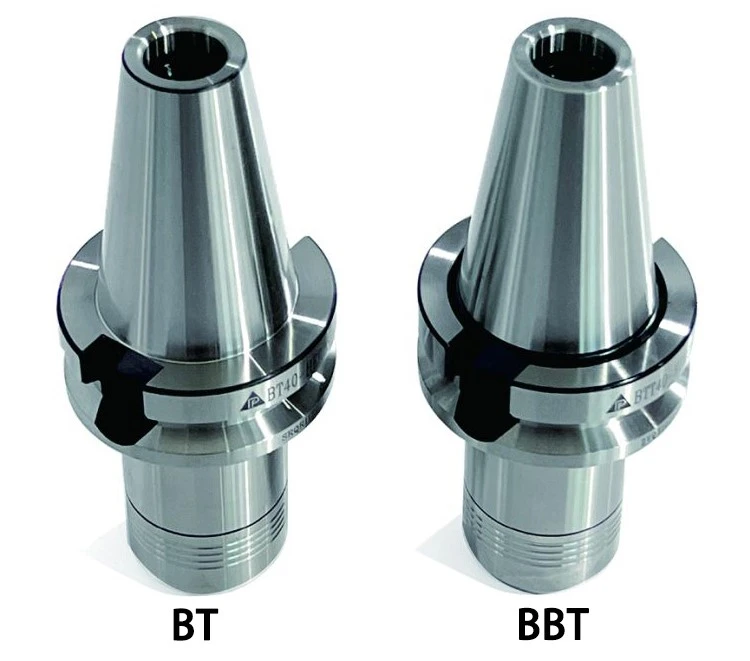
BT and BBT tool holders are two of the most widely used standards in CNC machining. While they appear similar, their structural differences can significantly impact machining rigidity, accuracy, and overall efficiency.
In this guide, we'll clearly explain the differences between BT and BBT tool holders and help you choose the right option based on your machining requirements.
.
What is a CNC BBT Tool Holder?
A CNC BBT (Boring Bar Taper) tool holder is an accessory that sits in CNC (Computer Numerical Control) machines; mainly used for holding cutting tools. It has been given a tapered interface to give it high rigidity, accuracy, and clamping force for use in the BBT tool holder. This type of machine is mainly applied in material removal processes, especially in milling and drilling newly developed industries such as the aerospace, automobile,e and precision sectors.
The BBT tool holder is an improvement on the conventional hole-making tool holder known as the BT (Boring Tool) holder with improved rigidity. The advanced configuration of this tool integrates a consistent contact not only on the spindle taper but on the face of the flange as well; thus, providing more improved torque transmitting capability and reduced tool deflection. This makes tool holders of BBT suitable for uses where there is heavy cutting force, large material to be cut, and high levels of tolerance are required.
Key Features of CNC BBT Tool Holders:
Dual Contact System: Increased accuracy and rigidity are obtained due to the use of both taper and face contact,
Precision Fit: Its accuracy and stability are very good and ensure minimal levels of vibrational errors such as end tool runout.
Versatility: They are ideal for almost all cutting tools including drills, mills, taps, and many others.
Improved Clamping Force: Reduces the chances of the tool–cutting as the tool is not being held firmly thus hindering its operation during high cut rates and heavy material removal rate operations.
Applications of CNC BBT Tool Holders:
Heavy Milling Operations: Especially where rigid and secure tool holders are desirable, for example in aerospace applications, where the requirement is to machine materials such as titanium and steel.
Precision Drilling and Boring: Ideal for use where close tolerance in hole making and with negligible tool deflection is desired.
High-Performance Machining: Favorite in CNC machining centers where it is important to have maximum force transmission into the workpiece to ensure accuracy.
BBT tool holders are appreciated in the highest speed/precise CNC machining for offering great stability, enhancing cut-ability, and ensuring first-class workpieces.
What is a CNC BT Tool Holder?
A CNC BT Tool Holder is a tool holder used in CNC Machinery to ensure that cutting tools are firmly held in place especially while milling, drilling, or boring. The BT (Boring Tool) holder has a tapered interface that fits directly onto a spindle of the CNC machine to allow it to offer a rigid contact point between the machine and the cutting tool.
BT tool holders can be applied widely in CNC vertical and horizontal machining centers. These generally provide higher accuracy and larger clamping force. They are usually made from very strong materials such as Steel to endure mechanical forces and high speed that is characterized by machining processes.
Key Features of CNC BT Tool Holders:
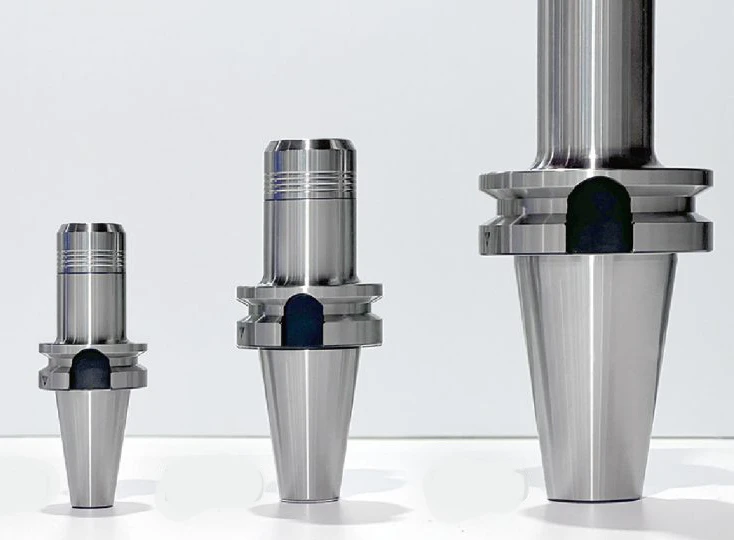
Tapered Shank: The BT tool holder therefore has an ISO 7388 taper that provides rigid, precise, and firm gripping capacity of the tool on the machine spindle.
Precision and Stability: It also provides solid clamping of the tool holder to the spindle reducing spindle vibration, and tool run and increasing the accuracy of machining.
Versatility: Due to the compatibility of the BT holders with a versatile of cutting tools that include drills, mills, and taps, the holders are suitable for different machining work.
Cost-Effective: Compared with some other specialized tool holders, BT tool holders are rather cheap, which is why they are in demand in various industries.
Applications of CNC BT Tool Holders:
General Milling Operations: Suitable for all kinds of milling and drilling functions where high levels of accuracy are important.
Machining Complex Parts: Highly appropriate for generating intricate and precision components common to industries such as the automotive, aerospace, and metals industries.
Medium to High-Speed Machining: Most commonly employed for operations requiring the moderate force of cutting and velocity.
Tool holders, BT are designed for highly reliable and flexible performance in machining which has always been a huge value for manufacturers as it provides cost-effective solutions for numerous types of CNC operations. These are particularly advantageous in sectors where accuracy is crucial, tool fluctuations are undesirable, and the application demands versatile tools for marginal tool changes.
What is an HSK Tool Holder Interface?
HSK (Hollow Shank Taper) is one of the high-accuracy tool interfaces applied in CNC machines to hold cutting tools with high accuracy. Contrary to the conventional tool holders, HSK possesses a special geometry of the shank that has a hollow, conical form and a clamping force that maintains extremely rigid, precise, and stable tool clamping during the process of the operation. HSK-tool holders system is distinguished by high rigidity of the system, high accuracy, and good operational characteristics in high-speed mode with a low level of vibration.
Key Features of the HSK Interface:
Tapered Shank: The shank of the tool is slender and once it is placed into the spindle the fit is rather snug making for excellent holding thereof for transmitting torque.
Hollow Structure: The shank is held to be of reduced weight but the middle part of the shank is designed to be hollow to keep up the vigor and firmness of the tool holder.
Clamping System: Instead, HSK employs a clamping force principle which forces the tool holder to be firmly grabbed hence providing a kinship between the spindle and the cutting tool.
Types of HSK Tool Holders:
HSK-A (Standard): Able to provide good results in high-speed machining while keeping the size of the machine relatively small.
HSK-F: Revered for best holding power, and rigidity which makes it perfect for any rigorous use.
HSK-E: Available with a still higher degree of accuracy being useful in applications requiring a very high degree of accuracy as in milling drilling and measurement.
Advantages of HSK Tool Holder Interface:
Higher Precision: HSK tool holders are great tool-holding devices, which enhance a precise interaction between the tools and the workpiece. So these ultimately minimize the run out to offer better accuracy on cut operations.
Improved Rigidity: The HSK interface has been blessed with better rigidity and tool stability in its design to enable machines to produce better surface finishes and tolerance.
Faster Tool Changes: There is a trend in HSK systems where the system allows for easier tool changeovers in production contexts.
Applications of HSK Tool Holders:
HSK tool holders are used in advanced numerical control machines, particularly in operations such as high-speed machining, accurate drilling, and operations that require high torque. These are used in businesses where there is a need to increase accuracies and holding forces, the some of the fields include aerospace industries, automobile industries as well as medical industries.
Differences Between BT and BBT Tool Holders
| Feature | BT Tool Holder | BBT Tool Holder |
| Contact Type | Taper contact only | Dual contact (taper + flange) |
| Rigidity | Medium | High |
| Stability | Standard | Excellent |
| Accuracy | General machining | High precision machining |
| Vibration Control | Moderate | Strong |
| Application | General machining | High-speed / heavy cutting |
| Cost | Lower | Higher |
Contact Mechanism
BT Tool Holder:
The BT tool holder consists of an undercut, followed by a taper that is located in the CNC spindle. This taper ensures a firm fitting, but the tool holder has only this taper contact to hold the Tool when clamping it. It does not have further face contact with the spindle.
The only thing that is clamped here is the spindle by way of developing a load-through taper with the tool holder only.
BBT Tool Holder:
This is provided by the BBT tool holder where two contact points are established, that is the contact by the taper and the face contact. Not only does the taper interface directly with the spindle but the face of the tool holder (flange) touches the spindle face.
This dual contact enhances the stiffness and strength, particularly at locations where high cutting forces are experienced.
Rigidity and Precision
BT Tool Holder:
BT tool holders are rather rigid and sufficient for the majority of machining applications; however, they can't be compared with holders of the BBT type. The single taper contact can reflect some slight oscillations or vibrations during high-speed or high/power-duty cutting operations. Recommended for small precision parts and light to medium activities.
BBT Tool Holder:
The dual contact system gives the machine improved stiffness and accuracy especially when using superior cutting forces. The face contact eliminates tool deflection and vibration, which makes BBT holders suitable for strong and precise tasks.
Most appropriate for operations that demand high speed and high torque and result in low values for tool deflection.
Torque Transfer
BT Tool Holder:
Transmission of torque in BT tool holders is principally through the slant spindles seated in the appropriate tool holder. Otherwise, the use of the concepts of torque transmission is effective for most generic jobs, albeit not as efficient when dealing with materials that would need deep cuts or high velocity.
BBT Tool Holder:
The BBT tool holder outperforms the others in the aspect of torque transmission because of the two contacting faces. The extra face contact enhances the transfer of torque thus suitable for use in high-rpm and high-torque applications such as metalcutting.
This increased torque transmission also provides the advantage of offering stability coupled with higher degrees of accuracy in difficult operations.
Applications
BT Tool Holder:
Distributed BT holders are predominantly incorporated in everyday CNC milling machines and lathes for traditional cutting operations such as milling, drilling, and boring. They are ideal for middle-range speed applications where material stiffness is not a consideration in the process. It is used in turn by various industries for finish cutting of nonferrous metals, light steel, and simple components.
BBT Tool Holder:
BBT bearings are ideal for high-performance and industrial use where matters such as stiffness, twist, and accuracy of bearings matter most. It was also found that the dual contact system allows BBT holders to be suitable for high-speed and substantial cutting force CNC machines.
Examples of usage encompass aerospace, automobile components, hard materials, and intricate parts using high-velocity milling or boring.
Cost and Compatibility
BT Tool Holder:
It may be noted that in most cases, the tool holders associated with BT are cheaper than the tool holders manifested for BBT mainly because the latter is more complex. Very versatile with many CNC machines and is commonly used by most firms that use this equipment.
As they only depend on the taper, they are more economical in comparison with other machining centers for average machining applications.
BBT Tool Holder:
The tool holders of BBT types are comparatively costlier than standard tool holders because of the two-point contact and high accuracy. It is necessary to have spindles just for the second contact system, potential compatibility with other CNC machines of old or less advanced models may be a problem.
Recommendable for those who want much higher precision cutting, highly labor-intensive operations, and are ready to pay more for better quality.
Tool Holding Performance
BT Tool Holder:
Designed for plain milling and moderate cutting speed work, BT tool holders give satisfactory results but tools may flex or vibrate slightly during heavy work. They are suitable for normal application when excessive cutting forces are not required.
BBT Tool Holder:
In high-torque applications, high speed, and high precision, the holders used in BBT tools work better. The increased face contact also guarantees minimal tool deflection and enhanced stability making the finish work more precise and pronounced during heavy usage.
The BT and BBT Tool Holders' performance
The BT tool holders are applicable across most CNC machining jobs. Ideally, they offer excellent staking because of tool rigidity, but the tool may deflect slightly during high-speed cutting operation or when used with higher-rated tools. This may also reduce the accuracy and wear of tools required when using the components in more challenging operations. Being economical and suitable for moderate cutting forces BT holders are ideal cutting tools for general-purpose milling and drilling.

BBT fitting area UP30%
While on the other side, BBT tool holders show better results because they provide a dual contact system. The extra face-bearing contact increases the stiffness and solidity and decreases any bending and vibrations important when running at high speed or when creating high torque. This makes BBT holders suitable for application on heavy-duty, high-precision operations where transmission of torque and cutting accuracy are paramount. However, the costs of BBT holders are higher, but they offer better tool life, higher machining efficiency, and overall as well that are ideal for heavy-duty operations.
Key Considerations When Choosing Tools for BT and BBT Interfaces
In a situation where the basic tool is incorporated in a machine that also supports both BT and BBT interfaces, there are certain differences in the structure of these machines, which should be taken into consideration.
BT tool holders have only taper contact, so they are suitable for light to average use, on the other hand, BBT tool holders have both taper and face contact for better rigidity and stability for heavy-duty and high-precision uses. Make sure that the tools work with both systems because, for instance, one experiences a limit with the dual contact feature of BBT holders. Tool materials should be capable of withstanding cutting forces to keep the tools in good condition; for BBT holders, coatings are recommendable.
In addition, for the BBT tools that involve higher accuracy, proper tool alignment and minimum run out will go a long way to giving you the best result. Finally, the tool must also be worked under different cutting forces and speeds to achieve the best outcome in both systems.
Conclusion
When choosing tool holders for CNC machines that use both BT and BBT interfaces compatibility, the solidness of the tool, the force used in cutting, and the degree of precision that is required should be considered. Free cutting without high cutting forces is perfect where BT holders are used; on the other hand, accuracy higher stability, and torque transmission are essential when using the BBT holders.
Being able to verify that the tools have the correct geometry and match the correct machine spindle and choosing the correct material to be machined will have a vast impact on the speed and life of the tools.