


Manufacturing companies need high precision to make quality parts. In lathe machines, if movement is not controlled properly, parts may be defective, leading to wasted materials and higher costs. Without an accurate guiding system, cutting and shaping metal becomes difficult.
A lead screw helps solve this problem by moving the cutting tool smoothly in a straight line. It changes rotary motion into linear motion, allowing the machine to cut and shape metal accurately. This is especially important for making threads and other detailed cuts.
Companies using high-quality lead screws get better results in machining. Machines like the 3-Axis Machining Center VMC Machine use lead screws to improve positioning accuracy and machine strength. This helps in making precise and consistent products.
Knowing how a lead screw works in a lathe machine is important for improving machining performance. This article explains its function, types, and benefits in industrial manufacturing.
What is a Lead Screw?
A lead screw is a mechanical part applied in lathe machines for the movement of the cutting tool along a straight line. Generally, it converts the rotary motion into linear motion, and in this way, accurate control over the movements of a tool can be achieved. Precise control is paramount for threading and other machining operations, calling for high accuracy.

A lead screw is made up of a threaded shaft and a nut that travels up and down the threads as the screw shaft rotates. The screw is made of hardened steel or stainless steel to minimize wear and to support precision. Square or trapezoidal threads are used depending on the machine's requirements.
Compared to a feed rod, a lead screw brings the user higher accuracy in the operation. Feeding rods are usually designed for general cutting operations. Lead screws are designed for threads and therefore give a possibility of very precise movement. Some other devices that can also be used for controlled motion are ball screws and a rack-and-pinion mechanism, but these differ in their application during the machining process.
Comparison of Lead Screw with Other Motion Control Mechanisms
|
Motion System |
Purpose |
Accuracy |
Common Use |
|
Lead Screw |
Precise linear motion |
High |
Thread cutting, fine machining |
|
Feed Rod |
General movement |
Medium |
Basic turning operations |
|
Ball Screw |
Smooth, efficient motion |
Very High |
CNC machines, high-speed machining |
|
Rack and Pinion |
Rapid movement |
Medium |
Heavy-duty machinery |
|
Belt Drive |
Power transmission |
Low |
Conveyor systems, lightweight automation |
Function of a Lead Screw in a Lathe CNC Machine
The lathe machine depends upon a lead screw to deliver the regulated movements needed for processing materials. Such movement enables the cutting tool to maintain a straight path motion at defined speeds. Accurate machining and high-quality production require proper implementation of this mechanism.
The five essential functions that a lead screw carries out within a lathe machine include:
1. Converting Rotational Motion into Linear Motion
The lead screw enables controlled motion of the tool carriage by rotating in a straight direction.
Moving tools precisely for cutting and shaping, and threading operations, becomes possible through the lead screw.
Manual adjustments would introduce additional errors if the lead screw were absent in the system.
2. Thread Cutting
The lead screw determines the cutting tool's velocity, so it will always correspond with the spindle movement.
By using this mechanism, the machine creates exact, consistent threads for both metal and plastic components.
The adjustment of the lead screw gear ratio enables users to create different thread pitch measurements.
3. Maintaining Machine Precision
Through its operation, the lead screw enhances tool movement precision to achieve higher accuracy levels.
The precision path of the cutting tool is possible because of this mechanism.
Advanced lead screws control the amount of oscillation that occurs during production to reduce unwanted system movement.
4. Automating the Cutting Process
The usage of lead screws frees operators from carrying out manual tool movement tasks.
The automatic operation mode enables unbroken production due to the absence of human adjustments.
Through automated control, machines deliver consistent results that yield parts that conform to the same requirements.
5. Enhancing Machine Efficiency and Productivity
A correctly operating lead screw helps machine processes speed up, yet maintains peak manufacturing quality.
The system speeds up manual work since it eliminates the requirement for manual adjustments and corrections.
Manufacturers who adopt CNC machines with sophisticated lead screw technology produce more units at reduced production costs.
Types of Lead Screws Used in Lathes
The design of threads in lead screws determines the different types used within lathe machines. The success of machining processes depends on a particular lead screw type that matches the operational requirements. Lead screws determine the efficiency parameters and accuracy, along with durability, for any system. Lathe machines implement five standard types for their operations.
Acme Thread Lead Screw
Acme thread lead screws serve as popular components for lathe machine applications that include general machining operations and positioning work. These threads follow a trapezoidal shape that strikes an excellent balance between their strength capabilities and their smooth operating motion. A wide thread angle decreases wear and enables the lead screw to operate under heavy loads. Screws made from hardened steel or bronze serve as common choices because they possess excellent wear resistance properties.
Acme threads maintain average precision levels while remaining straightforward when creating among different thread types. The higher friction levels of these screws result in efficiency reduction. The implementation of lubrication protects the equipment from wear and maintains its smooth functioning. Semi-automatic lathes, together with manual lathes, utilize these screws for their operations.
Square Thread Lead Screw
Square thread lead screws achieve better efficiency and generate less friction than the alternative Acme thread design. The square design of their threads enables better energy transfer while reducing sliding resistance. Square thread lead screws serve applications that need precise movement due to their suitability for CNC lathes and high-accuracy thread-cutting operations.

Square threads deliver the best efficiency by needing reduced force to operate the tool carriage. Manufacturing and maintenance of these threads proves to be complicated. Acme threads differ from these screws because they lack the self-locking ability, which means a separate braking system must be used for position retention.
Buttress Thread Lead Screw
The design of buttress thread lead screws enables them to handle large axial loads only in one direction. They have a thread structure that combines high-capacity strength on one edge with reduced friction on the other edge. The heavy-duty machining industry utilizes these screws since they deliver maximum efficiency when force is applied in one direction.
Buttress threads deliver superior strength during heavy loads, yet they function less well than Acme and square threads when operating in both directions. These screws find their main application in lathes, which need powerful cutting forces during metalworking operations involving deep cuts.
Trapezoidal Thread Lead Screw
Trapezoidal thread lead screws function like Acme threads, yet they possess a different thread angle. These threads achieve an effective strength-to-efficiency ratio. These screws serve European lathe machines, together with industrial applications that need average precision levels.

Trapezoidal threads distribute loads better than Acme threads, yet they produce notable amounts of friction during operation. The combination of durability requirements makes trapezoidal thread lead screws suitable for manual and automated lathes.
Ball Screw Lead Screw
Modern lead screws, known as ball screws, provide high precision along with fast operation capabilities. Ball bearings installed between the screw and nut serve to minimize friction and enhance movement precision. The application of these screws occurs frequently in CNC lathes together with automated systems because of precision demands.

The combination of high accuracy and efficiency makes ball screws the most expensive lead screw option available. Ball screws need regular maintenance to stop dirt accumulation while maintaining smooth operation. Ball screws lack the self-locking capability of Acme or trapezoidal screws, so users must implement additional braking systems for operation.
Comparison of Lead Screw Types
|
Lead Screw Type |
Strengths |
Weaknesses |
Common Uses |
|
Acme Thread |
Strong, easy to manufacture |
High friction, needs lubrication |
General machining, manual lathes |
|
Square Thread |
High efficiency, low friction |
Difficult to manufacture |
CNC lathes, precision cutting |
|
Buttress Thread |
Handles heavy loads in one direction |
Not suitable for bidirectional use |
Heavy-duty machining |
|
Trapezoidal Thread |
Good balance of strength and efficiency |
Generates friction like Acme threads |
Industrial lathes, automation |
|
Ball Screw |
Very high precision, low friction |
Expensive, requires maintenance |
CNC machines, automation |
Importance of High-Quality Lead Screws in Machining
Improves Machine Durability
Quality lead screws minimize the wear that occurs in lathe machines. Lead screws are built from durable materials that prevent bending and other forms of damage. The longevity of a lead screw extends through time because it needs little maintenance. The use of high-quality lead screws enables companies to decrease maintenance expenses and minimize equipment unavailability.
Enhances Precision and Accuracy
The proper lead screw enables smooth, uniform movement when machining occurs. The exact path follows without any deviation through the cutting tool. The accurate production of threads and elaborate parts depends on this feature. Material waste occurs when poor-quality screws result in cutting errors.
Extends Machine Lifespan
Machines that use high-quality lead screws operate with an extended lifespan. The efficient operation of the lead screw minimizes stress on the rest of the machine components. The smooth operation protects bearings as well as nuts and motor components from premature deterioration. A sturdy lead screw extends the operational lifetime of the entire machine system.
Material Selection for Better Performance
The manufacturing materials for lead screws include hardened steel and stainless steel, together with bronze. Manufacturers choose hardened steel materials for heavy-duty machinery because of their strength properties. Stainless steel stands as the preferred material selection when corrosion presents itself as a threat to the environment. Material selection for lead screws determines both their operational smoothness and their durability throughout their operational lifetime.
Reduces Maintenance Costs
A superior quality lead screw needs replacement less frequently. The system needs minimal lubrication and repair operations. The reduced maintenance expenses, together with uninterrupted production operations, become possible through the use of high-quality lead screws. The replacement costs for parts decrease when companies choose this option.
Increases Load-Bearing Capacity
The increased strength of lead screws enables them to bear heavier loads without experiencing any deformation. The capability to machine hard metals and large workpieces depends on this feature. The accuracy of the system suffers when a weak screw bends due to pressure. The performance of a system remains stable and efficient when using a high-quality lead screw.
Supports High-Speed Machining
The speed of operation in modern CNC machines remains high. When applied to high-speed operations, the precise manufacturing of lead screws minimizes both vibration and backlash. The implementation of precision-made lead screws leads to enhanced machining speed and better surface finish quality. Better lead screws provide advantages to companies that operate high-speed lathes.
Best CNC Machine with Best Lead Screws
Lead screws used in CNC machines must be of high quality to achieve smooth, precise motion. The positioning accuracy of finished products depends on how the lead screws operate the cutting tool. Advanced lead screws enable machines to operate with superior performance and increased efficiency, and extended operational lifespan.
The 3 Axis Machining Center VMC Machine GMD4-260 represents a CNC machine that depends on high-precision lead screws for operation. The machine contains lead screws from Taiwan Hiwin, which are recognized for their exceptional reliability and precision. The lead screws function to maintain precise positioning, which decreases the number of machining errors. The quality of manufactured parts improves while material waste decreases because of this advancement.
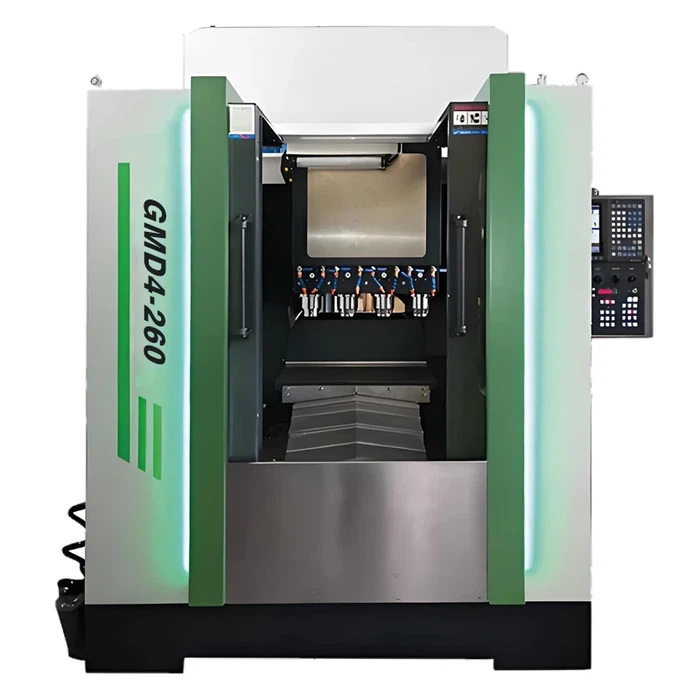
Advanced lead screws serve to improve the operational capabilities of CNC machines. The screws minimize mechanical play, which enables controlled and smooth machine operations. High-quality lead screws enhance machine stability, which leads to consistent results when running production operations for extended periods. Businesses that operate at large manufacturing scales need accurate positioning capabilities.
Maintenance and Troubleshooting of Lead Screws
The maintenance needs of lead screws determine both operational smoothness and equipment longevity. The accuracy of machining operations is negatively influenced by problems that occur in lead screws over time. Early detection and repair of these problems avoids costly machine failures and production interruptions.
Common Issues in Lead Screws
Wear and Tear
Ongoing operation leads to lead screw degradation, which diminishes their precision capabilities.
The material loss happens because of the friction that occurs between the screw and the nut.
The degradation of threads causes motion to become uneven while cutting.
Misalignment
The lead screw experiences movement shifts when machine vibrations occur or when the installation process is done improperly.
When alignment is off, the system moves unevenly, which creates excessive strain on machine components.
The condition leads to component damage if left unattended.
Backlash
A gap between the screw and nut leads to backlash formation.
Delays in tool movement occur because of backlash, which affects the overall precision.
Large amounts of backlash produce errors in threading processes while degrading surface quality.
Maintenance Best Practices for Longevity
Regular Lubrication: The recommended lubricant should be applied to reduce friction and wear.
Alignment Checks: Regular checks of alignment must include both inspections and adjustments for the lead screw to achieve proper positioning.
Cleaning: Dust removal must happen before damage occurs to thread structures.
Backlash Adjustment: Anti-backlash nuts and tension adjustments help minimize gaps during operation.
Routine Inspection: Periodically check for wear and replace damaged parts when needed.
Conclusion
Lead screws serve as essential elements for achieving accurate and efficient machining operations within lathe machines. The lead screws operate to guide the cutting tool while maintaining exact movements for threading and shaping purposes. Lead screws of high quality help reduce machining errors while simultaneously improving machine performance and extending equipment life duration.
The choice of lead screws depends on machining requirements, where Acme, square, and buttress threads represent different options. Routine maintenance procedures, which include lubrication and alignment testing, work to avoid problems like wear, misalignment, and backlash. The selection of appropriate lead screws leads to better production efficiency and shorter equipment downtime periods.
Great CNC Machine delivers high-performance CNC machines to companies that require durable and precise lead screws for their machining solutions. Quality lead screws provide improved efficiency and reduced maintenance expenses and produce consistent production quality throughout their operational lifespan.