


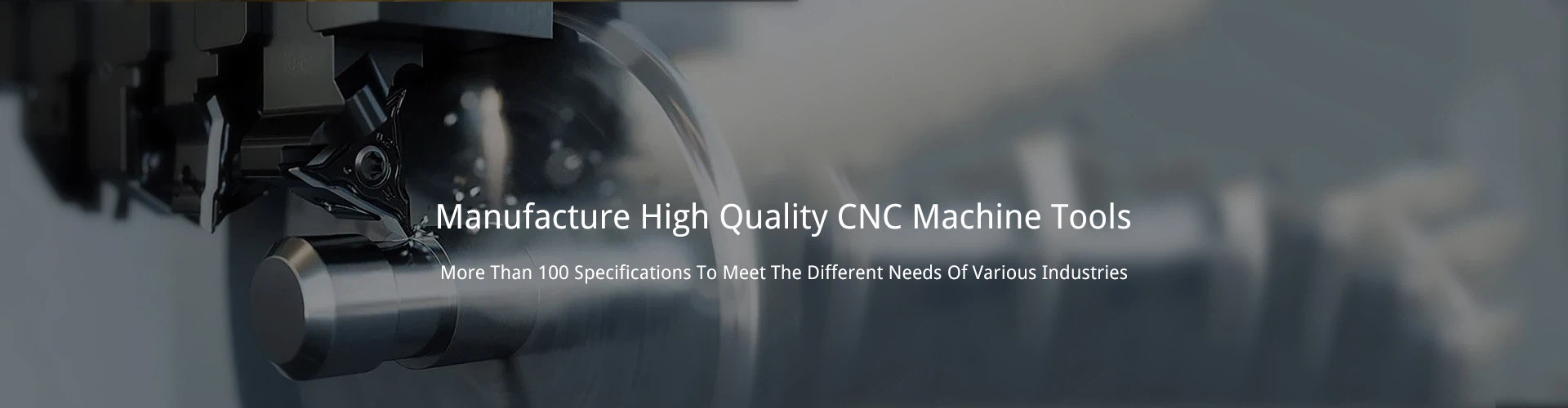
A boring machine is specifically used in the manufacturing unit to shape and enlarge holes in various materials. These tools are known for making accurate and precise holes in wood, metal, and plastic, and they come in handy when it's risky to use a deep-hole drilling machine.
This blog will provide a detailed overview of horizontal boring vs. vertical boring. Let's explore how horizontal boring machines differ from vertical boring machines in terms of design, functionality, capabilities, and practical applications. We have also discussed the merits and demerits of each type and explained which is the best choice for precision cutting. It will help you make more informed decisions about the right machine to invest in.
Horizontal Boring Machine
As the name suggests, horizontal boring machines have a horizontally oriented spindle that is designed to move along four axes: X, Y, Z, and A. To use this machine, the user must firmly place the workpiece on the table and then move the spindle in multiple directions to bore holes, create slots, or mill surfaces in the desired locations.
Pros and Cons of Horizontal Boring Machine
Pros
●Performs a wide range of boring tasks.
●Provides a better surface finish.
●Works along multiple axes for enhanced versatility.
●Improved accuracy and precision.
●Suitable for handling long and large parts.
●Offers adaptable tooling options.
Cons
●Comes with a costlier initial investment.
●Has complicated setup and operational procedures.
Vertical Boring Machine
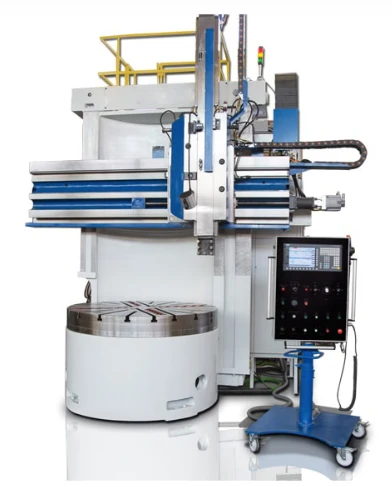
A vertical boring machine, on the other hand, has a vertically oriented spindle that moves along the Z-axis. In this case, the workpiece is placed on a rotating table as the spindle and cutting tools do their cutting and boring jobs while remaining still. Also termed vertical turret lathes, the vertical boring tools can work with heavy and large workpieces by facing, threading, and turning them.
Pros and Cons of Vertical Boring Machine
Pros
●Handles large-diameter turning jobs seamlessly.
●Specializes in facing, threading, and turning activities.
●Easier to maintain.
●Space-efficient and compact footprint.
●Demands lower skill sets from operators.
●More affordable and lower initial investment.
Cons
●Limited operation capabilities due to low motion range.
●Although the initial investment is low, you might require additional machines to achieve other operations.
Horizontal Boring vs. Vertical Boring: Key Differences
Now that we are aware of the design and orientation differences between the two types of boring machines, let's understand other points of difference between them based on the following parameters.
Workpiece Weight and Size
The weight and size of the workpiece matter the most to help the manufacturing team decide which boring machine would be more suitable to carry out a task. The horizontal tools can work with workpieces of different weights and sizes. These machines are able to accommodate long and heavy workpieces, thanks to their multidimensional axis movement (around X, Y, Z, and A) and large tables.
Whereas, a vertical turning lathe can handle large and heavy-duty workpieces that users may find difficult to manage with CNC horizontal mills. These machines rotate around the Z-axis and are capable of supporting considerable weight.
Setup and Operation
To best determine the type of boring machine you require for accomplishing specific tasks, you should know their differences based on setup and operations. Knowing this would also help users assess their operator skill levels, project complexity, and production timeline.
Horizontal boring mills come with a more complex setup and operation since they involve rotation around multiple movement axes. Therefore, operators must be skilled and properly trained to ensure the machine is properly aligned with the workpiece. They should also have the required expertise to program the tool to carry out varying operations.
On the other hand, vertical boring tools have a simplistic setup and operation, as the users simply need to mount the workpiece on the rotating table. The spindle, which remains stationary, does its job while you hold it in firmly. The operators should again be skilled in setting up the appropriate workpiece orientation.
Machining Proficiency
Operators must be sure that the machine they are choosing is suitable for the types of boring jobs required in their particular project or industry. It's crucial to understand the machining capabilities of both boring tools to make informed decisions to improve work efficiency.
The horizontal tools are known for their versatility in handling machining tasks, as they work around four-dimensional axes. Therefore, they can perform a wider range of tasks, such as milling, drilling, boring, and tapping.
On the contrary, vertical turning lathes specialize in particular operations like facing, turning, and threading. They have a limited motion range because they work only along the vertical axis. However, they can efficiently handle workpieces having significant weights.
Efficiency and Output
A machine becomes useless if you don't get the expected output and efficiency. So, let's understand the different levels of productivity offered by horizontal boring vs. vertical boring.
A horizontal boring machine provides high efficiency, all thanks to its higher motion ranges and excellent operational versatility. These tools can perform several machining, milling, and boring tasks without requiring the operator to reposition the workpiece continuously. Therefore, it minimizes setup time and maximizes outcomes.
Vertical milling machines are highly effective for performing specific operations, like handling large and heavy workpieces. Due to their vertical orientation, heavy-duty nature, and smaller footprint, operators don't need to worry about the workpiece causing damage to the machine's parts. Moreover, the vertical ones allow users to adjust the table diameter to cater to their project requirements and the workpiece size. However, the vertical milling tools have limited motion range, making them less versatile compared to the horizontal ones.
Automation and Advanced Technologies
Today's boring machines are incorporating modern technologies and automation tools to improve efficiency and accuracy. Features like Computer Numerical Control systems, adaptive control, high-speed machining, tool probing and measuring solutions, and live tooling abilities.
Both the horizontal and vertical boring tools are equipped with automation and smart technological features, like CNS systems and automated tool chargers. These features are designed to improve operational efficiency and productivity while minimizing the need for human intervention. These advanced features also yield high-quality results consistently.
Cost and Investment
Besides considering efficiency and throughput, investors should also consider the costs associated with this machinery. Costs do not only involve the initial expenses of purchasing or renting the machines, but also their maintenance, operational, tooling, and repairing costs in the upcoming days. So, it's time to weigh these expenses against the output you are generating to calculate the ROI and profitability behind this vital investment.
Horizontal boring devices are usually more expensive than vertical machines due to their versatility and complex systems. However, you can generate a better ROI considering the higher output levels they provide and the multiple operations you can perform with them. So, it's cost-effective in the long run as it lowers the need to invest in multiple machines, thus streamlining and optimizing the production tasks.
On the other hand, vertical milling devices are more affordable, but due to their specialized usage and limited practical applications, you might need to invest in multiple tools to perform other operations in the production process. However, if a major portion of your manufacturing operations involves heavy workpieces, investing in a vertical boring device would be beneficial.
Here's a table summing up the key differences between horizontal boring vs. vertical boring.
|
Category |
Horizontal Boring Machine |
Vertical Boring Machine |
|
Spindle Orientation |
The spindle is parallel or horizontal to the worktable |
Vertical or perpendicular spindle orientation, with the workpiece mounted on a rotating table |
|
Number of Axes |
Works around 4 axes of motion (X, Y, Z, and A) |
Works around the vertical axis (Z-axis) |
|
Cutting Orientation |
Cuts in multiple planes, thanks to the rotary worktable |
Cuts along a single plane or axis |
|
Cycle Time |
The machine cycle duration is low |
The machine cycle duration is high |
|
Surface Finishing |
Provides the best surface finishes |
Works best with intricate and complex geometries |
|
Cost and ROI |
Higher initial investment and better ROI |
Lower initial investment, but investing in additional equipment may be required. |
Horizontal Boring vs. Vertical Boring: Productivity Considerations
You will generate varied production outputs and efficiency with each type of boring machine.
Horizontal Boring Machine

●They offer quicker cutting speeds and faster machining of larger parts.
●They provide more effective chip evacuation to ensure cleaner finishes.
●They offer higher stability for deep or long bores.
Vertical Boring Machine
●These are easier to access, especially while working with complex geometries.
●When floor space is limited, vertical milling devices are more effective and space-saving.
●These are easier to set up and have straightforward features, thus saving time.
Horizontal Boring vs. Vertical Boring: Practical Applications
While the definitions are in place, the concepts may be easier to grasp if we discuss the practical use cases of these boring machines. It will help understand the differences between horizontal boring vs. vertical boring.
Applications of Horizontal Boring Machines

Horizontal boring tools are appropriate for drilling, milling, or tapping large workpieces that require complex fixing or machining operations. These tools are typically used in manufacturing the parts of automobiles and airplanes, and are, therefore, more common in the automotive, aerospace, and heavy machinery industries. In the aerospace and automotive sectors, these tools are required for locating holes in cylinder heads and engine blocks. They are also used to machine an aircraft's structural parts and create precise bore diameters. In these industries, high accuracy and precision are crucial.
Applications of Vertical Boring Machines
Vertical boring tools are ideal for working with large-diameter and heavy pieces that need heavy facing, turning, and threading operations. These tools are suitable for use in sectors like power generation, shipbuilding, and heavy equipment manufacturing, where traditional turning tools or horizontal drilling machines are not effective. The vertical boring tools can also be used in the automotive and aerospace sectors to deal with heavy-duty components, large gears, and huge impellers. Due to their high accuracy, vertical boring tools can achieve precise dimensions and machine components for pumps and valves.
Which is Best for Precision Machining?
Both devices have their unique strengths when it comes to high-precision machining. Vertical milling devices are more effective in attaining high accuracy with complex and intricate geometries. On the other hand, horizontal ones are preferred for their high power and speed, particularly for heavy-duty operations and deep grooving.
Horizontal boring machines are suitable for:
●Enhanced efficacy and speed for heavy-duty applications
●Increased performance and equipment longevity
●Making heavier and deeper slots and grooves.
If your manufacturing unit requires you to manage long and slender workpieces, horizontal CNC tools would be ideal for multi-sided machining. That's because these devices have higher chip management abilities and offer more flexibility during high-volume production.
Vertical boring machines are preferred for:
●High accuracy and precision for projects requiring tight tolerances
●Achieving higher maneuverability for complex patterns
●Handling simpler designs to improve operational and maintenance efficiency.
In short, vertical boring devices are preferred more for precision machining applications and when handling large-diameter parts. This is because they can achieve more precision, stability, and accuracy even while working with complex and detailed designs.
Furthermore, vertical tools are also ideal for units with limited floor space since they come with shorter footprints. Whereas horizontal CNC boring machines need more space to gain versatility across projects. However, it is dependent on your unique project requirements and the type of milling, drilling, or turning jobs you need to accomplish.
Summary
The key distinction between the two boring devices is based on the device orientation, workpiece size and weight, primary applications, setup and operation, automation and technology, flexibility, machining capacities, and cost and investment. For instance, in terms of orientation, the horizontal machines keep rotating while the workpiece remains stationary. However, the orientation changes with a vertical boring mill, where the tool keeps rotating vertically around the Z-axis, and the workpiece keeps rotating on a horizontal table. While horizontal tools are great for performing numerous activities and delivering a higher ROI, vertical tools are favored for heavy-duty activities and space-saving benefits.
We hope this article will help you make the right choice for your specific manufacturing needs and type of business. Your decision should be influenced by your project's requirements and long-term manufacturing goals. Consider the distinctions listed above to make the best selection for optimizing manufacturing operations and boosting efficiency.