



Getting that perfect surface finish isn't just about making parts look pretty - it's crucial for how they work. In aerospace, even tiny surface flaws can cause big problems. And in medical parts? That smooth finish could mean the difference between a successful implant and complications.
I've seen automotive parts where the right surface finish makes all the difference in how long they last. It's pretty amazing how a well-finished surface can cut down on friction and make parts fit together like they were made for each other (which, well, they were!).
That smooth finish keeps things running reliably, whether working with engine components or industrial machinery. Numerous elements like material choice, tool properties, machining parameters, or the environment can significantly reduce surface quality.
This article investigates important ideas, impacts, and advanced ways to improve surface finish in machining.
What is Surface Finish?
A machined surface finish refers to its texture and quality because it determines the part's functional characteristics and overall physical appearance. Several parameters determine surface finish characteristics, namely roughness, which has additional significance from waviness and lay. These parameters directly affect the achievement of optimal machining results.
Understanding their measurement techniques for evaluation is vital in reaching optimal machining results.
Parameters of Surface Finish
Three main factors determine the surface texture of machined components:
|
Parameter |
Description |
Impact on Machining |
|
Roughness |
Roughness is caused by cutting tool marks, vibrations, and material properties of machined surfaces. |
Affecting friction, wear, and appearance. Lower roughness indicates smoother finishes. |
|
Waviness |
Large undulations on surfaces may be caused by machine tool deflection, misalignment, or vibrations. |
Poor sealing and assembly issues may arise. |
|
Lay |
The pattern and direction of tool marks on a machined surface. |
Functional properties may be altered, including lubrication retention and contact stress distribution. |
An effective surface finish requires the reduction of roughness and waviness while adhering to an appropriate lay pattern for its intended application.

Measurement Techniques and Standards
Surface finish evaluation utilizes various measurement techniques, including:
●Contact Profilometers: Devices that make use of a stylus to trace surfaces and measure roughness values, such as Ra, Rz, and Rq.
●Optical Interferometry: This non-contact method employs light waves to analyze surface texture.
●White Light Scanning: White Light Scanning provides sophisticated 3D surface measurement solutions suitable for high-precision applications.
●ISO and ANSI Standards: To maintain consistency and accuracy in surface finish measurements, ISO 4287 and ANSI B46.1 international standards must be implemented for surface finishing measurements.
Role of Surface Finish in Different Industries
Industries vary significantly when it comes to surface finish importance:
|
Industry |
Application of Surface Finish |
|
Aerospace |
Aerospace requires increasing aerodynamic performance while decreasing drag resistance and improving fatigue resistance. |
|
Automotive |
It enhances lubrication, wear resistance, and sealing within engine components, thereby improving engine performance. |
|
Medical |
It offers innovative biocompatible and hygiene-enhancing products and implants for surgical instruments and implants. |
|
Electronics |
Efficient conductivity and assembly precision enhancement for circuit boards and connectors. |
Using high-precision CNC machines helps manufacturers meet these industry-specific surface finish specifications in a more efficient manner.
Which Factors Affect Surface Finish in Machining?
Getting an outstanding surface finish depends on numerous variables, from material choice and machining conditions to material selection. Understanding these influences allows manufacturers to optimize CNC processes for maximum results.
Material Properties
Workpiece material plays a pivotal role in defining surface finish quality.
|
Material Type |
Surface Finish Characteristics |
|
Soft Metals (Aluminum, Brass) |
Easy to machine but susceptible to burning. Sharp tools with optimized feed rates are necessary. |
|
Hard Metals (Steel, Titanium, Inconel) |
Difficult to machine can cause tool wear. Coated cutting tools are required with higher cutting speeds. |
|
Plastics (ABS, PEEK, Nylon) |
Low cutting resistance but susceptible to melting and deformation. It requires precise control of the feed rate along with the spindle speed. |
Picking the best material and machining parameters ensures a superior surface finish while decreasing tool wear and process inefficiencies.
Cutting Tool Characteristics
Cutting tool design and quality have an immediate and tangible effect on the surface finish of fabricated parts, ultimately determining their surface finish quality. Key factors herein:
●Tool Material: Carbide tools offer superior wear resistance over HSS (high-speed steel).
●Tool Geometry: Optimized nose radius and rake angles effectively create smoother surfaces with their tools.
●Tool Coating: Coatings like TiN, TiAlN, and DLC assist in lowering friction while extending tool life span and enhancing finishes.
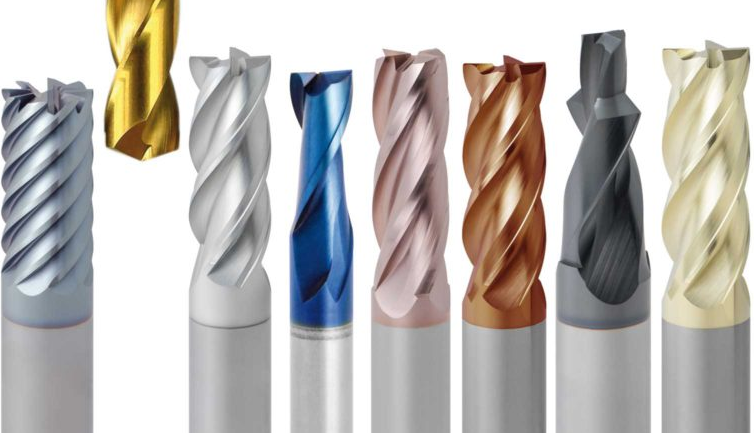
●Premium CNC tools and accessories can improve surface quality and machining performance.
Machining Parameters
One of the key ways to enhance surface finish is optimizing cutting conditions, considering various parameters as you do so. Here are a few points worth keeping in mind while optimizing cutting conditions:
|
Machining Parameter |
Impact on Surface Finish |
Recommended Approach |
|
Cutting Speed |
As cutting speeds increase, so too does cutting force reduction, leading to smoother finishes and creating less heat from frictional cutting forces. |
Speed up for finer finishes, but remain mindful of tool wear. |
|
Feed Rate |
Lower feed rates help minimize tool marks left on surfaces. |
Use a lower feed rate when performing finishing passes. |
|
Depth of Cut |
Shallow cuts result in smoother surfaces. |
Consider making multiple lighter passes instead of taking deep cuts. |
Machine Tool Condition
Maintaining a good CNC machine guarantees precise machining every time. Some of the machine tool conditions that you must keep in check are listed below:
●Machine Rigidity: Stable settings and rigid frames help reduce vibrations that would otherwise cause problems in workstation operations.
●Spindle Condition: A well-tuned spindle reduces tool deflection and chatter, lowering downtime resulting from these factors.
●Workholding Stability: Greater workholding stability and higher productivity can result from secure clamping's ability to lower motion and ensure consistent surface quality.
Utilizing high-performance CNC machines ensures stability and precision for superior finishes.
Environmental Factors
Machining environments influence surface finish quality; some factors to take into account in this respect include:
●Temperature Fluctuations: Heat changes mess with machining - when temperatures swing up and down, the metal expands and contracts, throwing off precision.
●Coolant Applications: Using coolant is super important - it keeps everything from getting too hot, which means your tools last way longer and saves you money down the line.
●Vibration Control: Damping solutions and isolation pads help control vibrations to eliminate unwanted sensations of movement in a room or house.
By optimizing these environmental factors, manufacturers can further advance their machining processes and surface quality.
Optimizing Cutting Parameters
Surface finish quality depends heavily on how you control your CNC cutting parameters. Getting the right settings for speed, feed, and cut depth. It helps minimize tool marks and keeps friction low, giving you more accurate and precise parts. Let's look at the three main factors:
Cutting Speed
This is how fast your tool moves across the workpiece (measured in SFM or M/min). You want to find that sweet spot - too slow and friction makes your surface rough; too fast, and you'll wear out tools or leave marks. Best approach? Start with recommended speeds and fine-tune while watching your tool life and finish quality.
Feed Rate
Think of this as how quickly your tool advances with each revolution. Higher feed rates leave more obvious tool marks. While slower feeds can give you smoother finishes, going too slow and risk material sticking to the tool, which can lead to uneven surfaces. A good rule of thumb: use faster feeds for rough cuts, then slow them down for finishing passes.
Depth of Cut
This one's about how deep your tool cuts into the material. Shallow cuts are your friend for finishing work - they keep the tool stable and reduce vibration. Deep cuts can create rough surfaces from increased cutting forces. If you need to remove a lot of material, it's better to take several light passes than one deep cut.
Selecting the Right Cutting Tools
Picking the right tools can make or break the surface finish when machining. Each choice matters between the tool itself, how it's shaped, and what it's coated with.
Tool Materials
What your tools are made of really affects the finish quality. Basic high-speed steel tools won't last as long, but they're easier on your wallet. Carbide tools cost more but last longer and have a smoother finish. Ceramic and CBN tools are your best bet when you need to work fast with a super smooth finish, since they can take the heat and stay super hard.
Tool Geometry
The shape of your tool matters, too. A well-designed tool spreads out the cutting forces better, which means less resistance and fewer marks on your work. High rake angles mean less pressure when cutting and more efficient chip flow for cleaner surfaces. A sharp edge may also come in handy for working on delicate materials like leather.
Tool Coatings
Tool coatings extend your tools' life while cutting more smoothly by minimizing friction and heat buildup.
●TiN coating allows your tools to glide effortlessly through their work, extending their longevity.
●For hard metals such as chrome, TiAlN is an outstanding material to work with at high temperatures.
●DLC coating is ideal for cutting aluminum or plastic - its ultra-smooth surface offers flawless cutting action and makes for effortless operations.
Selecting tools with the appropriate mix of material, shape, and coating will yield better surface finishes and increase their longevity as tools for long-term use.
Importance of Machine Tool Condition
Condition is critical in improving surface finish in machining, regardless of the cutting tools and optimized parameters used. Even with top-quality cutting tools and proper calibration parameters appropriately set in place, poorly maintained machinery may produce surface imperfections, inaccuracies, and production inefficiencies, negatively impacting production efficiency. Regular maintenance checks, calibration adjustments, and machine stability must all be provided to achieve high-quality finishing.
Machine Rigidity and Stability
Your machine needs to be rock-solid to get great finishes. When a CNC machine wobbles, you'll get chatter marks and parts that aren't quite right. Think of a machine like a house - it needs a solid foundation. Cast iron frames or beefed-up structures soak up vibrations like a sponge. Good bearings in your spindle keep everything running true, and if you don't lock down your workpiece properly, even the best machine won't help you.
Spindle Condition and Runout
Your spindle is at the core of your machine; when it stops rotating perfectly, everything comes crashing around it - like when one wheel on your car becomes out of balance and makes everything shake! Keep an eye out for its bearings; worn-out bearings cause tools to begin cutting erratically instead of straight. Make sure your tool holders fit right and balance your tooling, or you'll fight vibrations all day.
Axis Alignment and Calibration
Your machine's got to track straight and accurately on every axis, like a train on its rails. Think about it like alignment on your car - if it's off even a little, things just don't run right. Keep those gibs tight and ball screws clean, and you'll avoid that nasty backlash that ruins finishes. The fancy machines use lasers to check everything's lined up perfectly.
Lubrication and Maintenance Practices
Maintenance is key to keeping everything working efficiently. Your machine needs oil like a car needs gas, keeping everything moving nice and slick. Keep things clean - chips love to hide and mess up your parts when you least expect it. And don't try to squeeze too much life out of worn parts - they'll cause headaches down the road.
Do all this right, and you'll get parts that come off the machine looking like they've been polished. Skip the maintenance, and you'll fight poor finishes all day.
The Role of Cutting Fluids in Surface Finish
The coolant's like your machine's blood - it keeps everything running right. It whisks away heat, keeps things slick, and washes away chips that could mess up your finish. Get it right, and your tools last longer while your parts look great.

Types of Cutting Fluids
You've got different coolants for different jobs.
●Water-based coolants are excellent when you need to keep things cool, running at high speeds.
●Oil-based stuff shines when you're doing fine work and need that super smooth finish.
●Synthetic coolants are like the best of both worlds - they cool and lube without gunking everything up.
Methods of Applying Cutting Fluids
How you get the coolant where it needs to be matters too.
●Flood cooling is like a fire hose - it just dumps coolant right where you need it to wash away chips and heat.
●Mist cooling is perfect when running fast and hot - it keeps things from expanding too much from the heat. T
●Through-tool cooling is the fancy way - it shoots coolant right through your tool to exactly where the action is, which keeps chips from causing trouble.
Advanced Finishing Techniques in CNC Machining
Sometimes, basic machining just isn't enough to get that perfect finish you're after. That's when you must pull out the fancy tricks - from sanding wood to bringing out the grain with special finishes.
High-Speed Machining (HSM)
High-speed machining is smooth - you elevate the speed but slow the feed rate. It's like driving a sports car - smooth and controlled rather than rough and aggressive. Your cuts come out cleaner, the part stays cooler, and you get done faster. The nice machines can pull this off without breaking a sweat.
Vibration Damping Techniques
Machining vibrations or chatter are your worst enemy when trying to get smooth finishes.
●Use damped tool holders and anti-vibration boring bars for better stability.
●Optimize toolpath strategies to minimize sudden changes in force.
●Select machines with rigid structures to absorb excess vibrations.
Burnishing and Roller Finishing
Burnishing's a neat trick - instead of cutting. You're smoothing a surface by plastic deformation. Pressing a super-hard ball or roller against the part can smooth away all those micro-burrs and tool marks. It is much like ironing a shirt - leaving only smooth surfaces behind. The surface gets harder, too, which is pretty cool. Medical folks love this for their parts.
These aren't just party tricks - they're game-changers when you need smooth or super-precise parts. Each method has its sweet spot, and knowing when to use it can make the difference between a good part and a great one.

Post-Processing Methods to Enhance Surface Finish
After your main machining, there are still a few tricks to get even better finishes.
Grinding and Honing
Grinding and honing are go-to methods when you need really precise things. Grinding uses a spinning wheel with tiny abrasive bits to smooth things out, while honing's great for getting the inside of holes just right. Car parts and medical equipment often need this extra step.
Polishing and Buffing
Polishing and buffing take things up another notch. Polishing smooths out tiny scratches you can barely see, and buffing makes parts shine like mirrors. This is what gives those fancy consumer products their showroom look.
Coatings and Surface Treatments
Surface treatments are like putting armor on your parts. Anodizing keeps aluminum from corroding and makes it look nice. Electroplating adds a thin layer of metal, making parts tougher and prettier. PVD coating is the high-tech option - it adds a super-thin, super-tough layer that helps parts last longer.
Conclusion
Getting great surface finishes comes down to mastering all the key elements of the machining process. Success depends on using quality equipment, maintaining it properly, and following proven methods.
Start with a solid machine - the foundation of good results. Regular maintenance keeps everything running true. The right tools, fresh coolant, and proper speeds and feeds all work together to give you the finish you need.
Sometimes, machining alone isn't enough - that's when post-processing steps come in. These extra steps can take your parts to the next level, whether polishing, surface treatments, or other finishing methods.
When you combine all these elements - the machine, the tools, the process, and the finishing - you'll see consistently superior surface finishes in your work.
By following the best practices outlined in this guide, you can effectively address how to improve surface finish in machining and achieve optimal results for your CNC projects.
FAQs on How to Improve Surface Finish in Machining
What's the most significant factor in getting a good surface finish with CNC machining?
Your cutting setup makes the most significant difference - your speeds, feeds, and how deep you cut. Having the right tool and keeping your machine in good shape matters, too.
How can I reduce machining chatter to improve surface finish?
Keep your machine rigid, use balanced tools, plan smart tool paths, and try using damped tool holders if needed. These steps usually take care of most chatter issues.
Does using cutting fluid matter for surface finish?
Yes, suitable cutting fluid keeps things lubricated, stops heat buildup, and helps clear chips away - all of which help you get a smoother finish.
What post-processing techniques can further improve surface finish?
You've got several options - grinding, honing, polishing, or adding surface treatments like anodizing or plating. Pick what works best for your needs.