


In CNC machining, four core processes - drilling, boring, milling, and turning - form the foundation of precision manufacturing. Each plays a distinct role in shaping, refining, and finishing metal parts with exceptional accuracy. From creating holes to contouring complex surfaces, these operations work together to achieve high-quality results across industries such as automotive, aerospace, and machinery. Understanding how they differ helps manufacturers choose the right CNC equipment and improve production efficiency - something GreatCNC Machine has been perfecting for over 20 years.
What Is Drilling? - The Starting Point of Hole Making
Drilling is the most basic and essential process in CNC machining - it's where precision manufacturing begins. Through a rotating cutting tool (drill bit), material is removed to create a clean, round hole that serves as the foundation for other machining operations.
• Core Principle:
Drilling uses a rotary motion combined with linear feed to cut through the material, forming holes with controlled diameter and depth. In CNC drilling, this motion is precisely guided by programmed coordinates to ensure repeatability.
• Types of Drills:
Depending on the material and hole size, manufacturers may choose twist drills, indexable drills, or solid carbide drills. Each type offers different advantages - from durability and cutting speed to cost efficiency.
• Applications:
Drilling is used across industries such as automotive, aerospace, and mold manufacturing, where holes are required for fasteners, bearings, or coolant channels.
• CNC Advantages:
Modern CNC drilling machines provide consistent accuracy, automated tool changes, and stable spindle performance - significantly improving productivity and reducing human error.
At Great CNC Machine, our advanced CNC machining centers combine high-speed spindles, rigid construction, and intelligent control systems, ensuring precise, efficient, and reliable drilling performance for global manufacturers.

What Is Boring? - Achieving Hole Accuracy and Smoothness
Once a hole is drilled, the next step toward precision is boring - a process that enlarges and refines the existing hole to meet exact dimensional and surface requirements. In CNC machining, boring plays a crucial role in achieving tight tolerances and superior surface finishes that drilling alone cannot provide.
• Purpose and Function:
Boring removes a small amount of material from the inside of an already-drilled hole to correct size errors and improve roundness. It ensures the hole meets strict tolerance limits and alignment specifications.
• Types of Boring Operations:
Common methods include line boring, back boring, and jig boring. Each is chosen based on the part design and desired precision level - for example, jig boring is often used in mold and aerospace components that require sub-micron accuracy.
• Tools and Equipment:
A boring bar or boring head is typically mounted on a CNC machining center or lathe. Modern CNC boring machines can automatically adjust feed rates and spindle speeds to maintain stable cutting conditions.
• Industry Applications:
Boring is essential in engine blocks, hydraulic cylinders, molds, and bearing housings, where precise internal diameters ensure proper fit and function.
Reliable boring performance ultimately depends on the rigidity of the machine structure, spindle stability, and tool accuracy. Manufacturers that invest in advanced CNC machining centers benefit from consistent precision, smoother surfaces, and reduced rework - key advantages in today's high-efficiency production environments.

What Is Milling? - Shaping Surfaces with Flexibility
Milling is one of the most versatile machining processes in modern manufacturing. Unlike drilling or boring, which focus on hole-making, milling removes material from the surface of a workpiece to create flat, curved, or complex 3D shapes. It's the process that gives metal parts their final contours and dimensions.
How Milling Works
Milling involves a rotating cutting tool that moves across the workpiece to remove material.
In CNC milling, both the tool and the workpiece can move along multiple axes (commonly 3, 4, or 5), allowing for intricate designs and consistent precision.
This flexibility makes milling ideal for machining parts with slots, pockets, threads, or complex surfaces.
Main Types of Milling Operations
Face Milling: Used for creating flat surfaces and achieving high-quality finishes.
End Milling: Perfect for profiling, slotting, and contouring.
Slot Milling & Shoulder Milling: Designed for grooves and edges that require defined dimensions.
Helical or Contour Milling: Used for producing curved or complex 3D surfaces.
Vertical vs. Horizontal Milling
Vertical Milling Machines hold the spindle in a vertical orientation - best suited for precision parts and mold work.
Horizontal Milling Machines feature a spindle parallel to the table - offering better chip evacuation and higher cutting capacity for heavy-duty machining.
CNC machining centers today often combine both orientations, allowing greater flexibility in one setup.
Applications and Benefits
Milling is widely used in automotive components, aerospace structures, precision molds, and machinery parts.
It offers outstanding versatility, enabling manufacturers to perform multiple operations - such as drilling, threading, and pocketing - within a single machine cycle.
By integrating milling with other CNC processes, manufacturers achieve shorter lead times, better accuracy, and superior surface finishes.

What Is Turning? - Creating Round and Cylindrical Components
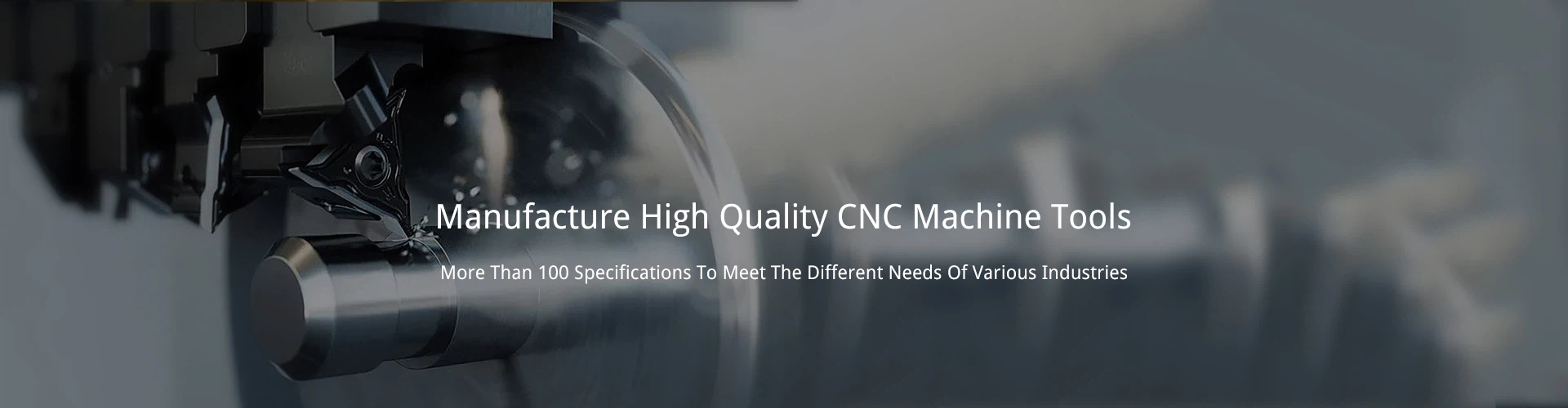
Turning is the primary machining process for producing cylindrical or rotationally symmetric parts. Unlike milling, where the tool moves around a stationary workpiece, turning rotates the workpiece itself while a cutting tool removes material along its surface.
How Turning Works
In a lathe or CNC turning center, the workpiece spins on the spindle while a stationary or moving cutting tool shapes the outer or inner surface.
This process is ideal for creating shafts, rods, bushings, and threaded components, achieving both dimensional accuracy and smooth finishes.
Manual vs. CNC Turning
Manual Turning: Requires skilled operators to control feed and depth, suitable for small batches or simple parts.
CNC Turning: Automates the rotation, feed, and tool movements, ensuring high repeatability, precision, and faster production.
CNC turning can also perform multiple operations in one setup, such as facing, grooving, threading, and boring, reducing production time and setup errors.
Applications and Advantages
Turning is widely used in automotive shafts, hydraulic cylinders, aerospace components, and mechanical fittings.
Key benefits include:
Consistent roundness and concentricity
High material removal rates for efficiency
Capability to handle both simple and complex profiles
Easy integration with other CNC processes like drilling, boring, or milling for multi-step machining
By combining turning with other operations, manufacturers can streamline production, reduce setup time, and achieve precision parts with tight tolerances and superior surface quality.

Drilling vs Boring vs Milling vs Turning
| Process | Main Function | Tool / Workpiece Motion | Typical Applications | Key Advantage |
| Drilling | Create holes | Tool rotates, linear feed | Fasteners, coolant channels | Quick, foundational hole-making |
| Boring | Refine/enlarge holes | The tool rotates inside a stationary hole | Engine blocks, molds, bearing housings | High accuracy, smooth finish |
| Milling | Shape surfaces & complex geometries | The rotating tool moves across the workpiece | Automotive parts, molds, aerospace components | Versatile, multi-axis shaping |
| Turning | Produce cylindrical parts | Workpiece rotates, tool moves linearly | Shafts, rods, bushings, threads | Consistent roundness, high precision |
How to Choose the Right CNC Machine for Your Needs
Selecting the right CNC machine is critical to achieving precision, efficiency, and cost-effectiveness in manufacturing. Each machining process - drilling, boring, milling, or turning - has unique requirements, and the ideal CNC machine depends on the parts you produce, the materials you work with, and your production volume.
Understand Your Part Requirements:
Consider the geometry, size, and complexity of the components you need to machine. Cylindrical parts may require a turning center, while complex 3D shapes may be better suited for a 5-axis milling machine.
Material Considerations:
Different materials - ranging from aluminum and steel to titanium and hardened alloys - require varying spindle speeds, tool types, and machine rigidity. Choosing a CNC machine capable of handling your material ensures tool longevity and consistent quality.
Production Volume and Efficiency:
For high-volume production, multi-axis or multi-tasking CNC machines can perform drilling, milling, and turning in a single setup, reducing cycle time and minimizing setup errors. Low-volume or prototype production may benefit more from flexible machines with quick changeovers.
Precision and Tolerance Needs:
Machines differ in their ability to maintain tight tolerances. For industries like aerospace or medical devices, micron-level accuracy is essential, so investing in high-rigidity CNC centers with precise control systems is necessary.
Future-Proofing and Automation:
Consider automation features such as automatic tool changers, pallet systems, and smart sensors. Machines with these capabilities not only improve productivity but also reduce operator dependency and errors.
Choosing the right CNC machine is about balancing part requirements, production needs, and budget, while ensuring the equipment can maintain precision and efficiency over time. Careful evaluation upfront will pay off in higher-quality parts, faster production cycles, and lower overall costs.
The Evolution of Machining
Machining has come a long way - from simple hand-operated lathes and mills to today's fully automated, intelligent CNC systems. Understanding this evolution helps manufacturers appreciate the efficiency, precision, and flexibility that modern machines bring.
1. Manual Machining
Before CNC, all operations - drilling, boring, milling, and turning - were performed manually.
Operators controlled spindle speed, feed, and tool paths by hand.
While skilled machinists could achieve high precision, manual processes were time-consuming and prone to human error.
Suitable for low-volume or prototype work but limited in scalability.
2. Introduction of CNC
The advent of Computer Numerical Control (CNC) revolutionized machining:
Machines became programmable, performing repetitive operations with high accuracy.
CNC enabled integration of multiple processes on a single machine, reducing setups and improving efficiency.
Allowed for complex 3D machining that manual tools could not achieve reliably.
3. Multi-Axis and Multi-Tasking CNC
Modern machining centers now support multi-axis and multi-tasking capabilities:
3, 4, and 5-axis CNC machines can handle complex parts in a single setup.
Multi-tasking machines combine turning, milling, drilling, and boring, reducing production time and costs.
These systems offer flexibility, ideal for high-mix or custom manufacturing.
4. Smart CNC Systems and Automation
The latest evolution includes intelligent CNC systems that leverage automation and digital technologies:
Automatic tool changers and pallet systems for continuous operation
Sensors and real-time monitoring for predictive maintenance
AI and software optimization for faster programming and better tool paths
Integration with digital twins and connected factories for complete production oversight
These advancements allow manufacturers to achieve higher precision, improved surface finish, and consistent quality, while significantly reducing labor costs and machine downtime.
Conclusion
Drilling, boring, milling, and turning form the foundation of modern CNC machining. Each process plays a unique role - drilling creates holes, boring refines them, milling shapes surfaces, and turning produces cylindrical components. Understanding their differences helps manufacturers select the right CNC machine, optimize production, and maintain high-quality standards.
With advances in multi-axis and smart CNC systems, these processes can now be combined and automated, allowing for greater efficiency, precision, and consistency than ever before. By carefully choosing the right machine for your parts, materials, and production needs, you can achieve shorter lead times, tighter tolerances, and superior surface finishes.
Ultimately, mastering these core machining processes is essential for staying competitive in industries like automotive, aerospace, medical, and precision engineering. Whether producing a prototype or running large-scale manufacturing, understanding and applying drilling, boring, milling, and turning effectively ensures your operations are efficient, precise, and reliable.