


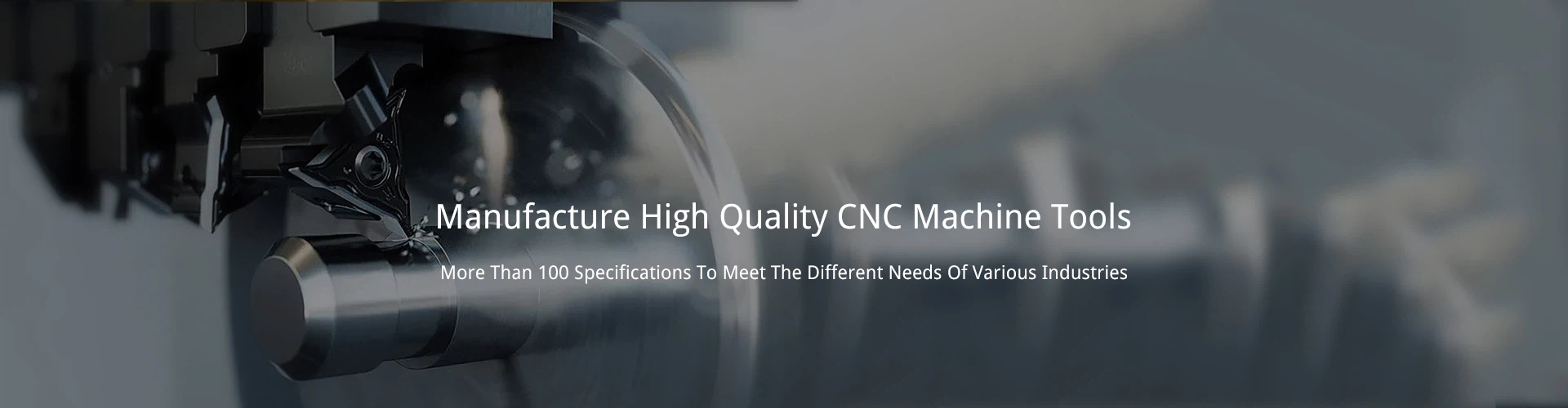
In contemporary CNC machining, the moving components play a pivotal role and should be thoroughly understood. These movements are closely linked to the accuracy and final product quality. In a CNC machine, the spindle and the tools, along with the workpiece, move in harmony when the machine is running to produce complete and perfect cuts and shapes onthe respective material. Moreover, the machine entails the capability of motion controls as per a precise design layout.
Once you understand how each component works, you can be in a position to obtain optimum outcomes for the manufacturing process. In addition, an adequate understanding of these movements helps engineers and operators to get machines efficiency and performance.
Components Involved in CNC Machining
CNC machining is made up of many components with movement. Each component plays a certain role in the material-removal process. Therefore, understanding how these components move is key to gaining precise control over CNC techniques. Let's discuss each component and its respective role.

Spindle Movement
The spindle in CNC machines is used to rotate the tool in notching operations. The fundamental operation of the drill is to grip and revolve the tool to shave through the material. Usually, there are two basic motions used in spindle movement: rotational motion and axial motion.
Rotational Motion: The spindle transforms its rotational movement around an axis and engages with the cutting tool to work on the material. The intended rotation is crucial for CNC milling and drilling operations.
Axial Motion: In some CNC machines, the spindle can also move along the third direction, like the Z direction or vertical movement, especially for tool sharpening, deep cuts, and a variety of CNC boring operations.
Cutting Tools Movement
In CNC machining, cutting tools are frequently used to form or design pre-defined components. These tools vary in parameters such as size, shape, material, and cutting speed.
Types of Cutting Tools: CNC machines can hold a variety of cutting tools like drills, mills, lathes, and grinders, depending on the material type, defined cut, and typical operations.
Movement Patterns: Most cutting tools move in two ways: straight and circular motions.
Linear Movement: The cutting tool translates in the X, Y, or Z direction to carve the material, or you can say define its shape.
Rotational Movement: Besides the rectilinear feed, the cutting tool may be rotated around its axis, thus enabling circular or spiral movements.
Workpiece Movement
A workpiece is defined as a material piece to be machined and is most often clamped during the process using work-holding techniques. You can move the workpiece to position it precisely where the cutting tool needs to act.
Types of Workholding: To guarantee that the workpiece remains in its correct position, CNC machines employ different fixtures, clamps, and vises. These can be hand-operated or power-operated. In general, you can lock it for optimal cutting when the machinery is in operation.
Fixtures: These are employed to avoid gaps and securely hold the workpiece in place in a custom manner.
Clamps: Hold-downs are tools that tighten to clamp the workpiece in place.
Workpiece Positioning: Depending on the design, the piece has to be properly oriented to allow the tool to take place at the appropriate region. For example, modern CNC utilizes accurate mechanisms to slide the workpiece along the X, Y, and Z axes, and for specific cases utilize motors and guides.
Axes Movement (X, Y, Z)
CNC machines are installed for several axes of operation. The axis movements are used to control both the tool and the intended work in question. Each axis gives the means for fine and controlled movement to achieve accurate machining outcomes.
X-Axis: In most cases, the X-axis is used to control the movement left and right along the workpiece or along the X direction.
Y-Axis: The Y-axis moves the workpiece up and down. It is also used to shift the workpiece back and forth.
Z-Axis: The Z-axis is used to move the cutting tool in the vertical direction to control the cutting depth.
Additional Axes: Recent CNC machines include 5-axis or multi-axis systems. These axes move in various directions. The cutting tool can tilt or pivot. The workpiece can tilt or rotate. This setup allows for the production of small, complex shapes.

Common Motion Types in CNC Machining
CNC machining employs a variety of motions to drive the tools and the workpiece through their required paths. All motion types are used to create high-precision parts from simple straight to 3D geometry. The following are five basic motion types and their uses in CNC machining.
Translational Motion( also known as Linear Motion)
In translational motion, the tool or workpiece moves up and down, side to side, or front to back in a straight, unbroken line. CN Drilling, milling, and slotting are performed using linear motion. The movement is motorized, most often with servo or stepper motors. It often involves feedback mechanisms such as encoders. The feed rate is varied according to the material and operation to maintain a uniform and accurate material removal rate.
Rotary Motion
Rotary movement deploys a cutter that has rotary movement while the workpiece(or tool) remains at a fixed position with the axis of rotation. In the case of the CNC lathes, the workpiece revolves around while the tool stays steady, normally in the Z-axis direction. Moreover, It is also used in CNC milling with rotary tables, enabling multiple-angle usage.
Circular Interpolation (also known as Arc Motion)
Circular interpolation is a motion control that uses both linear and rotary movement to trace a circular or arc. It is mainly employed in making concave features such as holes, fillets, and contours. The tool path is described by G-code commands; G02 for clockwise and G03 for counterclockwise motion.
Simultaneous Multiaxis Motion
The sort of motion involves all four linear axes (X, Y, Z) and three rotary axes (A, B, C) moving simultaneously. It makes it possible for the tool to get to any part angle, especially for the relatively complicated shapes. Familiar with 5-axis equipment, it is useful for components such as turbine blades or molds.
Rapid Motion (Positioning)
Rapid motion is a comparatively fast, noncutting movement used to position the tool quickly. In it, the tool is translated from one point to another at a higher speed, and often, no material is cut away. The CNC system controls the motion to minimize downtime between cuts. It is often utilized to transport the tool to new positions at high speed to maximize machining cycles.
CNC Software and Control Systems: Their Importance
CNC machines work based on CAM/CAD software programs, typically used to direct the specific component's movements and actions.
How G-Codes and Machine Programs Control Movement: Automotive CNC machines incorporate G-codes. These are conventional languages that instruct machine controllers on what to do against workpiece movement. In addition, these codes define the tools' movement, the tool speed, and their operation. G-codes are of several types. Each G-code represents particular instructions for motion along the axes, tool changeovers, feed rates, and so on.
Interaction of CNC Software with Mechanical Components: CNC software controls and programs the machine tool's movements. They communicate with the motors to control the spindle and cutting tools. Furthermore, the coordination helps move the workpiece to achieve specific motion patterns. Such interaction entails the practical application of automation and precise control of machining processes and minimizes the chances of human error.
Importance of Synchronization Movements In CNC Machining
Most importantly, the movements have to be very accurate in CNC machining because any out-of-place movement may lead to poor quality of the products/parts.
Coordination Between Spindle, Cutting Tools, and Workpiece: The movements of the spindle, cutting tool, and workpiece all require adequate synchronization. Additionally, it reduces the risk of over-cutting or incorrect positioning, which can occur due to human error. For example, the cutting tool must follow the contour of the workpiece to ensure precise cutting and a smooth surface finish.
Importance of Synchronized Motion for Accurate Machining: Synchronization of spindle motion, cutting tools, and the workpiece is not possible at the running stage. So, you may face defects such as tool wear, poor surface finish, or dimensions. Accurate mechanisms of the relative motion of each stage guarantee the creation of parts that meet the highest standards of quality, precision, and tolerate wear.
Types of CNC Machines and Their Movement Patterns
CNC (Computer Numerical Control) machines are magnificent equipment in today's manufacturing industries. Since these machines offer precision, speed, and automation, ca. A variety of machines are used to produce various components for optimum functioning. However, these machines differ in their precise movements to create sophisticated shapes. So, it's quite essential to learn CNC machine classifications, and the various types of movements to make when choosing the suitable machine for the job.
Vertical CNC Machines
Up-right CNC machines are common in industries, especially for operations such as milling and drilling. The spindle in a vertical machine is located vertically, while the workpiece lies on a table horizontal to the floor.
Movement Patterns in Vertical CNC Machines
Z-Axis Movement: Accompanied by the Z-axis,s where the machine spindle can move upward or downward to control the depth of the cut made into the workpiece.
X-Axis Movement: The workpiece translates along the X-axis horizontally, putting the workpiece under the cutting tool for ongoing operations.
Y-Axis Movement: The workpiece also translates along the Y-axis to a correct position for machining.
Rotational Movements: Some vertical machines comprise rotary movement so that the cutting tool or the workpiece can rotate to give more intricate patterns/cuts. For instance, air cuts are typical for vertical CNC machines designed for top-down milling, drilling, and tapping of engine parts and metal shells.
Horizontal CNC Machines
Horizontal CNC machines functioning as horizontal machining centers (HMC) resemble vertical ones except for the fact that the spindle of these machines is horizontal. These machines are normally used for large and complicated workpieces. Therefore, these are widely adopted in the aerospace as well as automotive industries.
Movement Patterns in Horizontal CNC Machines
Z-Axis Movement: In horizontal machines, the spindle is raised and lowered to bring the cutting tool to bear on the material.
X-Axis Movement: The workpiece is transversely mobile along the X-axis. Normally, it is mounted on a turntable to allow access to various material surfaces.
Y-Axis Movement: The workpiece moves in the Y-direction to change its position. This allows for forward or backward movement, where different cutting actions may be needed.
Rotational Movements: Horizontal CNC machines may incorporate rotary tables that allow the workpiece to rotate along its axis, allowing multiple-sided machining in a single clamping operation.
These machines are useful when the milling is to be done on large and complex parts and different angles are required for machining.
Multi-Axis CNC Machines
Multi-axis machines are prime examples of high versatility, with features that go beyond the basic three axes. These machines are used in operations that entail high-dimensional accuracy in cutting and shaping parts.
4-Axis CNC Machines: 4-axis machines are a type of turning machine. It includes a fourth axis, called the A-axis, which rotates the workpiece. The cutting tool operates on the X, Y, and Z axes. This setup allows greater flexibility for drilling and milling angled surfaces.
5-Axis CNC Machines: 5-axis machines have two more rotational axes (B and C axes) across which the tool as well as the workpiece can be rotated. This capability allows machining at different faces of the part without having to flip it over, and is ideal for difficult shapes like turbines or implants.
Multi-Axis CNC Machines(7-axis/12-axis): CNC machines also have an axis of control that goes beyond the 5-axis. Because the advanced machines can perform 3D contouring and complicated cutting. However, various machines use synchronized multiple-axis motion to provide accuracy and minimize cycle times.
Multi-axis machines are ideal for use in industries that need high precision and design complications of the workpiece, since they reduce the time and number of settings.
Issues and Implications of CNC Components Movement
CNC machines are designed to be accurate in their operations, but often present a few difficulties. All components must move correctly. Identifying potential problems is essential. Thus, understanding how to address such critical issues is important.
Common Issues with the CNC Movement:
Tool Deflection: The cutting tool may bend under the load. It can lead to poor accuracy and undesired part quality. Especially, it's worse in heavy cutting operations or for large workpieces where the heat generated greatly affects the cutting too, along with the workpiece shape.
Backlash: Play in the lead screw or gears causes backlash. The machine head tries to align with their direction. Slanted screw-threaded profiles create small errors, shifting part geometry.
Machine Stiffness: If the machine is not rigid, vibrations will affect the machining operation in some way. This problem is usually associated with miniature machines.
Ensuring Accuracy and Consistency:
Regular Calibration: Regular adjustments of the CNC machines allow for the improvement of the machine axes and help you reduce mechanical inaccuracy.
High-Quality Components: The employment of highly accurate elements like ball screws and linear guides reduces overall mechanical play. In addition, it ensures smoother operation.
Advanced CNC Software: Today's computerized numerical control systems employ digital software to precisely control tool trajectories and correct slight deviations in motion. Potential issues can be observed before the actual machining process is done through the use of software simulations.
Conclusion

In CNC machining, several factors come into play to achieve the desired part manufacturing accuracy. These are the spindle, cutting tools, workpiece, and machine axes, which are X, Y, Z, and the rotational axes. The movement of each component has a significant role in the machining process. The quality as well as the precision of the part is determined by the movement of each component.
The spindle and cutting tools remove material while the workpiece carries out movement to locate the position for machining. In addition, CNC software regulates the coordination of these movements to produce the required part form and surface texture.
However, it is important to know how these components move to be able to get consistent and accurate machined products. Further, these movements must be well coordinated and aligned to provide the desired accuracy in the parts being produced without defects. Greatcncmachine is a reliable CNC machining solution provider that has rich experience in handling these movements to guarantee precision and efficiency in each project.